The Quiet Struggle Behind Every Airport Line
Small carry-on friction like overlapping pockets and slow checks compounds quickly. Clear, single-use pouch setups prevent delays and ease travel.
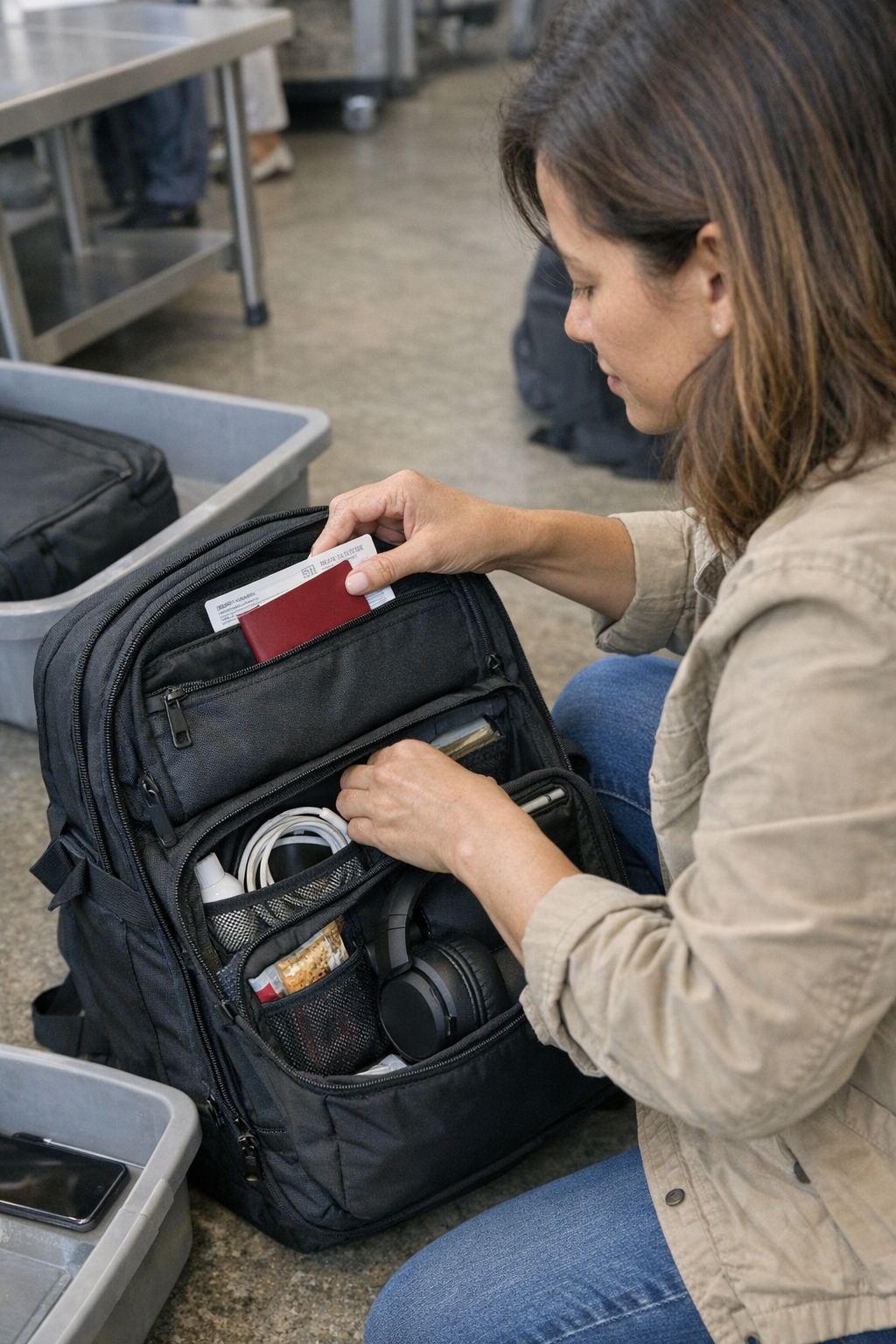
There’s a moment, somewhere between searching for a boarding pass at the bottom of your bag and glancing at a tightening security line, when a carry-on stops feeling like a tool and starts to feel like a small obstacle. I didn’t notice it on the first flight or even the second. The bag looked tidy enough at home; neat pouches, a clean profile, everything zipped and stacked in its place. But that early order was only half the story.
The details started to stand out with every movement.
Where The Interruptions Begin
You notice it after a few transitions. A zipper that hesitates because a pouch sits just underneath. Reaching for a charger but pulling out a tangle of cables mixed with passport corners. Boarding passes slipping under power banks, or headphones wedged sideways, pressing against the pocket meant for documents.
These small delays don’t announce themselves—they just add up. Standing in line, digging for ID, a snack wrapper slides into view, the rhythm breaks. A misaligned cable here, a hidden card there. What looked organized in a quiet room develops frayed edges in real-world motion.
That was the part that kept coming back: the small retrievals that should have taken seconds but dragged longer—especially when you just want to close up and move on.
The Difference Between Order and Ease
At first, the bag felt controlled. But the difference kept appearing. Each airport reset brought another tiny repack—slipping headphones back, nudging a pouch aside, scanning for where the hotel key or boarding stub ended up this time. With repeated use, the bag stopped feeling organized and started feeling cluttered.
An organizer—one that truly gives each essential its own home—turned out to matter more than I’d guessed. Travel documents in a top-facing slot, cords separated from passports, snacks and chargers each in their own side pocket, not mixed just to fit on paper. The change wasn’t dramatic, but every time I opened the bag, I could pull what I needed without having to reshuffle everything else.
It made boarding and security less of a fumble; repacking before landing became less of a half-blind scramble. Even remembering where things go after a tired midnight arrival took a little less effort.
Small Decisions, Fewer Distractions
Most of the time, the difference isn’t visible. It’s just fewer second glances, less shifting weight trying to find a cable or card at the last moment. A pocket only for travel documents seems fussy until you’re moving fast, trying not to slow down the flow behind you.
It’s not about perfect order or an aesthetic calm. The small gains add up: not needing to pause, not noticing a snag, not having to repack what slipped loose. That’s what makes a carry-on feel easy, even when the trip isn’t.
Packing started to feel less like a reset and more like a quiet, repeatable routine. And when every move is smoother, there’s just a bit less travel left on your mind.



