The Quiet Struggle Behind Every Dog Walk Pause
When public greeting routines lack practical gear storage, small annoyances build up, making daily walks harder; a grab-ready setup solves this.
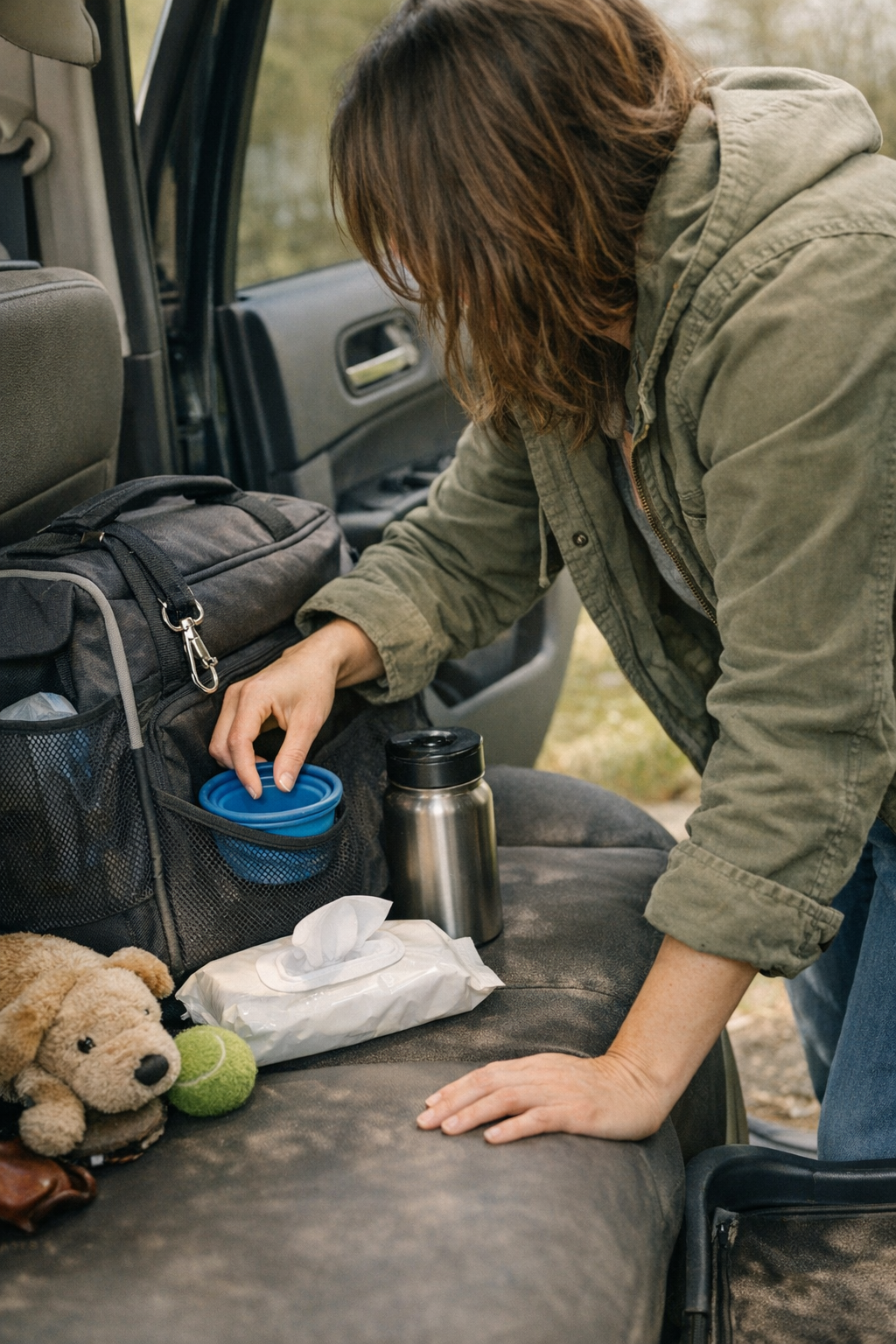
Most days, the routine feels easy enough—leash by the door, shoes lined up, keys ready. Still, whenever we met another dog or a neighbor mid-walk, my “wait” for her sounded more patient than I actually felt. It’s the small clumsy moments—pawing through pockets for a treat, untangling the leash yet again, realizing the baggie roll is missing—that start to unravel the calm I’d begun with. One morning doesn’t show it, but after a week, each fumble builds on the last.
It’s one thing when it’s just us—a lazy loop around the block, sun filtering through leaves, no one else nearby. When other people appear, each stop becomes a little scene with too many moving parts. Most tricks work once or twice, but real friction lives in the routine: digging through bags, reaching awkwardly, clipped-off “wait” commands as your hands scramble. The whole setup shows wear exactly where you want the day to feel steady.
How Small Gaps Quietly Stack Up
The first time, it looks like a glove dropped or a leash looped wrong. Insignificant, easy to ignore. But soon the small missteps repeat in the same places—by the sidewalk, at the yard gate, right before meeting someone new.
That part kept returning. Treats always buried deeper than expected, leash lying somewhere else. The house stays mostly tidy, but these fragments of routine slip out of sync, making each “wait” less believable than the last. You realize how often you’re resetting gear—re-gathering, recoiling, cleaning small messes left after walks.
If you’ve been there, you know it’s not the dog’s stubbornness. A smooth greeting isn’t possible when your hands never feel free.
The Real Difference Shows Up Later
After the walk, evidence lingers quietly. A treat pouch half-zipped on the credenza, leash draped over a chair, a training clicker under the table at nine p.m. None of these are big at first, but together the effort builds.
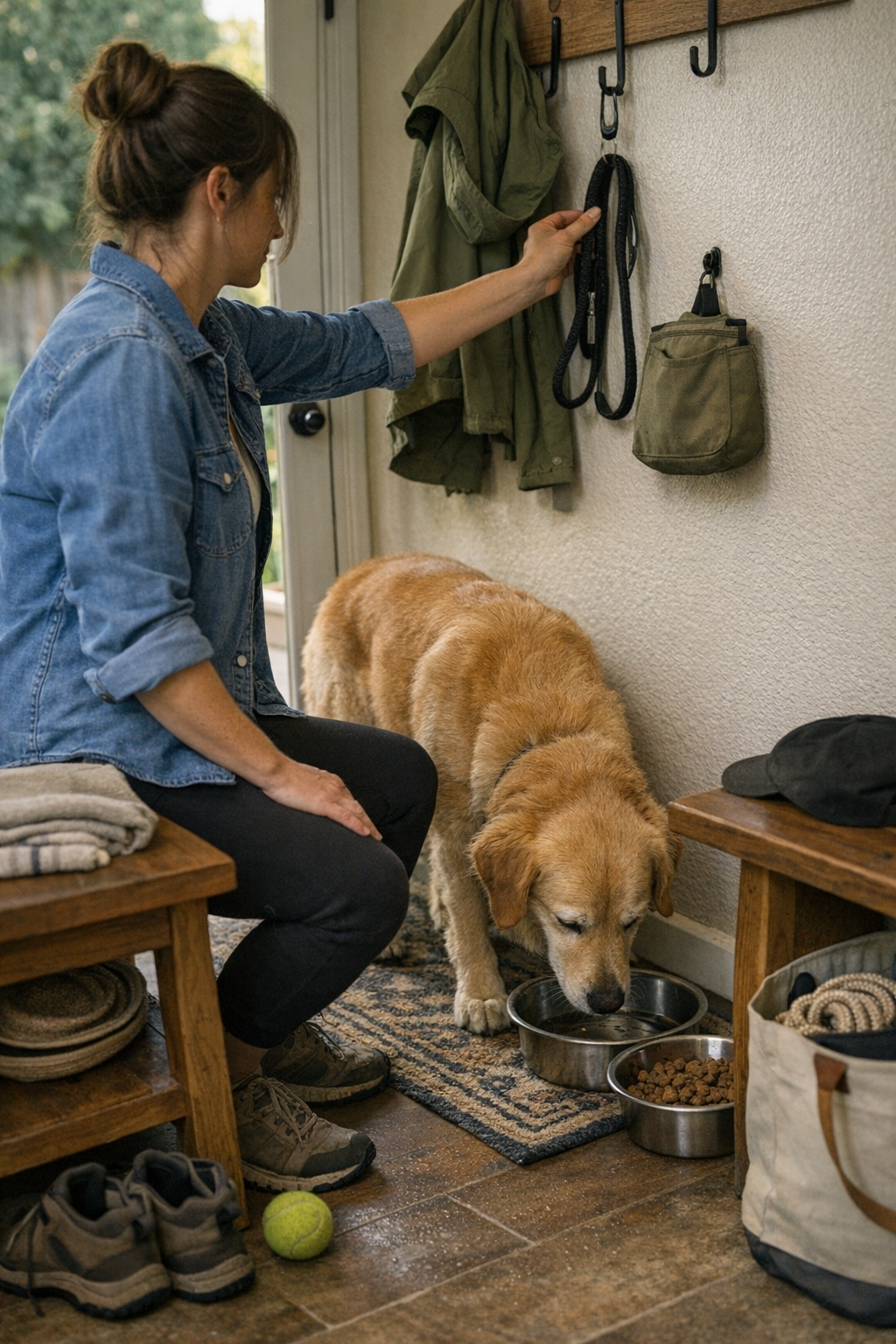
Cleanup gets delayed, then skipped. The next time, the fumble is longer, the greeting messier. One difference stuck: having one place for everything—a hook just high enough at the door, leash loops here, treat bag there, every return becoming a small, automatic reset. After a few repeats, the scramble stops quietly, and the “wait” command becomes what it was meant to be: a small moment of order, not a juggling act.
Routine, Absorbed
This wasn’t about making the house perfect or walks a performance. The real relief came from a single change removing an invisible tax from daily life. Some days clutter still creeps in, and things fall out of rhythm. But most of the chaos rolls away simply from not having to dig for one more basic item.
It’s funny how one repeatable habit can make the calm you want come—not from training the dog, but from clear, everyday care routines involving feeding resets, water refills, quick grooming moments, cleanup after short outdoor returns, and simple storage. You notice when porch or yard transitions, or starter-level care habits carry over better, the whole routine feels steadier.
If you want to see the kind of basics that helped here, you can look quietly, too: calmpetsupply.myshopify.com