The Quiet Struggle Behind Every Travel Moment
A carry-on stays quiet when silence essentials are isolated in an external pocket, avoiding noise from deep searches or overlapping pouches.
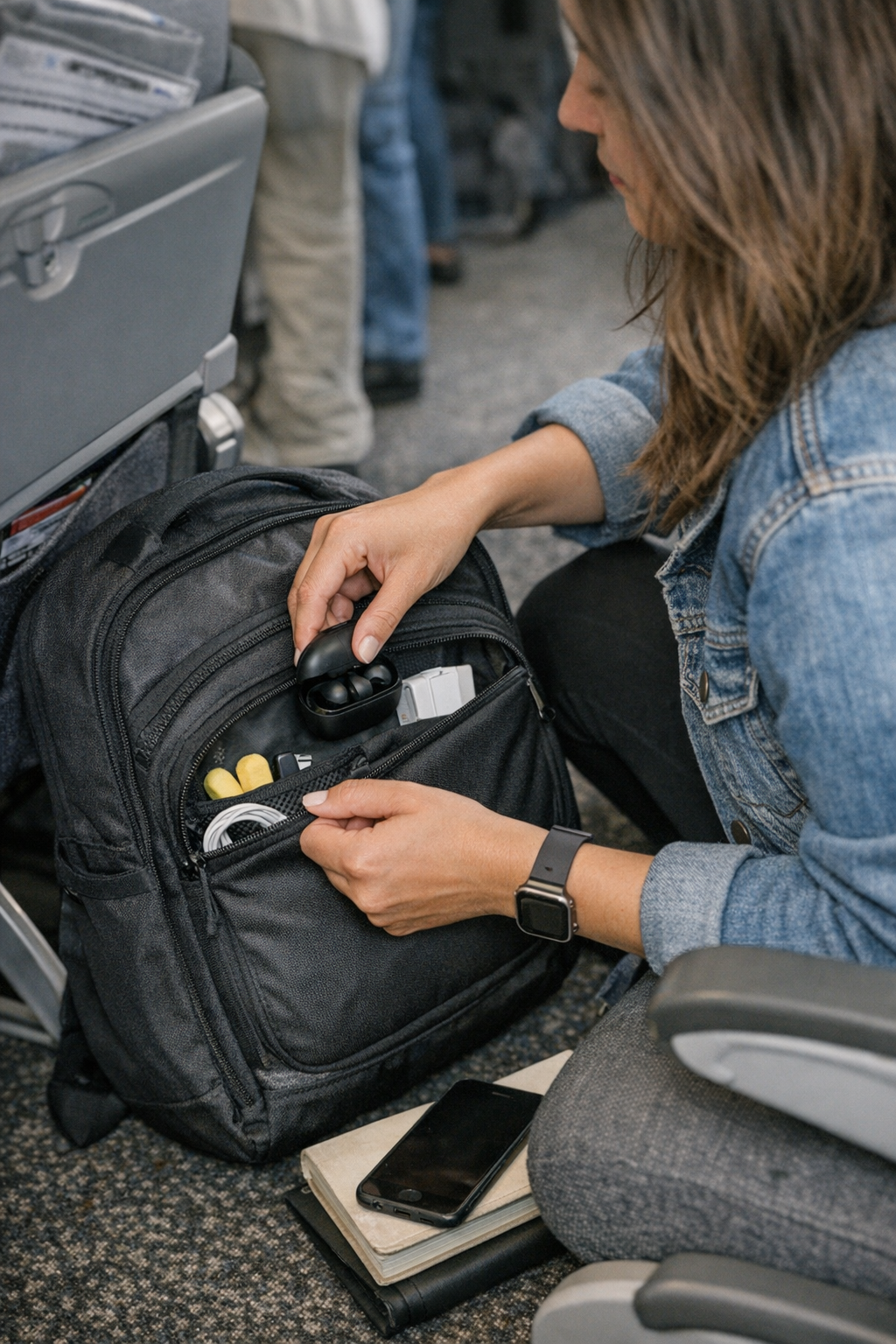
I didn’t notice the noise my carry-on was making at first. The small sounds of shifting fabric, the zipper pulling at its end, an interior organizer clicking loose—they all seemed minor. My plan was simple: pack light, stay organized, and keep essentials up front so travel would move smoothly. On day one, it looked neat. But by the third or fourth trip, while reaching for earplugs or a charging cord at the gate, I realized my carry-on had started making itself heard.
You really only notice it while moving. After you shuffle past a few boarding rows, grabbing something important—a passport, earphones, the comfort item that settles nerves during turbulence—the layers you carefully zipped together at home suddenly require unzipping, digging, fumbling, and often dropping things you weren’t even looking for. What felt organized in a quiet room becomes clumsy in the aisle. The noise builds after a few repeated transitions.
The psychology of “order” gets scrambled with repeated use. I tried layering organizers, separating items by category, even switching to slimmer pouches to avoid bulk. But time and again, reaching for a mask or cable meant bumping a divider and sending a spare pen tumbling deep into the bag. Each retrieval added a faint soundtrack: nervous rustling, zippers scraping, an interior snap unfastening prematurely. That persistent noise stuck out—especially when someone was waiting behind me or watching.
On about my fifth trip, sitting in a half-full cabin, the difference finally stood out. Someone nearby made an almost invisible move—one hand in an exterior pocket, item out, pocket zipped back before the row filled. No digging, no hassle. I’d been storing these quick-reach items in my main compartment, trusting slim organizers to keep access smooth, but it was the directness that mattered.
I shifted my routine: comfort and quiet-access essentials—earplugs, mask, e-reader—moved to a single zip pocket on the outside of the carry-on. One smooth motion in, one smooth motion out, even mid-airport or squeezed in by tray tables. The rest of the bag stayed closed.
After that, travel felt quieter for me and for those nearby. No more surreptitious pouch reordering, no bracing for the next noisy rummage. The access routine settled into muscle memory—a quiet pause amid the buzz of announcements and rolling wheels. It wasn’t perfect. Sometimes a travel document still ended up in the wrong pocket, and on other flights my careful compartment matched someone else’s faster pace. But the outer pocket became my relief point—the part of movement I could rely on.
There are still plenty of ways travel gets noisy—missed connections, lost headphones, rushing to taxis—but the bag itself doesn’t have to join in. Sometimes the best organization isn’t more layers; it’s smoothing that next reach before you realize you need it.
For anyone looking to quiet their own carry-on routine, there are a few ideas here.