The Quiet Struggle Behind Every Walk’s Start
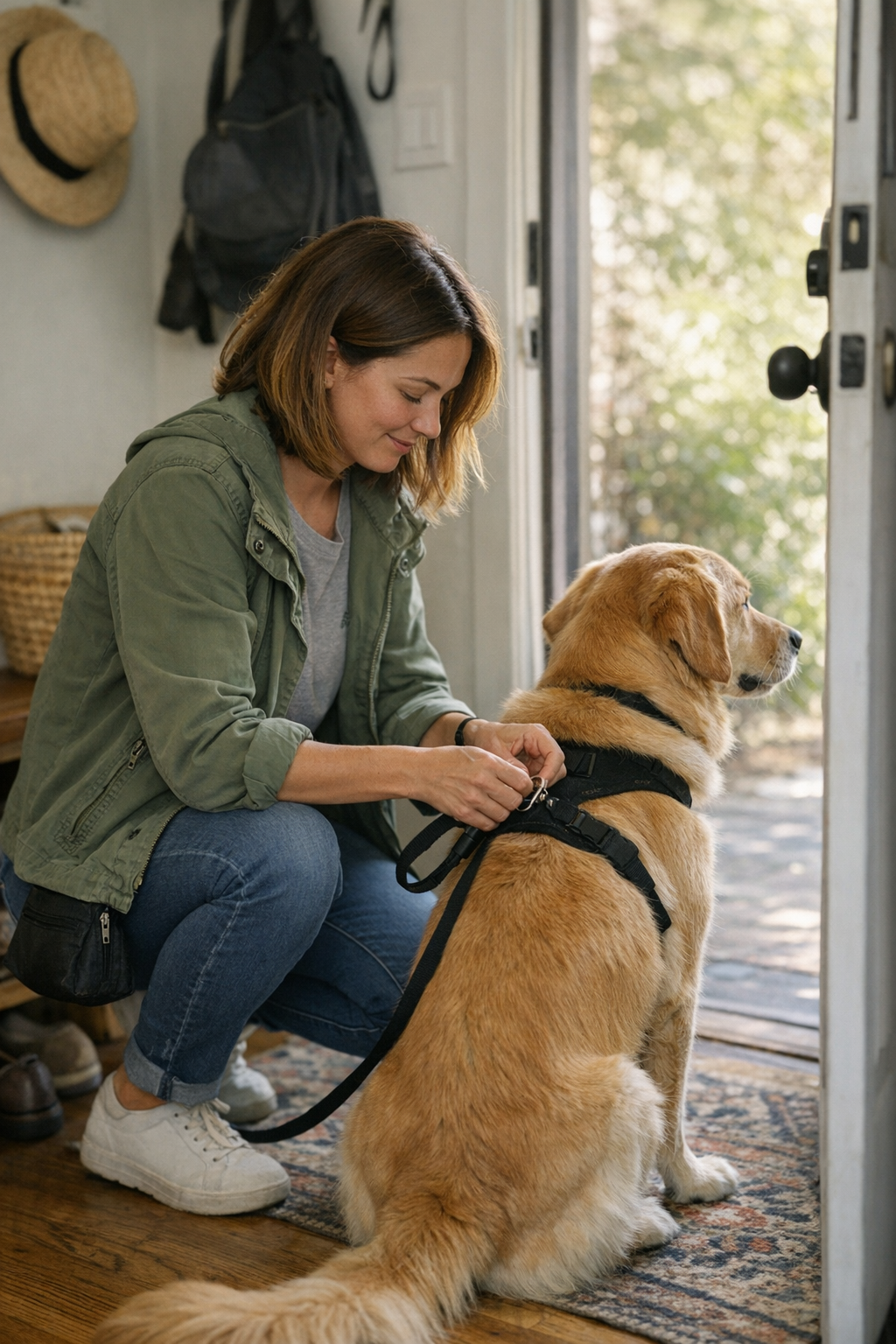
Leash routine friction builds up in repeated moments, often from a metal snap unsettling your dog before walks. Shifting this step smooths outings.
It took a few messy mornings to notice the real hang-up. Rushing out the door for work, coffee in hand, dog dancing underfoot, I’d shuffle past his food bowl only to double back—somehow it was always a half-step out of reach, tucked where yesterday’s convenience became today’s slow-down. At first it felt like minor clutter, the tiny negotiations you make with a lived-in space. But every day, that misplaced bowl rerouted the start of our morning, dragging me into a clumsy two-step just as things were supposed to flow.
You notice it after a few mornings. Not the bowl exactly, but that stuck feeling in your body when routine breaks down on the smallest snag. It isn’t about perfection. The dog waits, tail brushing the floor, while you reach past a stack of mail or nudge a mislaid towel aside. What looked tidy the night before becomes a block in motion. Funny how something so simple as bowl placement can shape the air between you and the next thing to do.
It became a small ritual—me, resetting the bowl, shifting water, collecting splashed kibble, always with a hurried edge. Even my dog picked up on it, his pause elongating, reading my hesitation as license to wander. The floor showed the cost: stray kibbles edged against the wall, a ring of water underfoot, tiny reminders that the system wasn’t as automatic as I wanted it to be.
The Expectation of Order
I always thought keeping the bowls pressed tight against the wall meant less mess. The line looked clean, efficient. In practice, it meant reaching behind lamp cords on mornings when everything felt off-axis, calling the dog over with one hand while straightening things with the other.
Every morning, I’d find myself crouching into the same narrow gap, nudging his bowl a few inches forward, and thinking it looked fine from a distance. In those moments, it became clear: sometimes the urge to tidy creates just enough of a barrier that you lose the easy flow of feeding.
Small things add up, quietly. A minute lost here, an awkward shuffle there—by the time I was ready to leave, that friction had colored the whole departure.
Noticing the Pattern
You only realize the pattern once you see yourself repeating it. The dog hovers, reading your intent, moving in oddly exact sync with old routines that don’t serve either of you anymore. One morning, after nearly kicking the water bowl out of place with a too-fast step, I paused—not out of frustration, but from a sudden sense that we’d both slipped into a feedback loop that didn’t fit the rest of the day.
That was the part that kept returning. The way a too-tucked bowl, or a clump of toys nudged too close, would slow down a routine that was supposed to feel smooth and shared. Clutter crept back even after late-night resets. What seemed under control from afar unraveled in the details: damp spots, scattered pieces, a line of bowls that needed their own small buffer away from foot traffic and tail swishes.
It took a while to let go of a certain “everything in its place” logic and admit that a practical, repeatable spot—one I could reach even while half-distracted—would work better than the look of tidiness. Counterintuitive, but true: everything became easier if the bowl started out one handspan further from the wall in the morning.
Quiet Shifts
After that, things got easier in subtle ways. The dog learned to wait just to the side, anticipation steady, no longer uncertain about whether feeding was a wait-and-see or a scramble. My own movement loosened—the quick refill became a reach, not a stretch. I slipped through the morning without knocking kibble into corners or trailing water across the hall.
The difference showed up in smaller ways than I expected. Fewer tiny sprints to grab paper towels, less stepping around puddles, a smoother handoff as I left for work. There’s a small relief in noticing when a routine goes right and realizing you’re not being corralled by the space, just moving within it.
As days settled into new rhythms, it felt like less of a reset and more of a remembered habit—one that made sense for both of us, even if it looked a bit less neat.
If these kinds of everyday details sound familiar, you might find a few more observations living quietly over here: http://www.dogpile.myshopify.com