The Quiet Struggle Behind Everyday Light Fixtures
Making ground wires accessible during installation ensures easier maintenance, safer repairs, and compliance, especially in damp or busy areas.
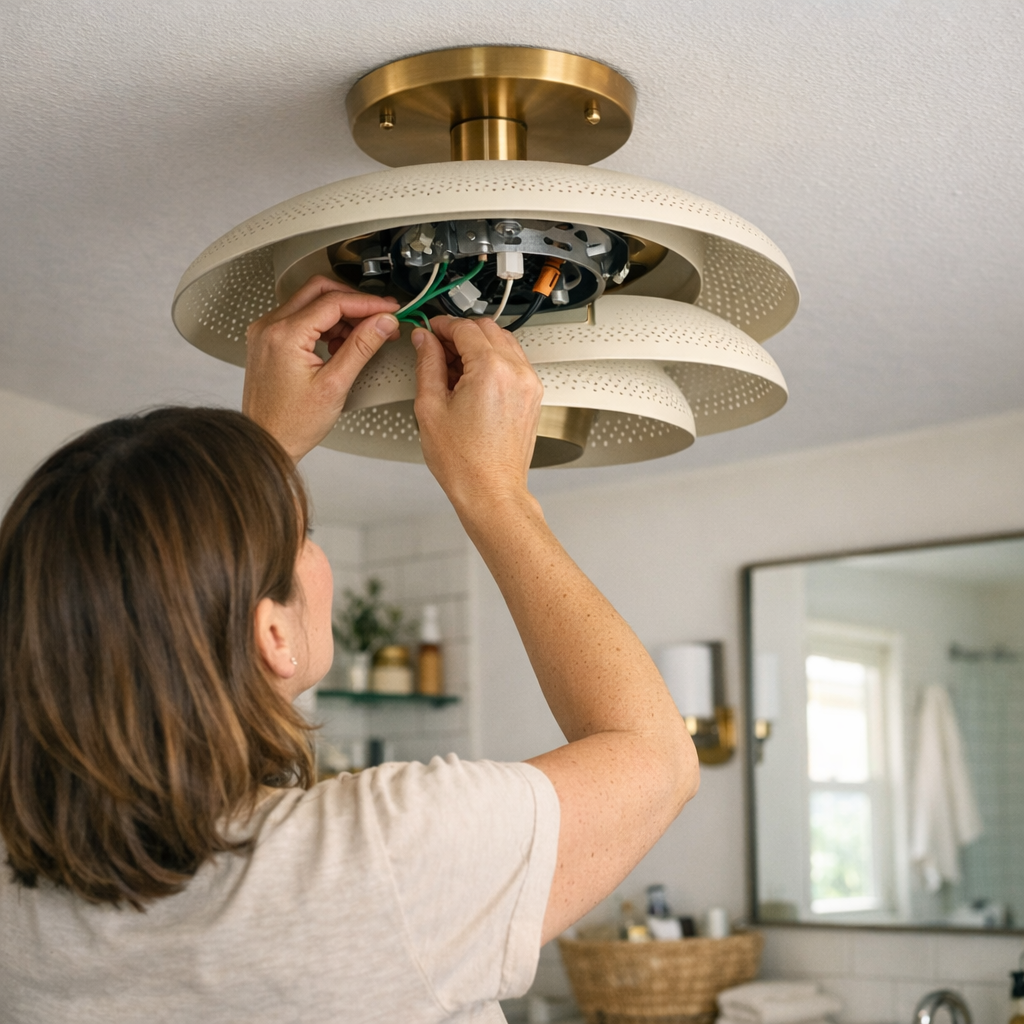
It’s easy to forget how a room feels after the first few weeks of living with it—the way light lands across the bathroom mirror, or how a hallway glows at night. Most lighting feels flawless when it’s new. But over time, something shifts: a sconce flickers along the stairs, a ceiling panel in the laundry room dims, or a bulb above the entryway needs replacing. What once seemed simple starts to resist. That’s the part I kept coming back to.
You don’t notice the little obstacles until routine kicks in. The hallway you walk through half-awake, the work surface where a shadow won’t quite leave—these places reveal where setup matters more than style. At some point, all those neat flush or semi-flush fixtures that looked so finished become less about their appearance and more about whether you can actually access them when you need to.
The Quiet Obstacle Hiding Behind the Plate
Growing up, I never thought about the ground wire. When I finally installed my own lighting—whether bathroom-rated vanity lights, stairway sconces, or flush mount ceiling fixtures—it was just another strand to connect, mostly overlooked. Maybe that’s why, the first time a flush mount refused to drop and the ground wire felt too tight to move, it stopped me. Five minutes of loosening hidden screws, wrangling wires in near-dark, just to check a flicker. You feel it in your fingertips: the struggle between clean lines and the need to reach what’s tucked away.
Especially with bathroom lights, damp-rated fixtures, or low hallway sconces, it’s not about looks anymore. Slight moisture, vibration from foot traffic on stairs, or even seasonal shifts add up—until that short copper ground wire dictates how much trouble a small fix will be. Compliance and safety matter, but by then it’s the awkward choices that stand out: do you risk a rushed shortcut or wrestle with an install that was “done” years ago?
When a Smooth Finish Stops Being Enough
On quieter mornings, it’s the difference you notice between having room to work and feeling caught in the grip of the ceiling mount. A vanity bar above the mirror, the sort you hope never needs attention, suddenly becomes a two-person job. Reach up, and if the wires haven’t been left accessible, the whole process drags out—what should be a quick bulb replacement becomes a slow negotiation with constraints.
I think about this most in the rooms that need attention year-round—the bathroom, the laundry light that burns late, the corridor flush mounts that never seem to escape the reach of careless hands. A fixture that looked straightforward on installation day ages into a small barrier, not because the lighting changed, but because access did. That’s something I hadn’t expected to notice as much as I did.
Letting a Bit of Slack Make the Difference
After enough tries, I started leaving an extra four inches of ground wire above every wall box or bracket. It doesn’t look any different from the outside, but it feels different the next time you’re up a stepstool in a cold room, trying to make a quick change. Suddenly, the job goes quietly, safely—one less thing pushing you toward shortcuts.
That change is almost invisible, but it grows in value with every year the fixture stays up. There’s a different kind of ease that settles in when the lights are both ready to use and ready to be worked on. Over time, it isn’t just about how a hallway or utility room looks when lit up, but whether the light is always there when you come back to it.
Some of these thoughts found shape while replacing a stubborn fixture not that long ago—if slow details in the world of indoor lighting interest you, a few more can be found here: http://www.lighthelper.myshopify.com



