The Quiet Struggle of a Disorganized Carry-On
Repeated interruptions in carry-on travel come from overlapping pouches and hidden holders. Isolate key items in outer pockets for smoother access.
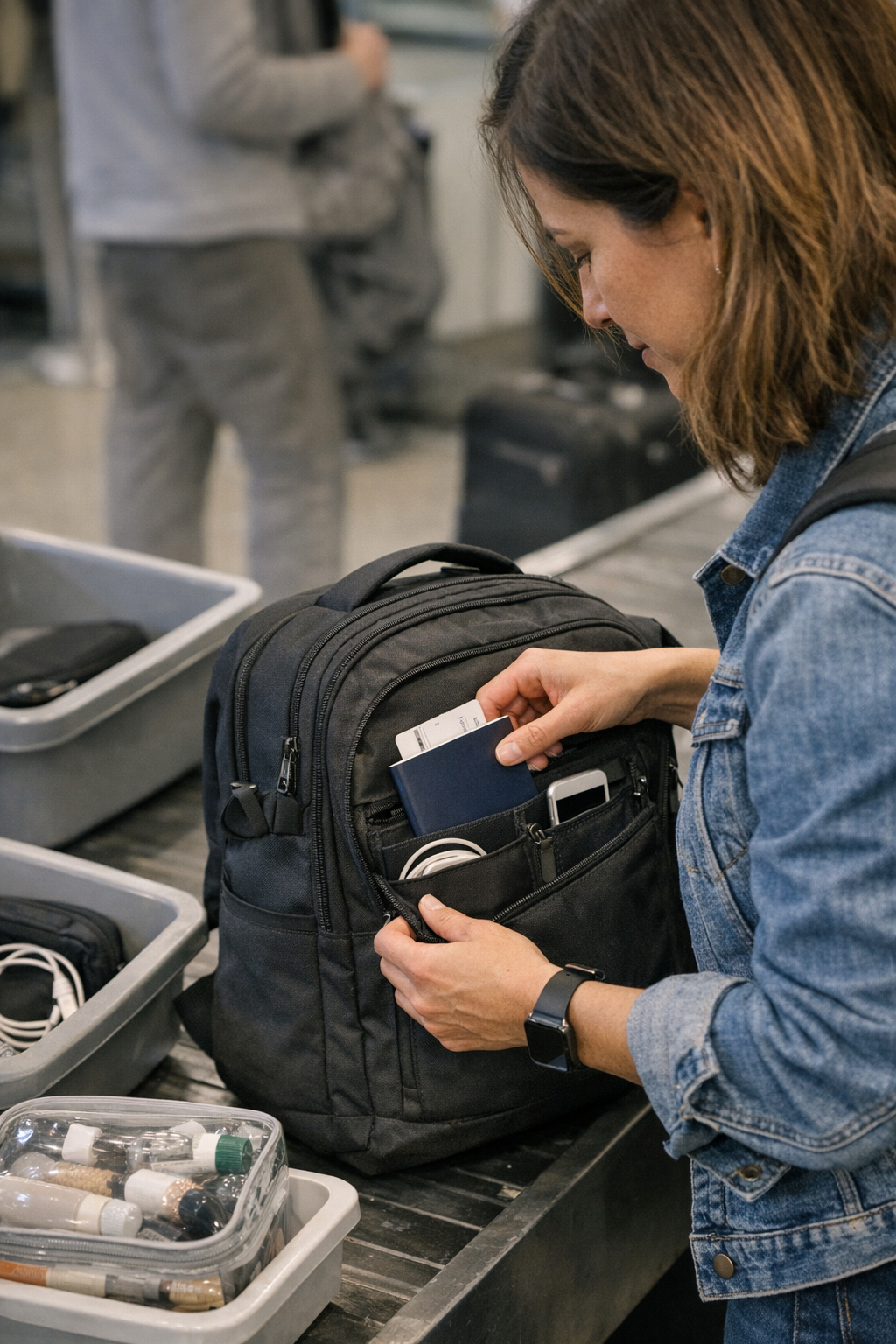
There’s a slow kind of aggravation that creeps into repeated travel. It surfaces in small but consistent ways: reaching for your passport or charger only to have other items shift or snag, or digging past pouches you never meant to open. At first, every compartment feels carefully arranged—chargers lined up neatly, documents packed flat, pouches zipped and secure. It’s easy to believe you’re set. But after several hours of transferring items through security trays, overhead bins, and seat changes, that ease fades. The routine of accessing essentials becomes slower, more tangled, and oddly repetitive. That’s when the real problem shows itself.
What Looked Good, Until It Didn’t
The issue doesn’t announce itself loudly. It appears in fragmented seconds here and there until it becomes a frustrating pattern. I noticed it after switching bags for the fifth time in a month: the setup that seemed efficient on my kitchen floor unraveled every time I tried to grab something mid-transit. That outside pocket, which once held passport, cables, and a pen together smoothly, became a reluctant merging zone. Pull the passport out, and two cords want to come along; slip a charger back, and it nicks the edge of a boarding pass. Everything looks orderly until you need one item quickly. That’s the snag repeating itself—how a perfect stack when still turns into a slow scramble in motion.
Why Repacking Never Gets Easier
On the move, it’s always about access paths. Overlapping pouch layouts or document holders buried under chargers create friction every time you reach inside. At crowded checkpoints, one stuck zipper or jammed pocket can scatter cables or spill loose change. Quick-access sections turn into slow-access traps when one reach disturbs two, three, or four items at once. This incremental disruption remains invisible until repeated movements expose it. Each attempt to put something back invites losing track, misplacing items, or mixing up compartments. This slow erosion of ease transforms a lightweight bag into something you hesitate to use—even though its contents weigh no more than before.
The Quietest Change That Actually Worked
The fix wasn’t dramatic. It came from a tired pause after another hectic airport shuffle. Instead of bundling everything “for convenience,” I separated essentials by frequency of use—passport, boarding pass, charger—each assigned to its own outer-facing zipper. The difference was almost immediate, though it took a few transitions to register fully. No more untangling a charger just to show a boarding pass; no more digging past layered pouches for a pen. The bag didn’t look neater, but moving items back after security became simple. That repeated frustration faded, and the setup finally fit the flow of travel—just reach, grab, reset, move.
It’s surprising how the smallest routines reveal what really matters in carry-on travel. If you want, here’s where I keep finding what actually works for real trips: http://www.carryonsupply.myshopify.com



