The Quiet Struggle of a Wobbly Bathroom Light
Hand-starting mounting screws prevents fixture sag, trapped screws, and mounting gaps, ensuring stable indoor lighting in tight or damp spaces.
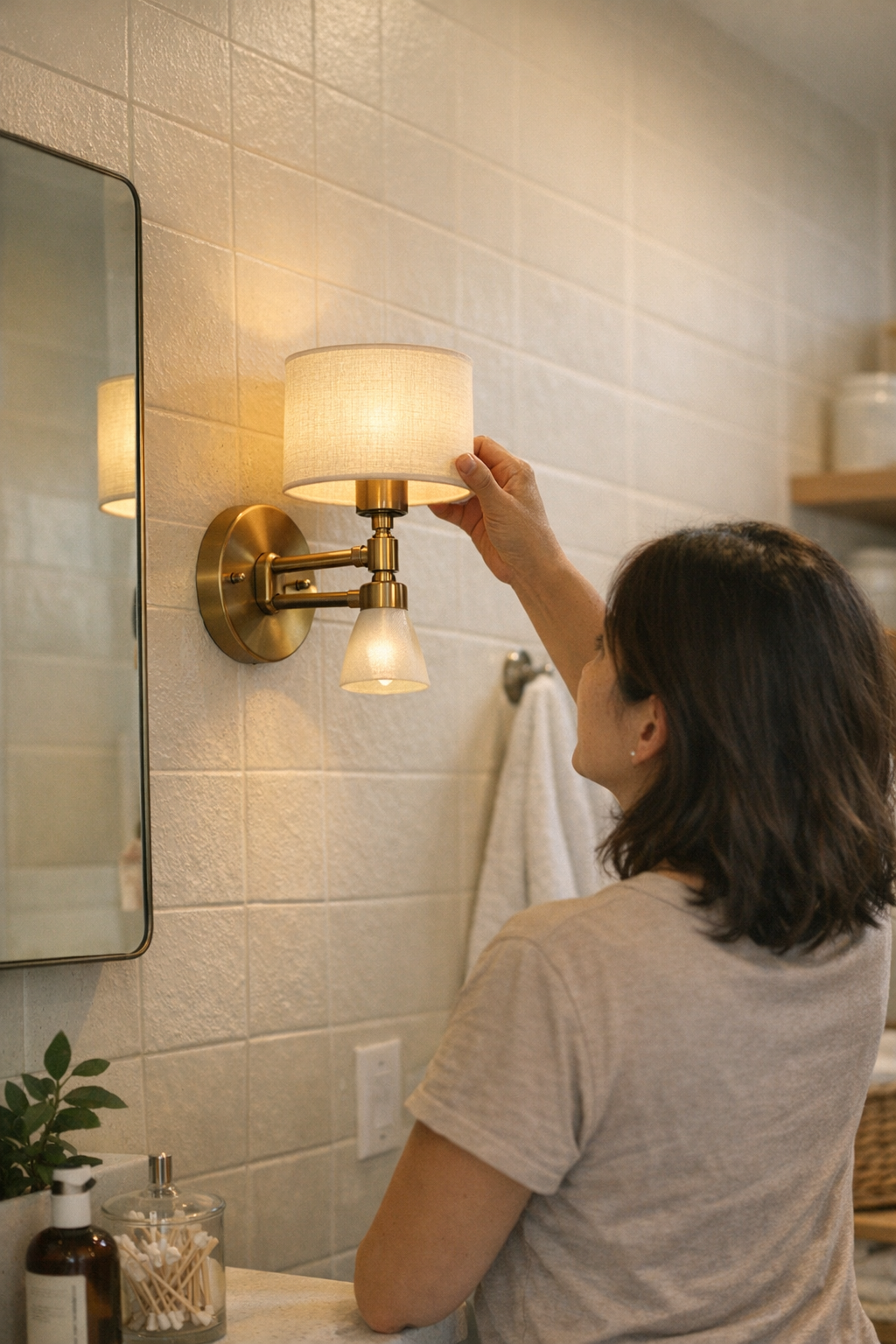
It crept up on me one evening—a barely-there tilt in the corner light above the laundry sink, just as I was juggling towels and a bottle of detergent. Most days I moved through the hallway, up the stairs, past the utility room, rarely thinking about how flush mount ceiling lights, semi-flush fixtures, or wall sconces actually sat. You turn a light on, you expect it to work; simple as that. But over time, something shifted. A fixture started to wobble. Another seemed to “breathe” against the wall when the door slammed. I kept ignoring it until those subtle slips became part of the daily scenery.
Lighting in real indoor-use settings reveals its flaws slowly—you don’t notice it right away.
The Small Things That Move
Sometimes a fixture loosens for reasons that feel insignificant—maybe vibrations from footsteps in the hallway, or the thud of laundry baskets on counters beneath damp-rated ceiling panels in the utility room. At first, nothing looks off. But weeks later, a visible gap appears at the ceiling edge, or a hint of shadow creeps in where there wasn’t one before.
That was the part I kept coming back to: not a catastrophic failure, just a spreading sense that some lights wouldn’t hold steady through normal living. It was the difference between fixtures I’d threaded slowly by hand—letting the screws “find” their way—and those I rushed onto their mounting boxes with a power driver, impatient to be finished. The slower, patient sets never budged. The ones I forced flush for a day would give way by the end of the month.
You don’t fully notice it until you’re reaching up to dust or replace a bulb, and the plate dips or buzzes under your touch.
Routines That Test the Fit
Maybe it’s the under-cabinet lights above the washer, used every Monday morning and otherwise forgotten. Or the narrow corridor with its shallow ceiling box, where any misalignment causes the fixture's edge to collect dust, lint, even stray bugs. Daily use exposes these small shifts relentlessly. A hurried walk-through, an elbow brushing a wall sconce, a quick mirror check under uneven vanity lighting—all reminders that what looked solid on install day can become annoyingly flexible once real life sets in.
Every time I tried to tighten fixtures that were cross-threaded or stripped, the job multiplied. Sometimes you have to step back and admit the difference between “done” and “settled-in.” It changed how I see every ceiling, not just as decoration overhead, but as part of the room’s reliability.
But you feel it.
How the Light Holds
Eventually, the practical difference became too clear to ignore. Each screw, hand-started, brought more certainty to daily living: a stable flush-mount, task lighting that didn’t buzz loose, bathroom-rated fixtures that stayed square no matter the humidity. These fixes are unspectacular and barely noticeable at first.
But in rooms where glare, uneven spread, or sagging plates create small disruptions to mirror balance, task-surface clarity, or stair-turn visibility, these decisions make the difference between a space that quietly works and one that quietly falters. Slowing down to start the threads by hand doesn’t change the look on day one—but months later, it’s there in every unremarkable moment: cleaning, switching lights off, or simply passing beneath a stairway fixture that, finally, stays where it belongs.
Some of these thoughts came together while working under the ceiling in my laundry room, and for a sense of how LightHelper works through these structural details, there’s more to see here.



