The Quiet Struggle of Managing Dog Gear at the Door
Where you keep dog-walk shoes and towels affects post-walk routines; keeping both together at the entry reduces mess and interruptions.
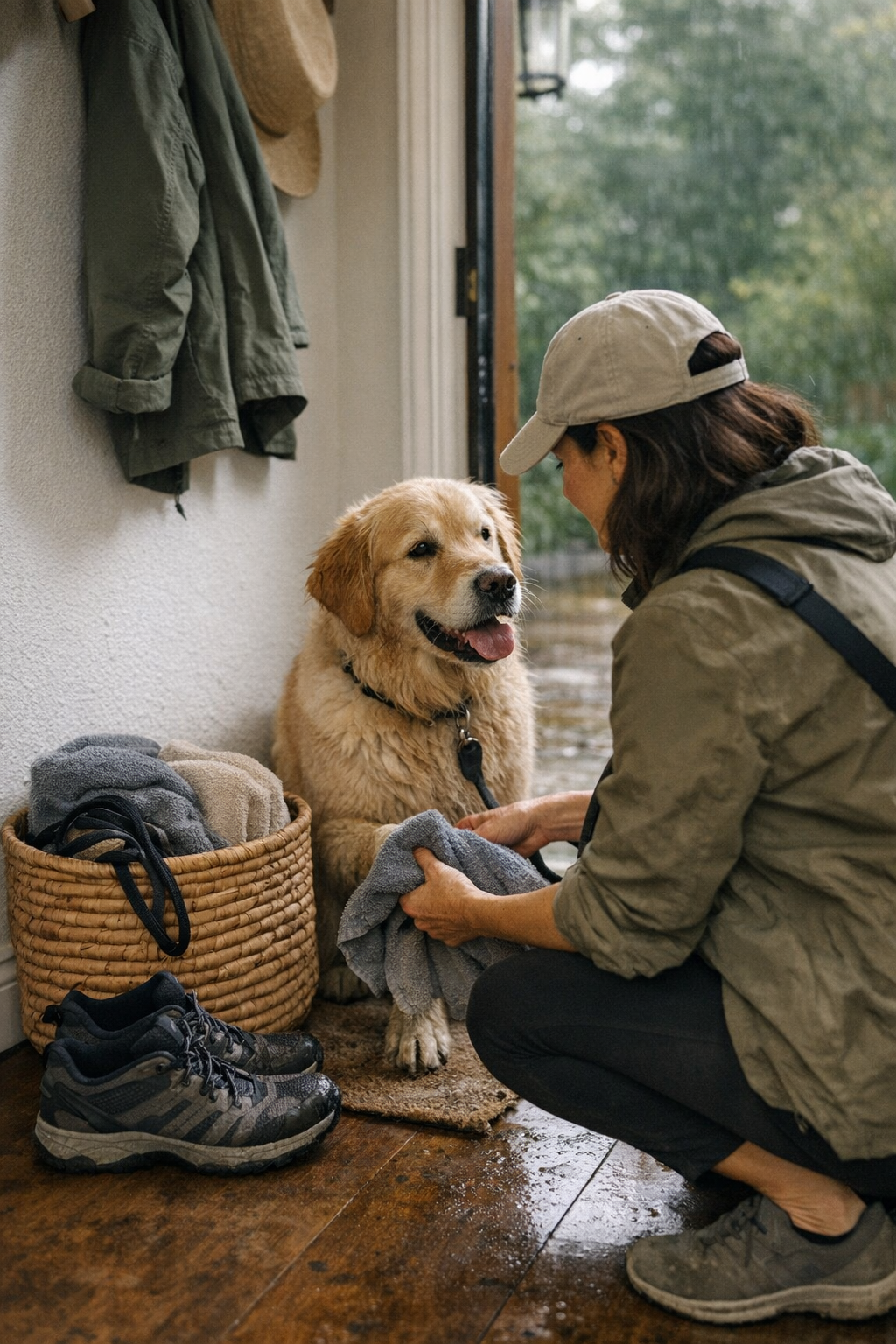
You pick up on it after a handful of walks—the rhythm that almost works, but keeps catching. My own routine often stalled where it shouldn’t: right at the front door. Shoes by the mat, leash looped around my wrist, but the paw-wiping towel’s across the hall with the laundry. It’s subtle at first, but the break in the pattern adds friction. After a few wet mornings and muddy loop-arounds, the messes start to outpace the system.
From a distance, it looked organized. Shoes tucked away, towels neatly folded farther inside the house. The entryway stayed mostly clear. But after enough repetitions, the setup felt backwards: every time we came back in, I’d have to pause—dog frozen mid-step, hunting for a towel while her paws left damp prints on the tile. Sometimes I tried to anticipate, but the reach or the stretch added enough hassle that it kept sliding back to “deal with it later.” That repeated interruption broke what could have been muscle memory.
A basket beside the door wasn’t my first idea. I resisted it, thinking more about how things looked than how life actually moved. Familiarity breeds routine, and routine exposes where friction hides. This became even clearer on busy days when the lag at the door rippled through everything: pacing dog, dirty mats, and a floor suddenly planned for cleaning. It’s surprising how an extra ten seconds can echo through the hour.
How Things Seem Versus How They’re Used
Most visitors wouldn’t notice the pause. In quick exchanges—someone dropping by or a delivery—I only showed the tidy side of my setup. But real routines happen between those moments. Bringing the dog back in, juggling leash, keys, phone, and her sudden bolt at the smell of food—these moments revealed the old towel placement’s flaws.
Usually, it’s the items you move most that never quite stay where you mean them to be. There’s optimism in restoring towels to their “proper place,” but reality keeps undercutting that. This showed up most on rainy days. The longer the reach, the more likely the dog skipped the towel entirely, tracking mud past the mat and into the kitchen. Sometimes the floor dried before I got to it. Sometimes I doubled back, wiping muddy footprints after the fact, muttering as the day went on.
There’s ease—but it comes slowly—in minimizing the steps between motion and cleanup. Keeping that towel, and the shoes, within the same small stretch of space isn’t about neatness as much as flow. The difference appeared in smaller ways than expected: the dog stopped pacing around the towel, and I found less to clean up later. What looked less tidy on day one became less mess over the week.
Repeating Patterns Become the Real Routine
If you’d asked why I stored things where I did, the answers sounded reasonable enough—“That’s where the laundry closet is,” “Shoes take up too much space”—but the logic didn’t match the living rhythm. Patterns matter more than static tidiness; I learned to care about the walk itself, not the blueprint. The walk is always harder when starting or finishing is difficult.
After a few wet mornings, you notice: if every entry and exit is interrupted by a scuffle for something basic, the pause lengthens, the dog’s patience wears thin, and even a short outing feels stretched. The basket by the door—shoes, towel, extra leash looped inside—cut out the awkward shuffle. It’s not decorative, but the reset became easier.
The routine turned into: towel first, paws wiped, leash dropped, shoes off—all in one spot. Cleanup was faster, with less frustrated energy at the threshold. That made walks—not just returning but leaving—less of a groan. Sometimes the best adjustment isn’t a new trick but moving what you already have closer to how life actually flows.
Learning the Comfort of Practical Placement
There’s comfort in having the right tool within reach, especially with repeated use. Over time, these small shifts smoothed the daily rush. I expected changes to be about dog training, but what really changed was how I arranged the margins: fewer crossed halls, fewer doubled-back steps, not needing to call the dog twice.
A routine is only as smooth as its bottleneck is easy. I stopped worrying if the entry looked fuller because having the towel right there—sometimes already in hand by the time the leash came off—made cleanup almost automatic. Fewer muddy footprints, less unsettled energy when coming back inside. The clutter resolved—not by being hidden—but by making life move simpler.
The realization came slowly. It shifted from thinking “that’s how I was told to store things” to “that’s where we pause, every single day.” Adjusting for lived-in comfort helped all the pieces settle. There’s no glamour, just the quiet satisfaction of not doubling back, not apologizing to the floor, not feeling like the day starts behind.
For routines you repeat daily, the smallest, closest distance between need and solution makes the biggest difference—especially when both you and the dog just want inside from the rain.



