The Quiet Struggle of Moving Through Travel Lines
A carry-on that looks organized but slows repeated access becomes an obstacle; simple outer pockets reduce friction and speed up travel.
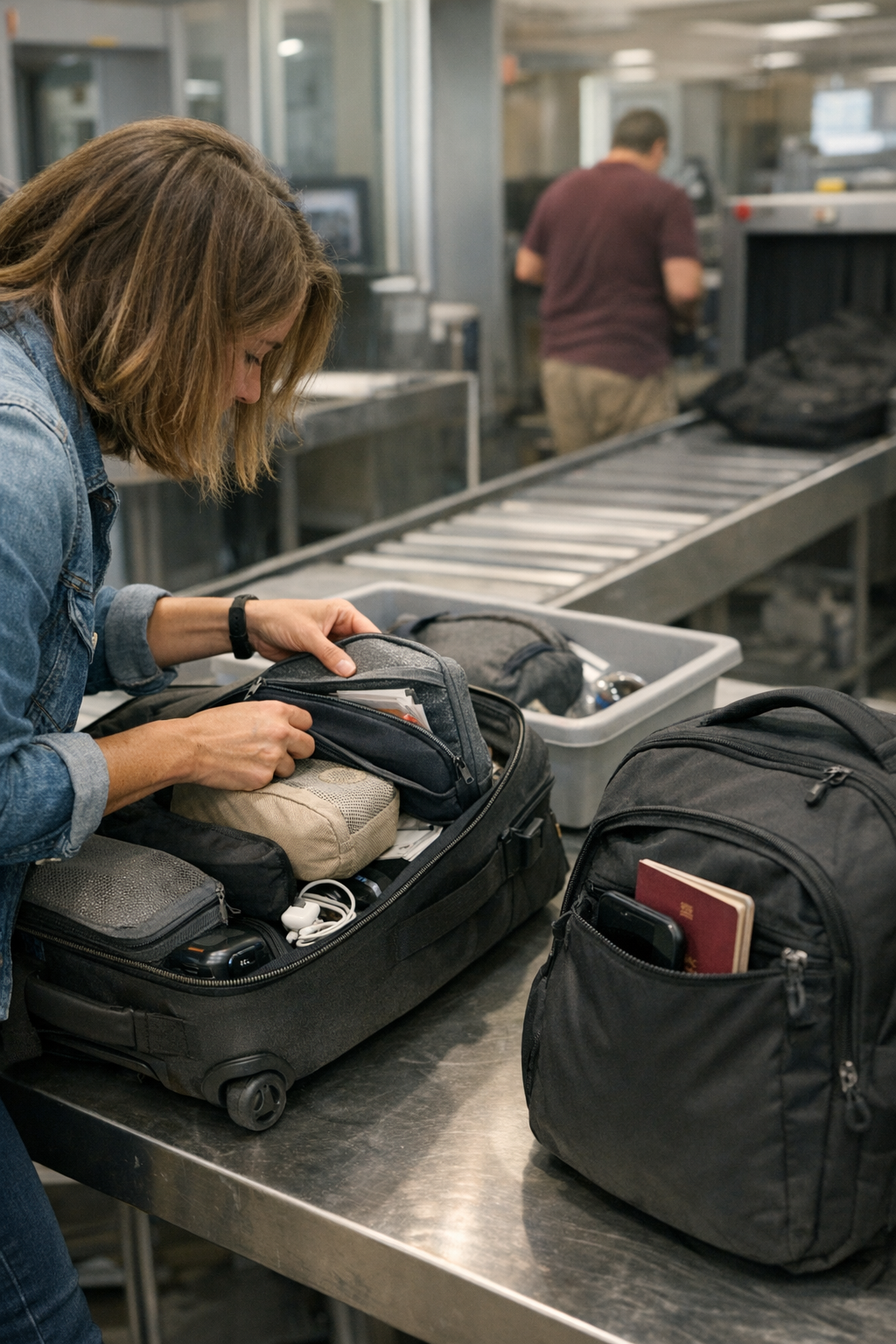
It happens quietly, somewhere between the first transition and the second. The bag looks organized—everything tucked away, pouches meant to keep you in control. At first, maybe rolling into the hotel or pausing at security, the arrangement still feels right. But as the trip unfolds and you keep reaching for the same essentials—passport, phone, cables—the calm of initial order slips away. It isn’t chaos exactly, just small interruptions. Items that seemed tidy start taking more time than you remember.
You notice it after a few transitions.
A system built in a still room often drifts when tested in motion. Each return to the bag brings the same little delays—fumbling through zipped cases, pouches stacked inside other pouches, reaching under one thing to grab another. It looked fine at first. But in crowded zones—the beginning of boarding lines, the security tray shuffle—every extra layer or misplaced pouch adds a pause. The pace changes, and the bag reveals what it’s good at: smooth flow or quiet resistance.
The difference kept showing up. An outer pocket, even if a little less polished, meant my passport and boarding pass could slide in and out without a second thought. I watched people, including myself, caught in a familiar rhythm: one hand on the bag, the other tugging a zipper or digging past a tech organizer, searching for a document just used and now misplaced by the urgency of movement. There’s a small cost every time—a half-second lost, the mind cluttered by another minor friction.
It never felt like a crisis; more like the rubber band of a travel routine growing tighter with each leg of the journey. That was the part that kept coming back.
In the end, I found myself shedding pouches for something quieter. A single quick-access point, with only what I’d need in line, was enough. Not all in one basket, but all in one hand, when it mattered. Fewer choices, fewer interruptions. The structure of the bag changed—not in appearance, but in how I moved with it. The relief wasn’t dramatic, just gently cumulative. I didn’t gain time exactly. I just lost a little less to friction.
Sometimes the difference is simply not having to think about where things are, just when you need them. And that kind of quiet—especially while balancing in a moving aisle or waiting for the overhead bin to free up—often means more than looking put together.
If you’re curious to see a space built around repeated movement, you can find it here: http://www.carryonsupply.myshopify.com