The Quiet Struggle of Staying Organized on the Move
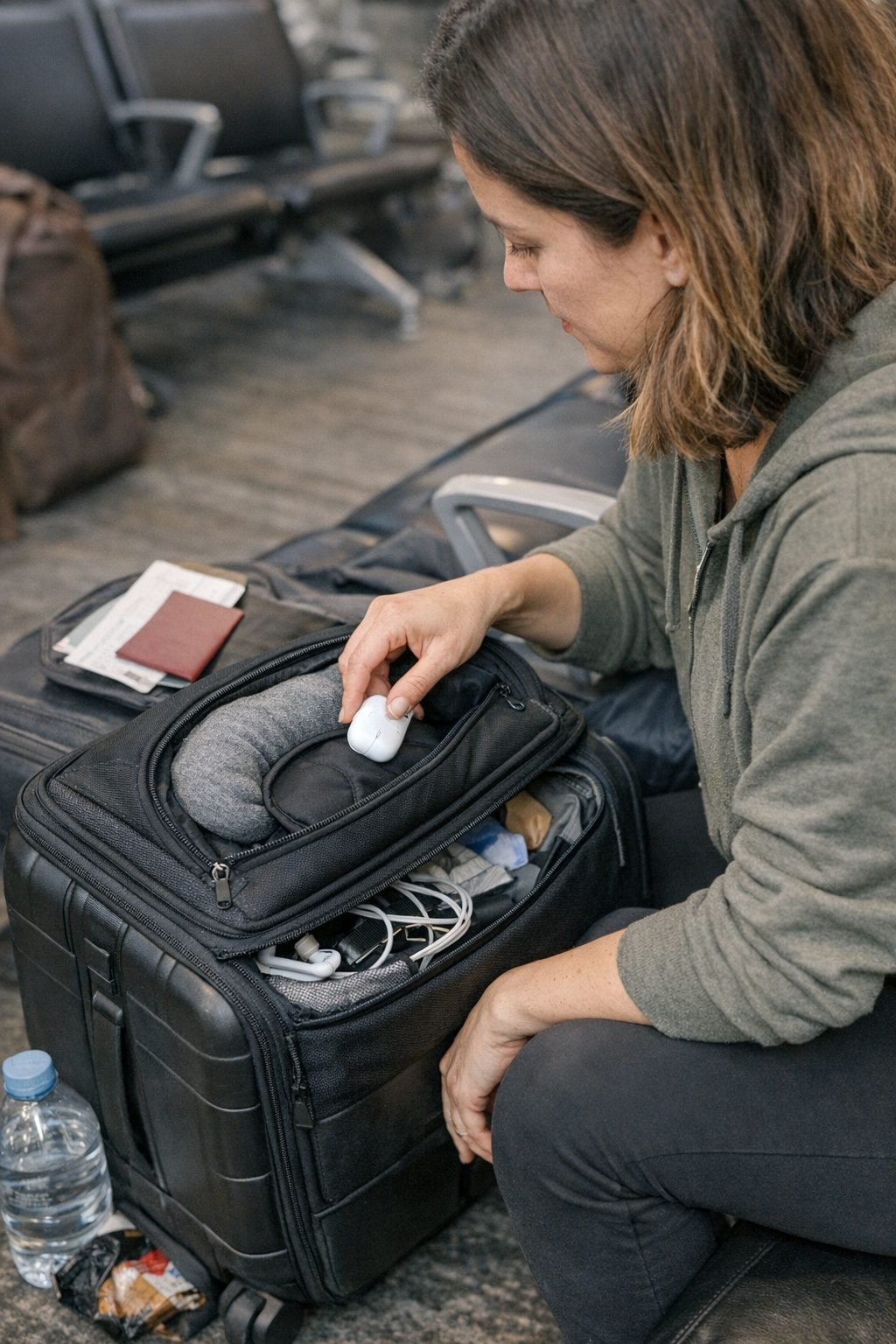
Separating rest items into a dedicated top-access zone prevents repeated interruptions and improves carry-on retrievals and travel flow.
There’s a moment—somewhere between settling into a cramped airplane seat and fishing out a single small item—when a carry-on that felt perfectly organized at home suddenly feels awkward to manage. I kept running into this repeatedly: reaching for a travel comfort or an essential, then realizing I had to shuffle through or half-unpack the “organized” setup I’d packed with confidence the night before. That’s when the difference between neat order and actual ease became clear.
The Hidden Friction of Overlapping Zones
Packing gear at home, everything lines up: pouches, segmented slots, and slim rows of organizers tiled just so. It looks like it should work. But it’s in all the little transitions—boarding, finding the gate, dropping into a seat—that the real friction sets in.
You notice it after a few passes. The rest mask and charger cord sit in the same zone, and it takes just one reach to unsettle both. Pulling out a document means disturbing headphones. Each time, there’s a quick reset—a small, silent irritation that doesn’t quite register as a problem until it quietly adds up. Instead of helping you move smoothly, the bag subtly demands that you manage it.
The Layer That Disappears in Motion
I started paying attention on the third or fourth leg of a trip. What looked neat at the start never stayed that way after multiple rounds of access and repacking. That messiness kept returning.
Layovers, tight aisle spaces, unexpected seat-mate shifts—the need to retrieve one item without upsetting the whole balance became a constant struggle. When medication or rest gear was buried under tech accessories, I’d end up crouching over the tray table doing quick, awkward halftime repacks just to get things partially back in place. After a while, the urge to only reach into one single, clearly defined space—to separate rest gear from everything else—felt less like a preference and more like a small survival tactic.
When Small Design Changes Outperform Organization
The real shift came when I swapped out my multitasking pouch for a pocket holding only rest gear. Just a slim, dedicated space for mask, earbuds, and travel pillow—nothing nesting alongside chargers or paper. No major overhaul, just a new, simple surface habit.
It didn’t look dramatically different. But the difference kept showing up. I could reach for what I needed and close it in one smooth move—the rest stayed untouched. Even after several retrievals, there was no slow drag of rearranging, no creeping disorder. This reliability was quiet, almost unremarkable, but the ease of those tiny motions changed the energy of every airport transition and seat shuffle.
Real improvement didn’t come from packing everything tighter, but from making sure what I needed most was the easiest to get to—every time. Sometimes a simple, single-purpose space is what holds the rest of the routine together.
If you’re ever curious, this is where I found mine: http://www.carryonsupply.myshopify.com