The Quiet Struggle of Travel Bags in Real Life
The first signs a carry-on fails appear as travel repeats: slow retrieval and repacking drag outweigh neat initial layouts. Simplify access.
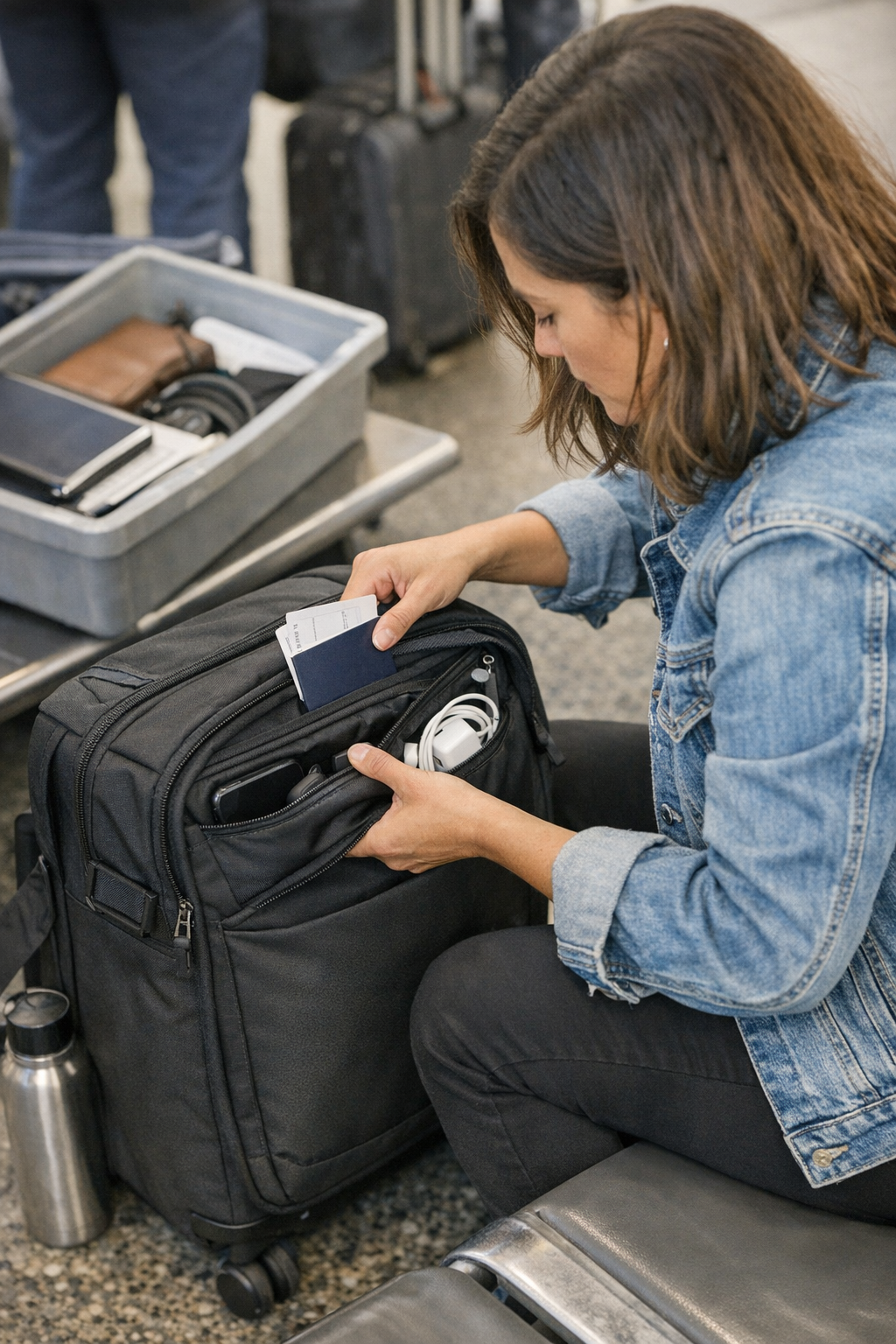
There’s a moment—usually after the second or third time you dig through your carry-on at a crowded gate—when you realize that organization isn’t the same as ease. I thought I had nailed my packing system: every charger and document tucked inside its own neat pouch, each compartment zipped and slotted with intention. It looked calm and controlled before the trip started. But the real test comes later, right after reaching for something mid-transit and missing a beat.
You start to notice it after a few transitions. The bag that looked satisfying on a hotel floor doesn’t always cooperate once you’re in motion—especially when the pressure is on, shoes half-off in the security line, or a tray begins to slide as you fumble a zipper for your passport. What’s organized loses its edge if it blocks your hand when quick access matters most. That kept coming back to me: not how the bag looked at rest, but how it handled speed and repetition.
Slowed Down, Even When Packed Well
There’s a gap between a tidy layout and a bag that’s actually easier to travel with. I kept noticing it in those small, unstaged moments—the hesitation before unzipping a pouch, the stop-start dance of rearranging items after pulling one out. Sometimes it was a stiff outer pocket jamming against its contents, or the awkward feeling of tugging through overlapping sleeves to find a boarding pass.
It looked fine at first. But the difference kept showing up—not dramatically, but as a low-grade friction that lingered. Each retrieval, each repack through security, didn’t ruin the day, but it took something from it: a sense of pace and smooth movement through all the little steps. In the moment, I’d ask why everything felt slightly off—every access requiring a shuffle, each move slowed just enough to be remembered.
Where Layering Starts to Get in the Way
It’s easy to add more compartments: pouch for chargers, pouch for tech, pocket for documents. That’s what makes the bag look controlled, even impressive sitting open on a table. But moving through airports taught me something simpler. Every extra layer, every segment meant to keep things sorted, added another decision—to unzip, to pull out, to rearrange just to reach what’s next.
Over time, I felt the tension in small repeated-use details. Sometimes it was reaching under one pouch to grab a passport, or shifting one organizer to find the charger for a dying phone. Tray transfers became a game of memory: where did I put that one thing? Items went back into the nearest spot after each search—never quite where they started. The system drifted toward confusion, always under the surface.
A Quiet Shift to Quick Access
So I let go of the idea that everything needed its own pristine pocket. The essentials—documents, charger, pen—moved to a single, easy-to-reach pocket near the top zipper. That changed the tempo of every in-transit moment. On my last trip, grabbing a boarding pass and ID at security became automatic; no need to reshuffle pouches, no choices, just movement that matched the pace outside the bag.
Boarding smoothed into one quick reach. When things went back in, there was only one zipper to find. The travel day no longer felt broken up by split-second delays I’d gotten used to. I learned that if something is used often, it belongs where it can be found in motion—not beautifully segmented, but reliably there, right when you need it.
The setup never photographs quite as cleanly now, but it finally moves with me instead of asking me to keep catching up.
If you find yourself wondering how much routine shifting could be saved by rethinking pocket logic, you’ll probably appreciate where CarryOnSupply’s design philosophy comes from: http://www.carryonsupply.myshopify.com