The Quiet Value of Everyday Storage Routines
Simple, open storage solutions outperform complex systems by preventing blocked movement and overflow, making routines easier and resets automatic.
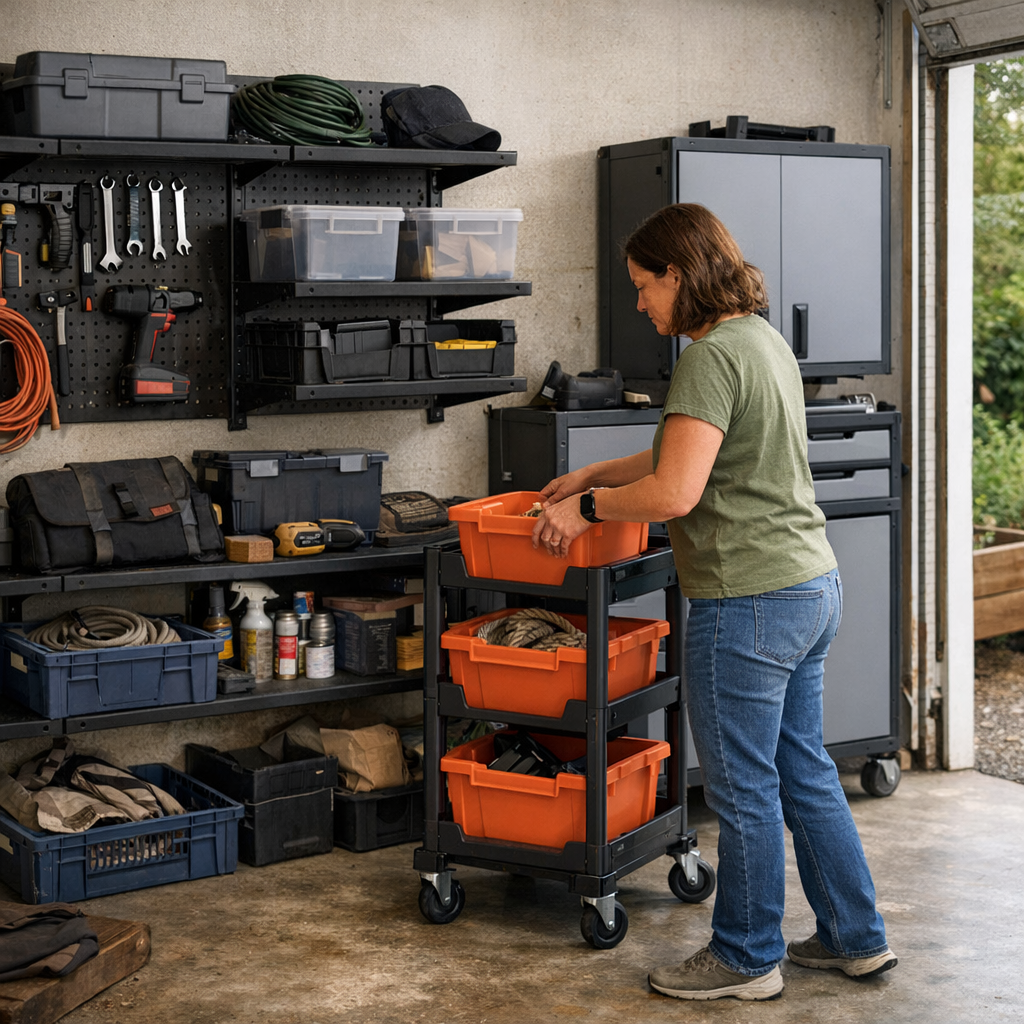
There’s a gentle relief in coming back to a workspace that doesn’t demand more attention than necessary. Most of us don’t notice when order quietly slips away—it’s the small delays, the awkward step around an old box, or the shuffle to squeeze something away after a long day. Storage, until it gets in the way, remains invisible. But the more you move through a workshop, garage, or backyard shed, the more those small interruptions start to add up.
What Looks Clever Isn’t Always What Works
I’ve seen it firsthand—beautiful grid walls, modular racks, and color-coded bins, all lined up like a catalog page. On day one, everything feels purposeful, even a little proud. You want the setup to be as thoughtful as your projects.
But over time, the reality surfaces. After a few cycles—loading, using, returning—certain layouts resist smooth workflow. A shelf just a few inches too low becomes a magnet for forgotten gloves. That narrow cart, efficient at first, ends up blocking a path on busy days.
You don’t spot it immediately.
But you feel it.
The initial “wow” factor fades. What matters most is whether the daily routine flows easily or constantly stalls.
Friction Grows in the Subtle Places
It’s rarely about how many compartments or clever tricks there are. Instead, it’s whether the setup lets you move—without thinking, detours, or silent negotiations for space.
Sometimes the simplest, most ordinary shelving works better than all the custom racks combined. I once switched from a complex, perfectly measured modular system to a single open shelf along a clear wall. It didn’t win any style points. But something changed: I stopped rerouting, stopped juggling overflow, and found a landing spot for anything, anytime.
A system that blends quietly into the background tends to last the longest. There’s comfort in knowing that when your hands are full or your energy is low, putting things away requires no extra thought. Over time, these “boring” setups outperform the showpieces simply by making movement easier.
The Invisible Reset
That’s the key difference. It’s not how a storage system looks, but how little you have to think about it. When the return flow is clear—when there’s no decision to make or bin to rearrange—clutter doesn’t get a chance to build. The reset becomes automatic, almost effortless.
You might not notice the change at first. Maybe your entryway isn’t blocked anymore, or gloves finally find a home instead of lingering in corners. It’s a quiet shift: the area feels calmer, even if nobody else notices.
If you ever pause, wondering where to tuck something—or worse, pile it “just for now”—that’s usually the sign. Often, the simplest shelf is the only solution you keep using.
It’s funny how the most important things quietly work without drawing attention.
These thoughts came together while rethinking a small workspace reset.



