The Subtle Door Habit That Changed Our Dog’s Calm
A quiet, fully latched door close and proper bed placement reduce distractions, leading to smoother, less interrupted dog rest and routines.
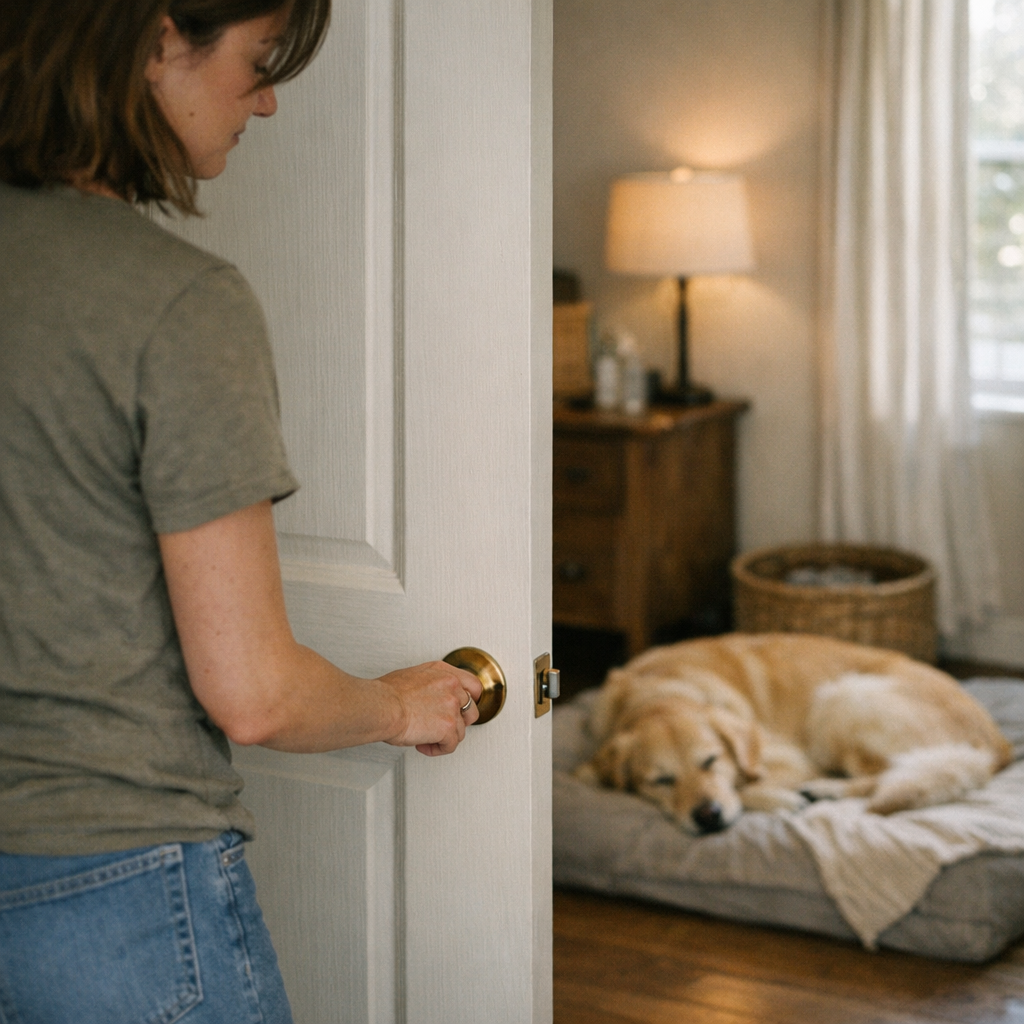
Some routines take time to show where they quietly wear us out. It’s easy to think that if the crate or rest space looks peaceful enough, everything else will follow. But after many afternoons trying to cue calm, I noticed it wasn’t that simple. The sound of a half-shut latch or the faint click of the door springing back a little—these felt minor until it was just me, my dog, and a stretch of supposed quiet that never quite arrived.
You notice it after a few mornings. There’s a soft choreography to prepping the rest corner: smoothing a blanket, scooping up a stray toy, waiting for the right pause before shutting the crate. But a misjudged close, a rushed door, or even letting it hang open by mistake always showed up later—paw shuffling, a nose pressed to the gap, ears tracking every echo from the kitchen. It looked fine at first. Still, these moments added up in the way the routine never really let both of us fully step back.
The Pattern That Doesn’t Change on Its Own
It would be easy, looking back, to blame the unsettled rest on my dog’s personality or some invisible hallway stimulus. But after repeating the pattern enough times, I saw it didn’t matter whether the house was busy or silent—if the crate door was left imperfectly closed, the interruptions returned. A door left even half-ajar turned the crate from a place of pause into a front-row seat for every shuffle, cupboard door, or dropped dish.
That was the part that kept coming back. Not a dramatic problem or full agitation, just a half-rest. My dog would settle for one or two breaths, then break the pattern, shifting or glancing toward the opening, as if always half-waiting for me to fully leave the space. Most of the time it felt minor. But the cumulative effect was a rest session that never gained solid, settled weight. Even when he closed his eyes, I could feel the alertness beneath.
More Than Tidy Corners
Nothing made this clearer than the days I made a point of clicking the door fully shut—not with a bang, but with a soft confidence. The difference showed up in smaller ways than I expected: fewer head lifts around footsteps, no more nose poking at the seam, and quietly, my own willingness to step away from the area for longer stretches. I kept thinking, "This looks almost exactly the same as before." It wasn’t.
A tidy-looking rest space—bed straight, toys corralled, bowl out of the walkway—can easily hide a flaw in the flow. If the close is unreliable, the dog’s attention never releases. Rest stays fragile, easy to break by the smallest sound or movement. Every time I rushed the setup or left the gap, the same signs emerged: the rest didn’t really “take”; cleanup got delayed; the next transition felt heavier.
Somehow, it became one of those nearly invisible differences between looking organized and actually making life easier. What I kept relearning in these small repeated moments is that ease isn’t just about how a space looks when you’re done. It’s about the little signals, the feel of the pause, and the way routines either collect friction or let it go.
Settling In
There’s a tendency to underestimate how much these details matter. The right latch, the quiet close, the way you turn away—isn’t it only a few seconds? But over a week or a month, the little frictions add up. Before making more complicated changes to the routine, I found that simply closing the crate door softly and fully—actually hearing the latch settle—did most of the heavy lifting. The rest space stopped being a source of low-level tension. Nights felt less dense, and transitions relaxed.
It wasn’t about achieving perfect calm. Instead, I found myself stepping less carefully, not listening for every movement in case my dog broke rest again. Once the door was always closed the same gentle way, the pattern mostly kept itself going—nothing big, just less disruption, more real pause.
Small routines teach you that a lot of household friction starts with the one part you keep rationalizing away. Day after day, it turned out the door and how I closed it was the only thing really asking for an adjustment. Harder to see than a toppled bowl or a trail of toys, but just as quietly persuasive.
Sometimes the smallest fix is the one you keep coming back to. If there’s anything to take from it, maybe it’s that the routines that survive are the ones you barely notice anymore—until something brings you back to the latch, the click, and the next full exhale.
For anyone who wants to see how small changes in setup can matter, there’s more here: http://www.dogpile.myshopify.com



