The Subtle Struggle of Carry-On Rhythm in Everyday Travel
Even well-organized carry-ons can slow you down if zones overlap; separating items by access frequency keeps travel transitions smooth.
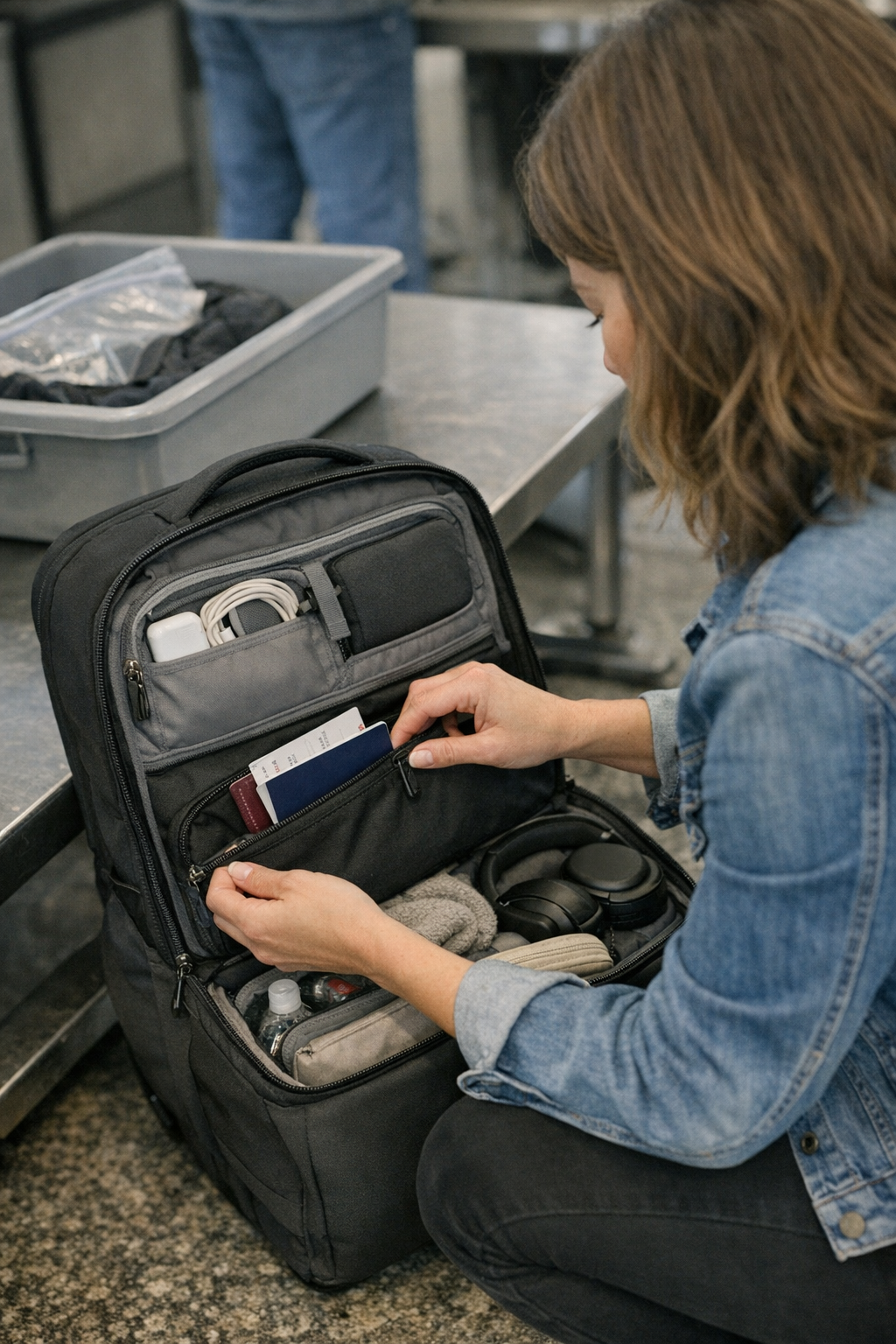
It took more flights than I expected before I realized what was slowing me down with my carry-on. Standing in line, fumbling to pull out boarding documents while a charger pouch blocked my reach, I kept thinking: this bag was supposed to be organized. I had carefully packed each item into its own section—stacked neatly, zippers closed with that satisfying sense of order. But that order never lasted past the first security checkpoint. By the time I was juggling trays and shuffling items at the gate, I saw the real issue: it wasn’t how much I packed, but how things nested and overlapped inside, forcing awkward double-handling when I just needed a small essential quickly.
The Real Shape of Movement
At home, everything fit perfectly. Pouches slid into place, pockets aligned, and the bag stood upright like it was made for efficiency. But the problem showed up the moment I needed to grab something small on the go. One priority item was always blocking another, turning a simple reach into a two-step dance.
This was the recurring frustration. No matter how tidy it looked, the actual movement inside revealed flaws. The mental drag of fishing out documents from under cables, then trying to return everything the right way before boarding, wore on me far more than any visible mess ever could.
Access Versus Appearance
On early trips, I chased that neat, clipped-together look: passport stacked, cable pouch zipped, comfort items tucked in their own envelopes—everything picture-perfect. But real travel isn’t static. Security lines, overhead bin juggling, seat requests—it all breaks down the initial order.
After a few transitions, the problem became clear. Items that needed to be grabbed fast ended up buried deep. The carry-on’s rhythm slowed. I began rearranging—giving important documents their own easy-access pocket, always within reach and never blocked by tech gear or toiletry bags. The bag looked less “sculpted,” but it worked smoother and felt calmer every time I used it.
Small Shifts That Change Everything
The change wasn’t dramatic, but it was consistent: less effort each time I moved through the airport. Headphones easy to grab, passport exactly where I left it. Pouches stopped competing for space. Repacking felt less urgent and chaotic. Prioritizing zones over perfect compression made the bag feel lighter, even when fully packed.
This shift—from tightly stacked to functionally separated—meant one less zipper dance at each checkpoint. Less guessing which pocket held my boarding pass. It lost the flat, flawless look but matched the real pace and flow of airport movement better than any packing video promised.
Trips feel more manageable when a bag moves with you, rather than tries to control you. Sometimes the quietest change is the one that makes everything easier.
If you’re curious, I found a few setups that helped over at CarryOnSupply.



