Unseen Risks Beneath the Walls We Tear Down
Cutting order for reciprocating saws in demolition affects safety, speed, and tool life. Starting with outer material removal reduces risk and delays.
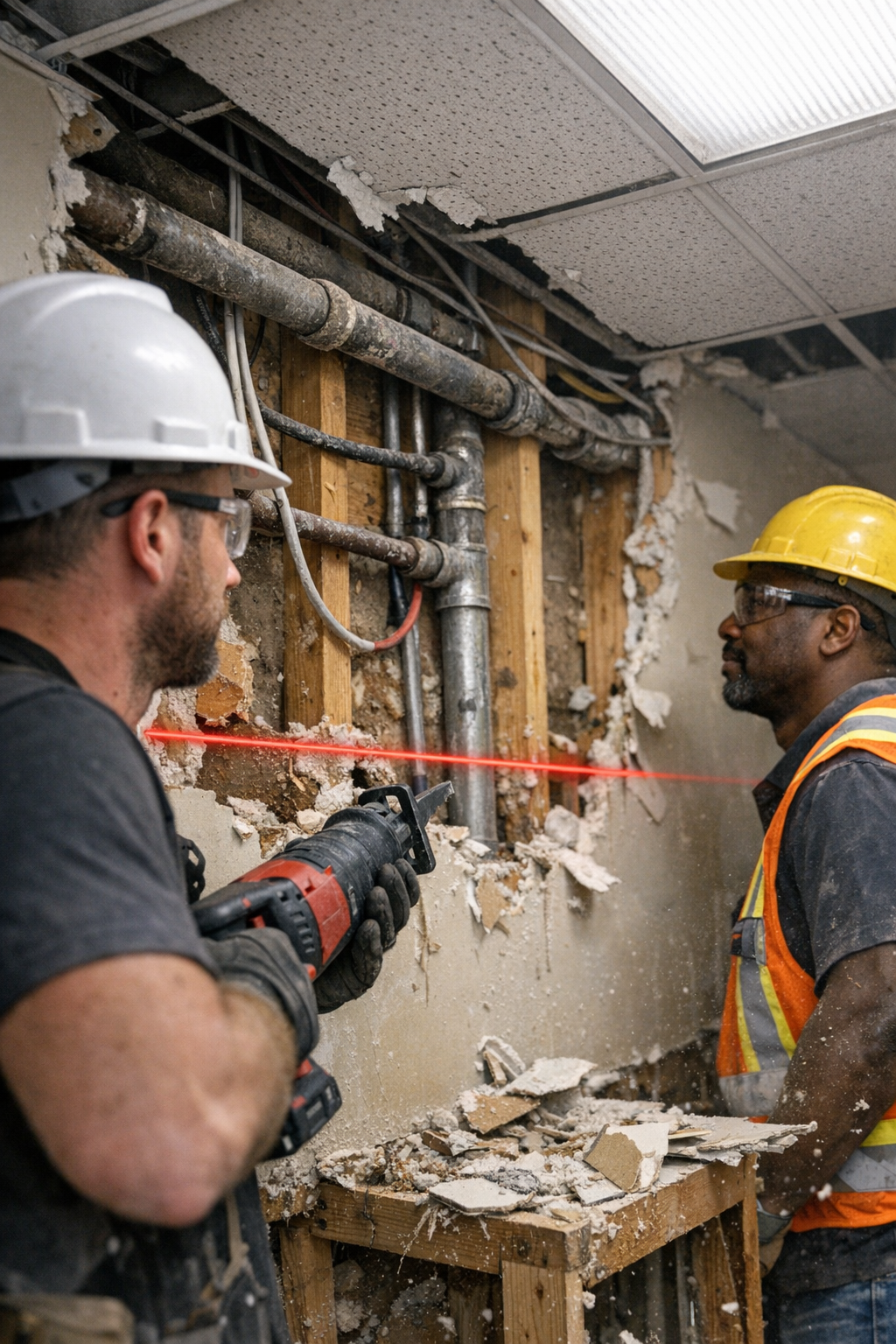
Most days, a demolition site flows with a steady rhythm. There’s the ringing start of the saw, muscle-memory movements, and a sense of momentum as drywall and studs fall away. It’s the kind of work where instinct and order blend into something quietly satisfying—until you feel it falter.
You don’t notice the cutting order at first. Not really. Until a blade stalls, or a sudden screech signals metal behind the plaster, and the job dissolves into stops and starts. That’s when the sequence you chose—almost invisible—makes itself known in every snag, every cloud of debris.
When “Just Cutting” Isn’t Enough
There’s a temptation sometimes, when faced with an exposed wall, to think any cut will do. The materials all lay in front of you; the urge is to move fast, to make progress obvious. At first, it all feels the same—saw through drywall, let chunks of wood and metal drop where they may.
But then a pipe jumps the saw, or a hidden cable throws sparks. The energy shifts. You don’t notice it immediately.
But you feel it.
One wrong cut, and you’re kneeling in dust, fiddling with another worn-out blade. There’s a thin line between a smooth tear-down and a slow unraveling—the difference is often just the order you decide to follow.
What Revealing Surfaces Can Reveal in You
I’ve seen crews work in chaos, diving past layers instead of peeling them back. I’ve done it myself, when urgency overtook method—sawing toward what I thought was the shortest path. Every time, I paid for it: a snapped blade, a drip of water from a pipe I missed, the weird silence after nicking something electric.
Then came a quiet change. Instead of diving straight for the goal, I’d stand back and run a laser level along the drywall—maybe 48 inches up, where switches hide. It was a small pause, but everything shifted. Teasing away the first layer felt less like wasting time and more like adjusting focus, like tuning an old radio until the song comes in clear. The mess got smaller, the cuts more certain.
It’s strange how the right order uncovers not just wires and plumbing, but a certain calm. The job becomes less about fixing mistakes and more about guiding the work with a gentle hand.
The Difference a Moment Makes
There’s always that quick moment—a decision at the start that shapes the whole day. Choose haste, and the work gets harder, not easier. But hold back just a little, check the layout, clear what hides beneath the surface. The next steps fall into place.
I started noticing how rarely I swapped blades, how the saw seemed to hum instead of fight. There was less backtracking, fewer stains on my sleeves, less tension hanging in the dust.
Maybe it’s just demolition. But sometimes, the change you feel comes not from muscle, but a sequence you almost forgot to notice.
These thoughts came together while quietly watching the patterns unfold on a renovation I was helping a friend with.



