When a Cart’s Wheels Decide the Flow of Home Life
Locking wheels anchor mobile carts, preventing drift and clutter to keep entryways clear and maintain smooth daily flow.
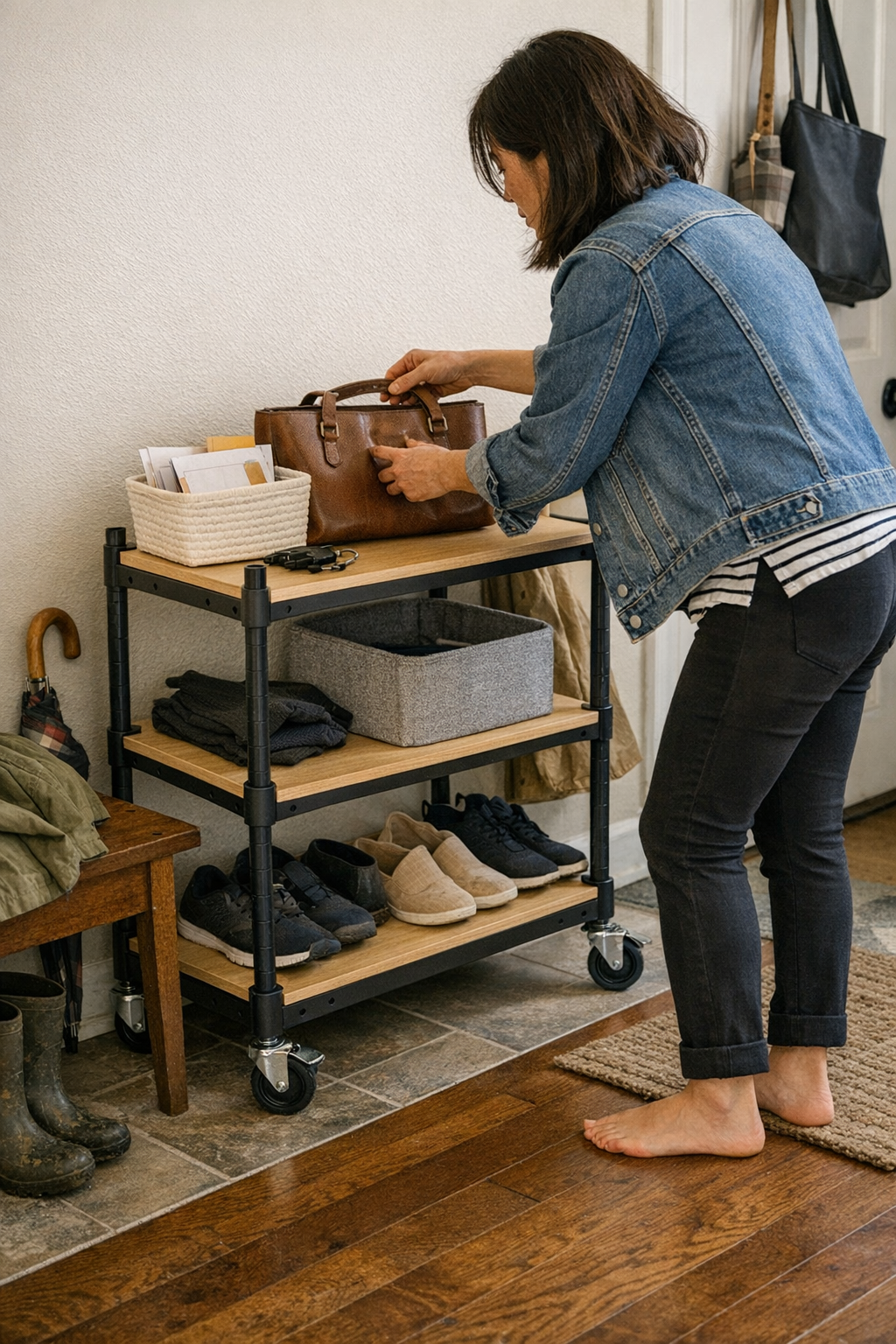
There’s a particular edge to the entryway at the end of a dense workday—bags hit the bench, shoes tangle at the threshold, and your only thought is making it inside without tripping over what last week’s routine left behind. That’s where I first noticed the shift: the mobile cart by the door, designed for quick drops and shoe overflow, wouldn’t stay anchored. Not in an obvious instant, but through small daily frictions that crept into habits and grew with every arrival, departure, near-miss, and slow drift across the passage.
The Shape of Movement in Spaces Meant for Passing Through
Transition spaces aren’t neutral; they reveal themselves through the way things repeatedly move—or don’t. The difference between a cart that stays put and one that doesn’t shows less in how it looks when carefully placed, and more in the gaps that form as family life spills in.
You don’t notice it right away. It begins with someone nudging the cart to make room, or leaning on it for balance while untying boots during a rainy morning. Soon, instead of functioning as a flexible landing spot for odds and ends, the cart drifts into the narrowest part of the passage. Bags tip over. Shoes scatter further out. This mobility, initially helpful, turns on itself—replacing simple routines with a cluttered scatter that takes more time to fix than it ever saved.
When Wheels Become Anchors
The small relief that comes with locking the wheels is subtle, but it settles the space. There’s quiet satisfaction in knowing the cart will be waiting exactly where you left it that morning—no slow shuffle inward, no pooling of bags at unintended edges. Once the wheels lock, the boundary between entry space and living area feels less imaginary. There’s a gentle permission to let arrival clutter land just at that seam, never drifting further.
That’s what I kept coming back to—the way a locked cart gave definition to a boundary I’d only half-noticed before. The grout line on the floor. The way the area holds its shape against the day’s rush, even as threshold traffic piles up or everyone rushes out within minutes of each other.
A Small Change That Quietly Multiplies
The practical realization surprised me with its simplicity: mobile carts without proper locks demand quiet, constant attention—always needing to be pushed back, straightened out, or tucked away again. The fatigue built slowly, not from the clutter itself, but from the micro-adjustments required just to keep the passage clear.
But you feel the difference once the reset stops being constant. Shoes stay lined up by the wall. The cart stops edging into the walking lane or bumping the bench. Daily flux continues, but the passage retains its shape—even amid wet umbrellas, backpacks, or the chaos of a busy morning. It’s a kind of gentle order, sturdy but unobtrusive.
These small observations tend to linger. If you’re curious where such changes might start, sometimes it’s enough to look here: http://www.betweenry.myshopify.com