When a Slight Warp Changes the Whole Cut
Maintaining router base plate flatness prevents alignment errors and defects; checking and replacing warped plates keeps results consistent and reduces rework.
There’s a certain satisfaction in watching a router glide smoothly down a length of hardwood. The sound, the scent, the crispness of a fresh edge. But sometimes, in the middle of a long session, a little frustration starts to build — a barely visible misalignment, just enough to unsettle an otherwise even cut.
You don’t notice it immediately.
That’s the strange thing about tools: so much depends on details that lie just out of sight. The flatness of a router’s base plate, for example, quietly decides whether your day unfolds with steady efficiency or stutters into unexpected fixes. The line between a job well done and hours lost in reclaiming mistakes can be as thin as a paper gap under a straightedge.
When Flat Isn’t Really Flat
At first, every router base plate feels dependable — fresh, solid, perfectly mated to its tool. But edges and hours have their way with metal and plastic. After a few projects, fatigue and repetition settle in, and the workpiece tells you if something’s wrong: uneven seams, small ridges, those little burn marks along a delicate profile.
Sometimes you think it’s your hands. Sometimes it’s the wood fighting back.
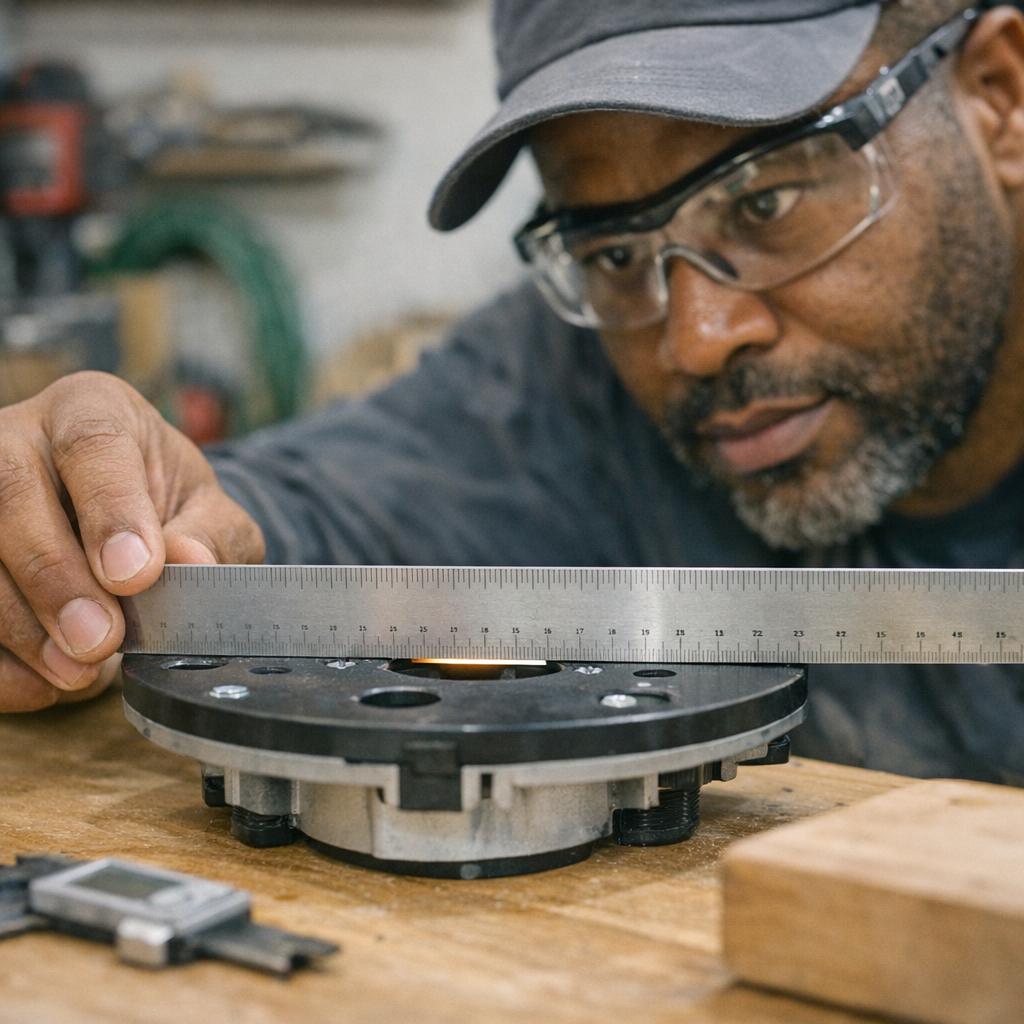
But then, a subtle unevenness in the tool’s route hints at something off. I’ve seen how a 0.2mm gap under a metal straightedge (barely a fraction of a fingernail) can lead to hours of unplanned sanding, or worse — the steady accumulation of mistakes that no finish can quite disguise.
The Realization Arrives Mid-Session
The base plate rarely becomes a problem at the start. It tends to reveal itself halfway through a long, focused edge run — maybe on the third or fourth panel in a row. That’s when wrist and shoulder begin to tire, and a once-straight line picks up a subtle dip. Now the cut seems to wander, ever so slightly.
You don’t notice it immediately.
But you feel it.
That edge that began sharp and proud now calls for chisels and more sandpaper. The tool rocks, just a little, and what should have been a straightforward process turns fussy. By the time you realize it, the possibility of a smooth finish has already leaked away, one fraction of a gap at a time.
Catching It Before the Mistakes Stack Up
At some point, I started laying my router’s base plate onto a steel surface, running a finger beneath a straightedge just to see if the daylight peeked through. It takes almost no time — a kind of small ritual, like tying an apron or checking that a blade is sharp.
That moment always resets my attention; a reminder that the surest route to consistent work isn’t cleverness, but noticing what’s changed before it matters. The difference was immediate: edges stayed truer, seams pressed together with less persuasion, and the time spent tidying up dropped much closer to zero.
It’s the sort of adjustment that doesn’t clamour for attention, but quietly keeps everything else running well.
Some lessons arrive quietly, disguised as ordinary problems. And sometimes the tiniest check — like passing a straightedge across a worn router base — is the thing that lets everything else work as it should.
These thoughts came together while sorting tools at the end of a long Friday noir.