When a Tidy Workshop Hides Everyday Frustrations
A setup that appears organized at first often hides subtle barriers that sap productivity and safety with repeated use.
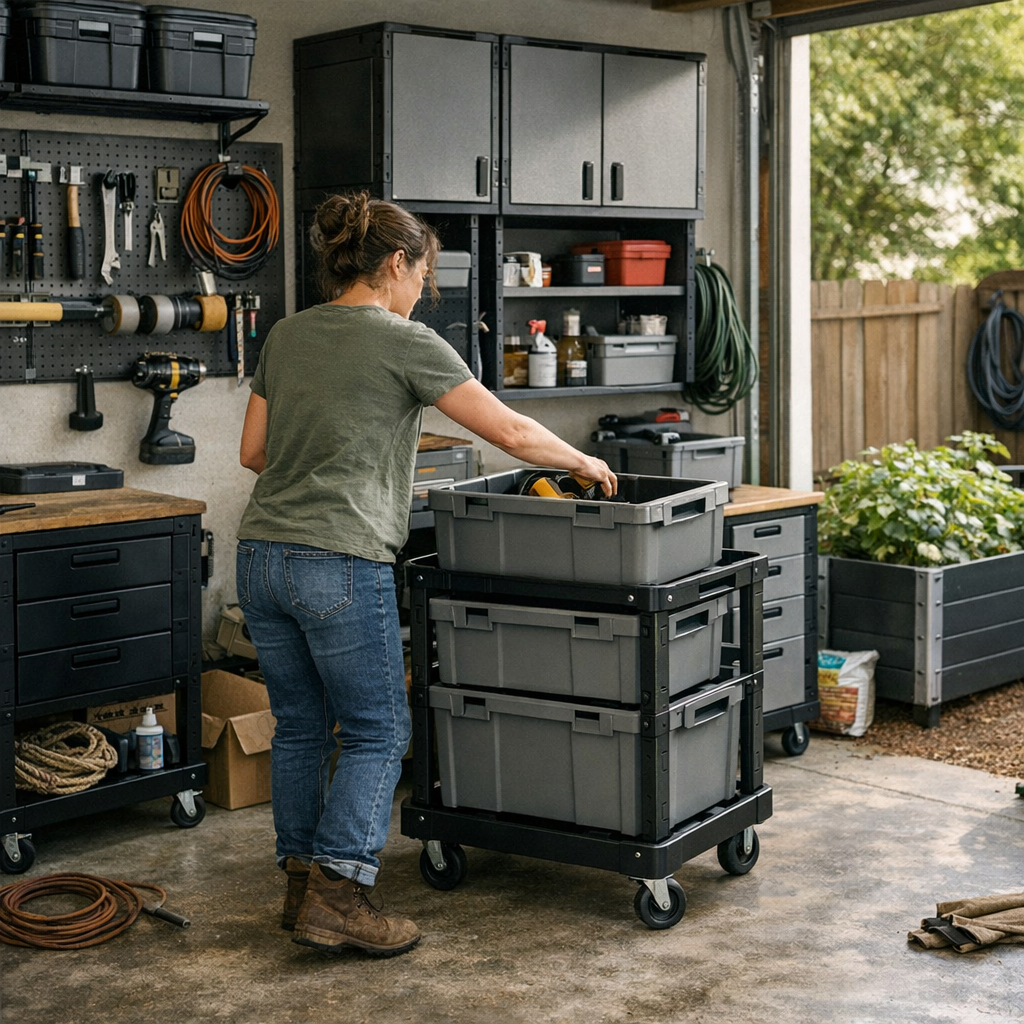
It’s easy to overlook the small snags in your garage routine—until your foot catches on something left out, or a cabinet drawer grinds open just enough to block your path. A garage can look perfectly organized, with neat lines and stacked bins, but the real tension shows up only in motion. Modular storage, wall-mounted units, mobile carts, and floor-based setups work—until they don’t.
We often focus on making rooms look tidy. An “after” photo with every tool squared away and carts rolled flush feels reassuring. But the reality of a workshop or garage is lived through repeated, often frantic dashes in and out, juggling cords, grabbing what’s needed, and trying not to trip.
You don’t notice it at first.
But over time, you feel it.
When Tidy Stops Working
A space can look perfect after a morning spent organizing: containers labeled, carts lined up near the wall, everything easy on the eyes. For a moment, it feels finished.
But things shift the first time you’re in a hurry. A cabinet drawer doesn’t clear the natural walk path by an inch or two, forcing you to sidestep. Mobile carts start blocking one another. Projects interrupt their flow—bins don’t return where they belong, tools pile up in awkward corners, and even clean walls collect clutter.
Little by little, efficiency leaks through the cracks.
It’s hard to see how small obstacles pile up until you move through the space day after day. What felt neat in an afternoon becomes a week’s worth of clutter migration.
Real-Life Clutter Isn’t Static
There’s a difference between how a space looks unused and how it feels when busy.
Picture a one-car garage optimized with cabinets installed, mobile carts ready, and hooks lining the walls. For a while, it’s calming. But routines change. The carts begin overlapping, a cabinet blocks the spot where you sweep, cords drift across walkways.
Small design choices reveal their impact: blocked lanes, doors swinging into your path, lost floor space behind what once seemed useful. Sometimes it’s just a few inches—enough to interrupt your workflow, enough to cause a pause every time you move.
You notice when you repeat a step or pause to work around storage that’s supposed to help.
Small Changes, Unexpected Freedom
I remember moving one cabinet down by just a cart’s width along the wall—a palm’s gap really. Suddenly the mobile carts returned home without pinching the flow; nothing got stranded mid-traffic. Even that minor adjustment let the space exhale—less frantic, less prone to accumulating “just for now” clutter.
It’s tempting to treat storage as a set-and-forget solution. But real relief comes from thinking about how you move, not just how you store. Sometimes the best setup is less about adding bins and more about quietly tracing the simplest path between what you need and where you want to go.
After several projects, it’s clear: the most useful garage isn’t the one with the tallest stacks or most containers. It’s the one where every return and reset happens without friction—especially on busy days when your mind is somewhere else.
There’s a quiet difference in a space that flows—one you barely notice until you realize what’s missing.
These thoughts came together while rebuilding a corner of the shop for spring.



