When a Walk Feels Like Home, Not a Hassle
A pet travel bag may seem ready at first, but repeated walks reveal friction; separating essentials reduces delays and eases travel.
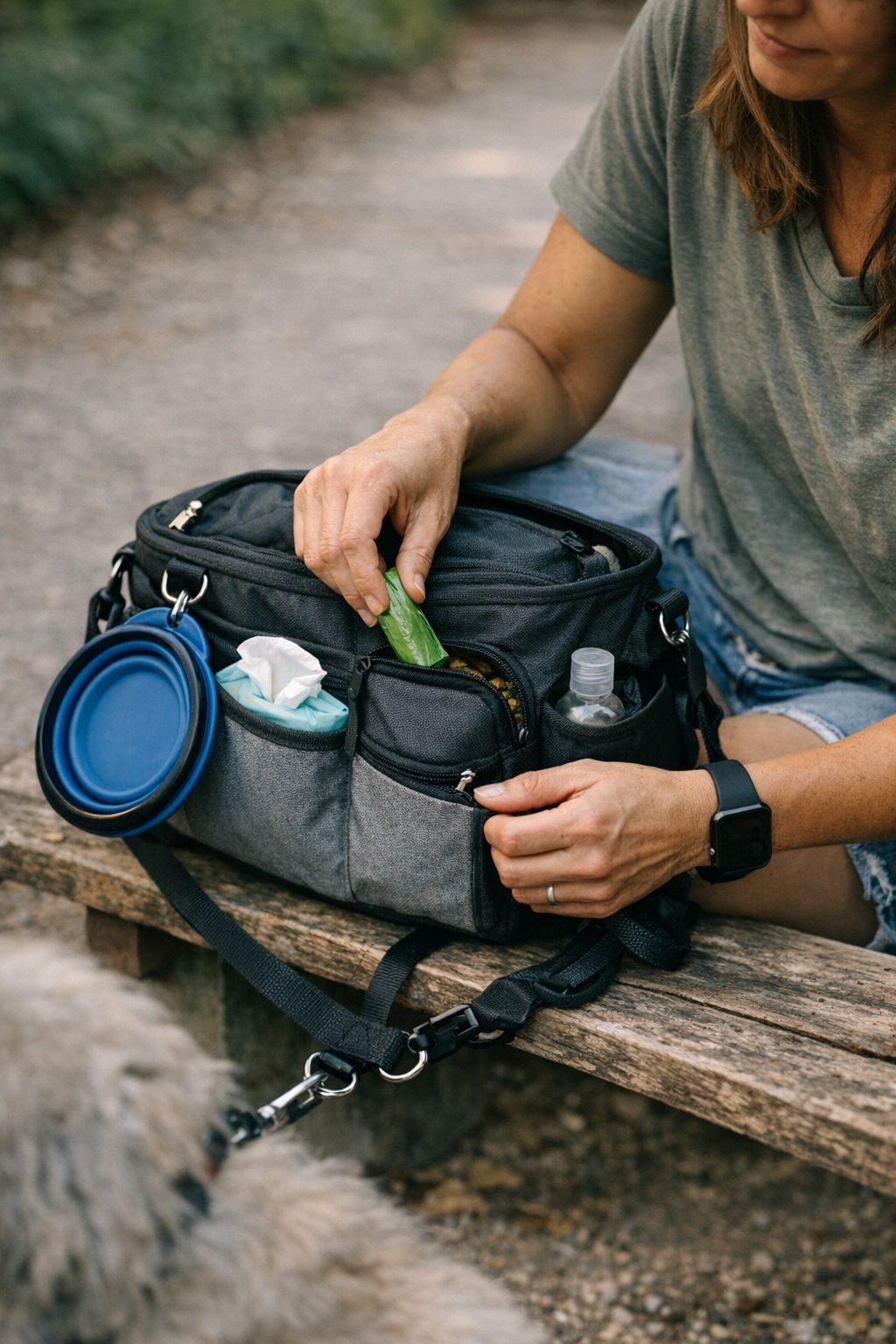
Every pet carrier I’ve tried looks organized enough at first. Zipped up and standing upright, each item in its compartment, supposedly ready for the trip. You feel prepared. But it doesn’t take long—even on a short loop—for small snags to reveal themselves. There’s a difference between how these kits look at home and how they behave in motion, especially when you’re back at the same corner for the third day in a row and the pauses begin to build a rhythm of their own.
You don’t notice this gap straight away. It’s only after a few restarts—after the leash tugs while you’re reaching for wipes, after the treat bag gets pinned under the folded bowl a second time—that it sinks in. What looked neatly structured an hour ago has started to get in its own way.
The Gap Between Order and Movement
On paper, there’s a quiet satisfaction in seeing every pouch lined up and filled: the dedicated water bowl, the strap-on bag, the stash of cleanup pouches—it all seems under control.
But as you repeat the routine, reaching for the same item with one hand while steadying everything else, you notice what resists the flow. Wipes migrate beneath dog snacks. A simple tug on the leash gets tangled with the bowl’s clip. The bag you thought would keep things simple now demands a reshuffle at every stop. Small overlaps start to matter; order dissolves not in chaos, but in a slow, consistent drag.
That was the part that kept coming back: not the obvious mess, but the subtle slow-down every time you moved.
When Setup Meets Real Use
After a few trips, the compartment that made sense in your living room is buried somewhere between tissues and treats, shifting further away with each jostle and restart. Cleanup pouches slide to the side, always just out of reach. You find yourself crouched by the curb, nudging the bowl aside just to get at the wipes.
Movement presses everything differently than stillness does. Items that stayed in their lanes at home start to press and migrate, building pressure points you barely notice the first time—but can’t ignore after it happens again.
It looked fine at first. But the difference kept showing up.
Making the Smallest Change Count
In real use, one practical decision has made more of a difference than expected: separating the essentials, not stacking them. Putting wipes in an outside pocket, or moving the bowl away from the leash clip doesn’t just change the look—it softens that repeated pause. One reach really is easier than two.
It’s not about swapping bags every time. Sometimes a quiet tweak—a dedicated zip here, a fixed pouch there—clears just enough path so that each return to movement feels less like starting over.
What seems like an organizational detail actually lets the whole trip breathe. Each repeated stop and start tells you more than the first setup ever did.



