When an Open Carrier Shapes Quiet Moments at Home
Keeping a cat carrier open helps reduce feline stress, but placing it away from feeding and walkway areas prevents added daily work and friction.
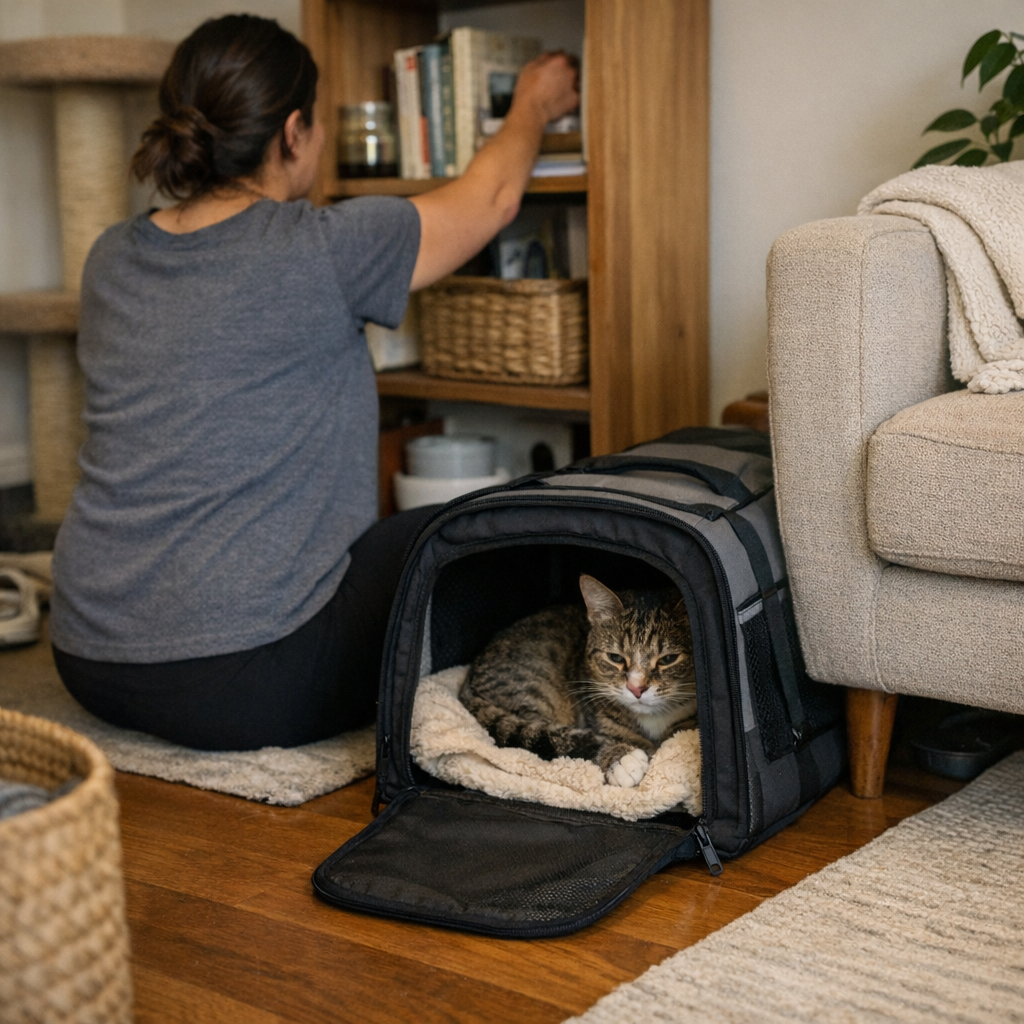
It seemed harmless at first—leaving the carrier open, tucked along the living room wall, right in the mix of daily routines. I’d heard it helps cats feel less trapped when travel comes around, and it made sense: keep the space familiar, let it become part of the backdrop. For a week or two, it was just another soft corner in the house. Only later—after a spilled water bowl met a half-crumpled mat angled against the carrier door—did I start to notice the hidden catch. These things blend in until they don’t.
Comfort Is Quiet Until It Isn’t
The open carrier, at first, felt like an ordinary upgrade. My cat wandered in and out, bedding got re-shaped, and the living room didn’t look any messier than before. It honestly felt good to let the carrier be a resting spot rather than hauling it out from closet exile right before the next vet visit. But you notice it after a few resets. The food mat creeps up against the open door. Bedding shifts closer to the water dish. What looked tidy on day one collects fur in the grooves and lingers just out of the way—until suddenly, it doesn’t.
Where All the Reset Happens
The careful balance slipped a little each day. A familiar paw swiped a toy just beneath the door’s hinged edge, and reaching it meant a contortionist move between a refilled water bowl and a pile of bedding that wouldn’t stay put. After every cleanup—wipe, sweep, push things back—there was a new pocket of mess to deal with. That kept returning. I found myself adjusting the carrier or the mat nearly as often as wiping up tracked litter or stray food bits from the tile. Each fix was a minute here, a shuffle there, adding up quietly.
A Small Shift That Stayed
It looked fine at first. But the difference kept showing up once I moved the carrier just beyond the main run of daily activity—no longer crowding food bowls, not stealing space from supply baskets, bedding safely away from the water’s edge. The friction faded. Letting routines overlap less—giving each zone breathing room—did more for ease than any single object ever could. The rest corner, kept a small distance from traffic, stayed restful. Cleanup was more straightforward, and tracked litter kept to its own side of the room. Sometimes it’s not about adding something new; it’s about where it quietly stays put.