When Backyard Corners Become Clutter Magnets
Corner clutter happens as single-spot storage builds mess quickly under shared use; splitting storage into zones reduces pileups and eases upkeep.
Why Every Tool Ends Up in the Same Backyard Corner
After a few weekends working in a shared yard, you start to notice something familiar: no matter how often you straighten up, the tools always seem to end up in the same corner. At first, I thought it was just bad habits or that no one wanted to be the person responsible for returning the shovel. But over time, it became clear this was less about laziness and more about how our storage setup interacted with our routines.
How Clutter Quietly Collects
Everything tends to land in the easiest spot—especially after a long session of pruning or digging. For us, that spot was the bin by the back gate, a familiar drop zone. Everybody naturally gravitated there, tossing in clippers, gloves, and a wrench or two. Those first days after a cleanup felt promising, but the pile would creep back almost overnight.
It wasn’t about laziness; it was the path of least resistance. When everyone’s day ends at a single access point, that spot absorbs the flow of returns. Tools got layered: a rake handle placed sideways across hand tools, and by the following weekend, the thought of sorting it all again felt heavier than it should. The pile built up with each round of use, and the workload subtly shifted toward whoever got there first.
The Trouble with One-Spot Storage
At first, it seems logical: one big bin or a row of hooks to keep everything organized. But real life rarely sorts itself so neatly, especially outdoors and in shared spaces. Small items like nozzle fittings or garden gloves would get buried beneath larger, heavier tools. Retrieving anything quickly became a mini excavation, and the system intended to make life easier became a gravity well for clutter.
It wasn’t just about messiness—it was about ongoing workload and spillover. That “convenient” spot kept getting more crowded, and the edge of the yard, less often used, stayed clear. The structure intended to help quietly made the reset harder, subtly altering how and where people chose to return tools. The yard’s own logic was quietly rewriting our good intentions.
How a Split System Changes the Routine
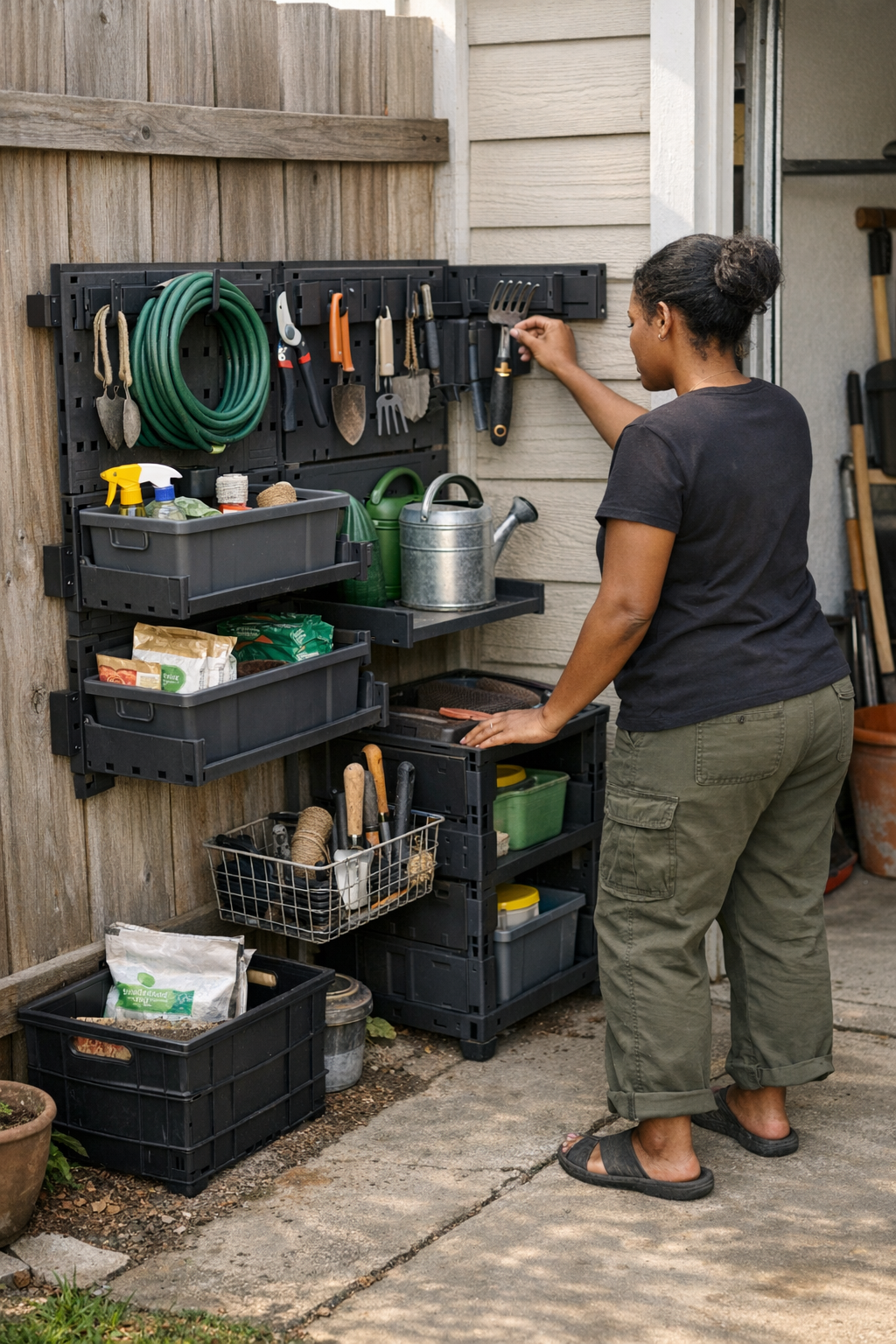
Realizing this simple but important detail changed everything. Instead of a single communal return spot, dividing storage between two wall-mounted panels—one near each main path—spread out the pressure. Returning tools meant taking a single easy step rather than a walk across the yard.
After the change, a calm settled. The pileups didn’t vanish entirely—sometimes gloves still went missing—but the clutter cycle reset before it could spin out. Different users gravitated naturally toward their closest storage section, preventing messy clumps from layering into the same tired spots. Paths stayed clear, and fewer reminders to reset were needed.
The smallest shift, making it easier for everyone to put tools away without overthinking it, made all the difference. This reflects the reality of small-yard setups, where shared use, limited space, and repeated resets need storage solutions that adapt to actual movement and flow.
These reflections come from regular afternoons spent tending a small backyard space and watching storage in action, grounded in the practicalities of wall-mounted systems, modular structures, and outdoor utility storage.