When Bathroom Lights Fail Quietly in Everyday Steam
Ignoring steam in bathroom lighting causes dimming, stains, and failure; bathroom rated lights maintain steady output and resist moisture damage.
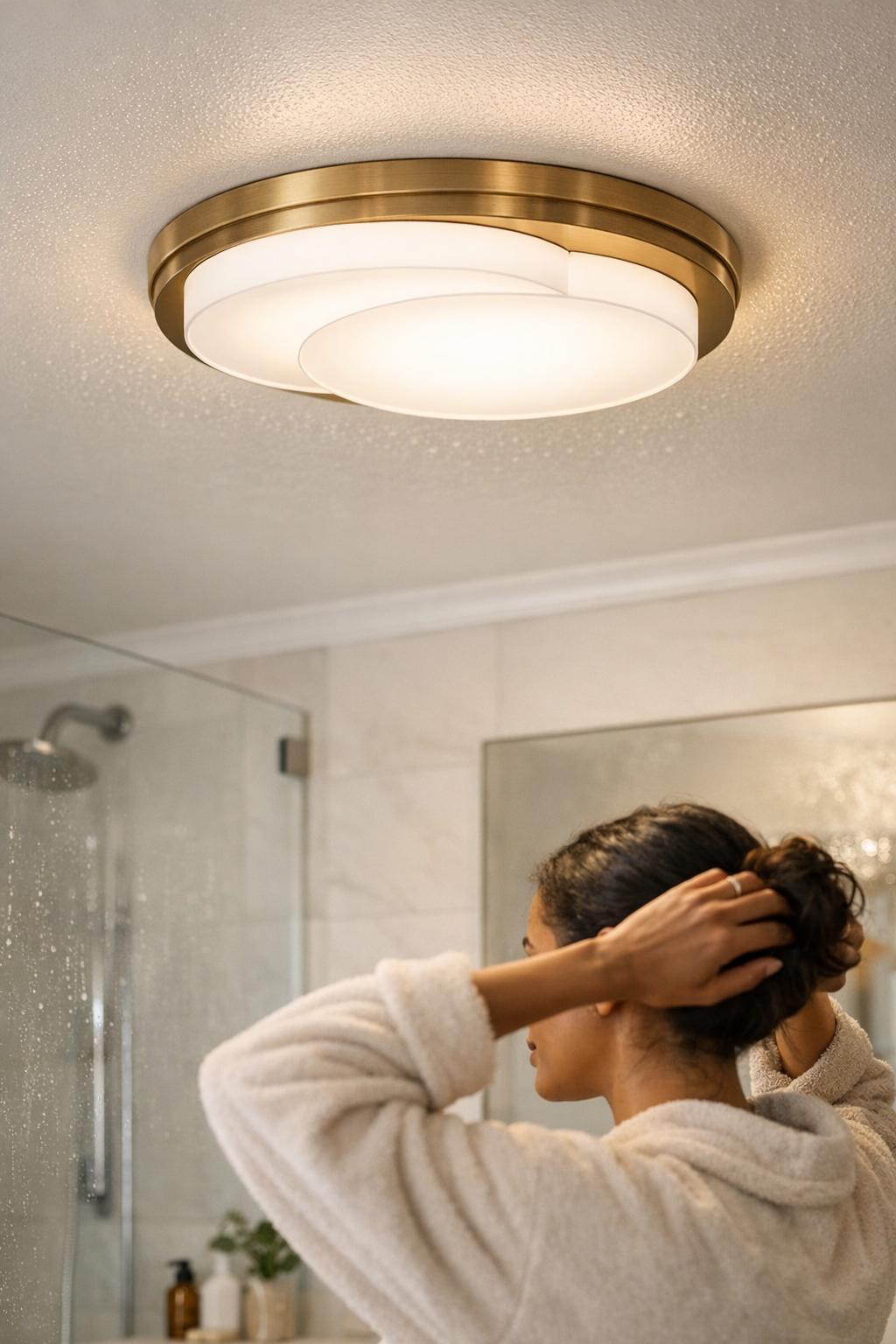
There’s a kind of clarity you expect in a bathroom—especially in the morning. Standing half-awake over the sink, the simple routine of a light turning on brings comfort: it reveals corners, spills evenly across the countertop and mirror, and creates a clear, consistent space. For months, the fixture overhead looked fine. But gradually, tiny details started to feel off: the glow dulled, a pale streak appeared along the ceiling, cabinets caught awkward shadows.
No one talks much about lighting in this way. You just begin to notice—bulbs taking an extra second to reach full brightness, a dim haze fogging the lens, rough edges on mounting brackets you hadn’t seen before. Living with the same setup every morning, I kept expecting it to simply work. But it slowly drifted.
Where the Steam Settles
I didn’t see the problem at first. The routine was the same: shower, reach for the towel, squint into the mirror.
But steam isn’t just a momentary blur. It’s a slow, persistent presence that pushes through seams and screws, finding every small gap. Over time, my so-called “standard” bathroom light did what I thought any basic light would do—until it didn’t.
Condensation gathered along the rim. The hardware at the edge of the lens grew orange and flaky. When I wiped the trim, a stubborn film remained. That was what kept drawing my attention—not just a visible stain, but a quiet wearing down by moisture settling in for the long haul.
Seeing the Pattern
Some design differences stay invisible until daily life exposes them. Most ceiling fixtures in my home looked almost identical—low-profile, plain, minimal. One stayed sharp at the edges and dry inside, always bright at full flick. The other steadily gathered mist.
At first, it was subtle: a pale yellow outline in the plastic, a spot where light faded unevenly. But once you notice it, the fixture never looks the same. I found myself glancing up whenever humidity rose, almost waiting for the shadow at the edge to grow.
There was a stretch of weeks—changing bulbs, scrubbing hardware, tightening screws—until the reason became clear: the times the fixture lasted were the times it had a real seal, not just a surface finish. That small gasket or shield wasn’t just decorative. It decided whether the light worked reliably or became something to live with reluctantly.
A Different Kind of Routine
The lesson I learned was quieter than I expected. For me, the biggest difference wasn’t wattage or style, but the freedom from having to watch for problems. Cleaning meant a quick swipe, not a special project. No flickering. The morning didn’t start with second-guessing about whether the light would hold.
The new setup, with a properly sealed fixture and better cable support, left no stains, no dim spots, no distractions at the room’s edge. I hadn’t realized how much I’d gotten used to chasing small frustrations. When I stopped needing to check—when the lights stayed crisp and the trim stayed dry—it felt like the space was truly part of the routine, not an obstacle.
Sometimes, these things only make sense after living with them for a while.
If you want to quietly check where I ended up, you can see more here: http://www.lightsupport.myshopify.com