When Batteries Falter: Quiet Struggles on the Jobsite
Battery health checks in multitool fleets detect fading cells early, preventing stalls, reducing downtime, and improving job-site reliability.
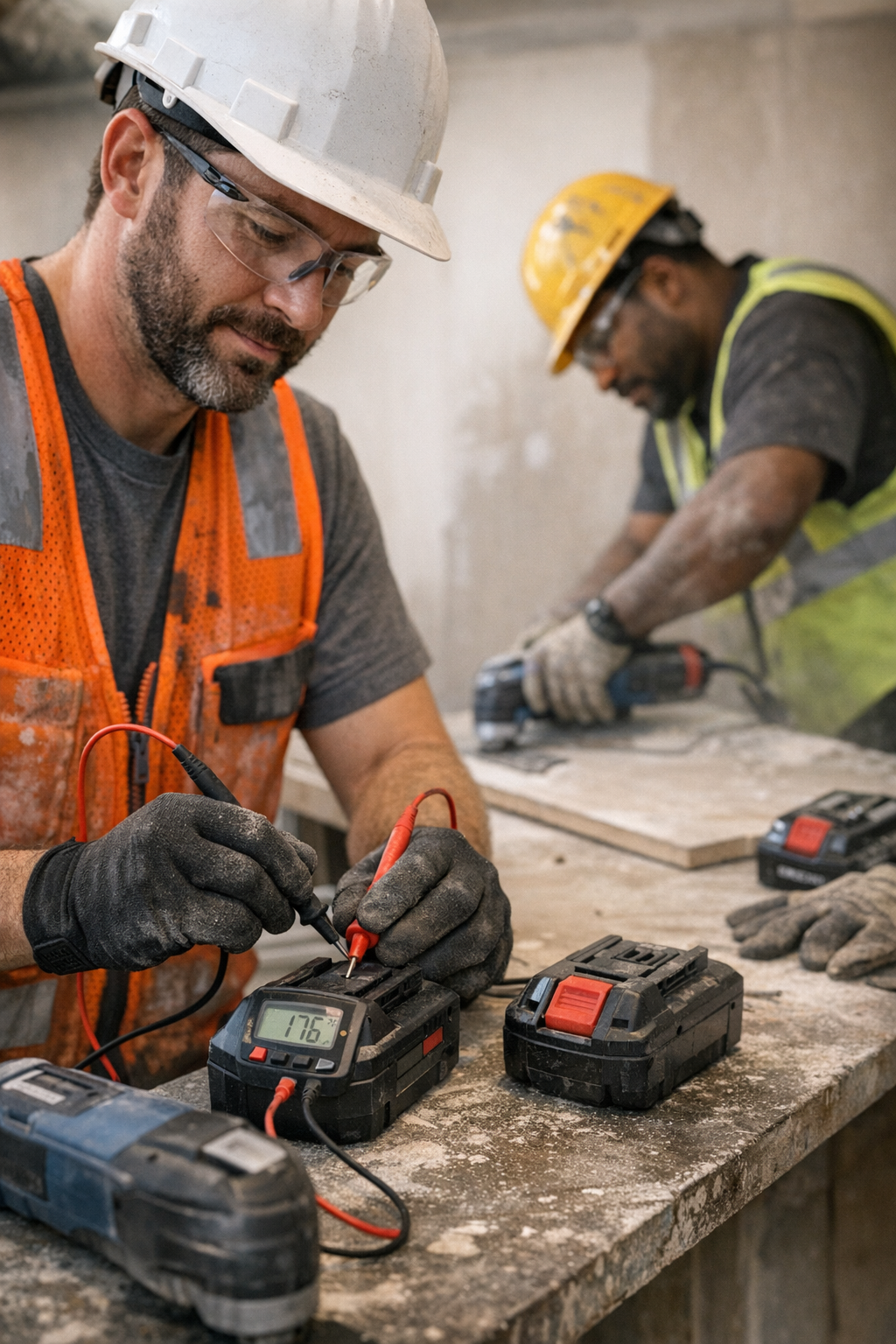
There’s an odd comfort in routine: the hum of work, the quiet reliability of good tools—until the rhythm stutters. Most days, battery life for everyday site tools slips by unnoticed. But let a battery falter midday, and you see how quickly small things unravel the flow of a crew.
Oscillating multitools have a way of exposing what’s happening beneath the surface. The keyword—battery health check—comes up softly, not as a warning, but as something you learn to appreciate with time.
The Moment You Begin to Notice
You don’t notice it immediately.
Maybe it’s a drag where there should be steady motion. Two identical multitools, but one moves with intent through material, while another stutters like it’s lost resolve. Midway through a shift, when everyone shares the same tools, small gaps in battery health find a way to break through.
It’s rarely dramatic. A smudge where the cut should have been clean, a motor warming up too quickly. Each sign is subtle, but together they add up: lost minutes, unfinished tasks, a strange sense that something minor has become larger.
The Cost of Overlooking the Small Stuff
It’s easy to rely on what’s visible—charge indicators, bright LEDs, a solid click as the pack fits. But surface signals only tell part of the story. During a hospital retrofit, I remember a late shift where the difference became unmistakable: one tool powered down against fiber cement, and what should have been a quick job unraveled into repeated battery swaps. Crews paused, looked at each other, quietly frustrated. Thirty minutes disappeared to battery swaps that morning checks had failed to anticipate.
There’s a natural temptation to overlook these checks. After all, the tools worked yesterday. But routines evolve when you see how much smoother the day goes with one small habit—a real check, under load, before the pace picks up.
The Ease of Letting Things Slip
Letting battery health checks become second nature is easier than it sounds. The pause doesn’t have to be long: a quick test under real conditions, not just a glance at a green light. Packs that don’t hold voltage don’t go back into jobs where a stall could set you back. Over time, the fleet becomes something you trust, instead of something you have to manage.
Here’s the quiet shift—when stops and stalls fade, you don’t notice the routine as much, but you feel the clarity it brings. Worksite rhythms smooth out. The battery is no longer an afterthought, but a quiet partnership in daily work.
It’s a small thing, and it changes everything in subtle ways.
I thought more about this while tuning up an old favorite before a long week on-site. If you’re curious about how much difference these small routines make, you can read on here.



