When Bright Lights Hide Quiet Problems at Home
Enclosed lighting without ventilation leads to fogging, yellowing, and shorter bulb life, causing maintenance issues and poorer task lighting.
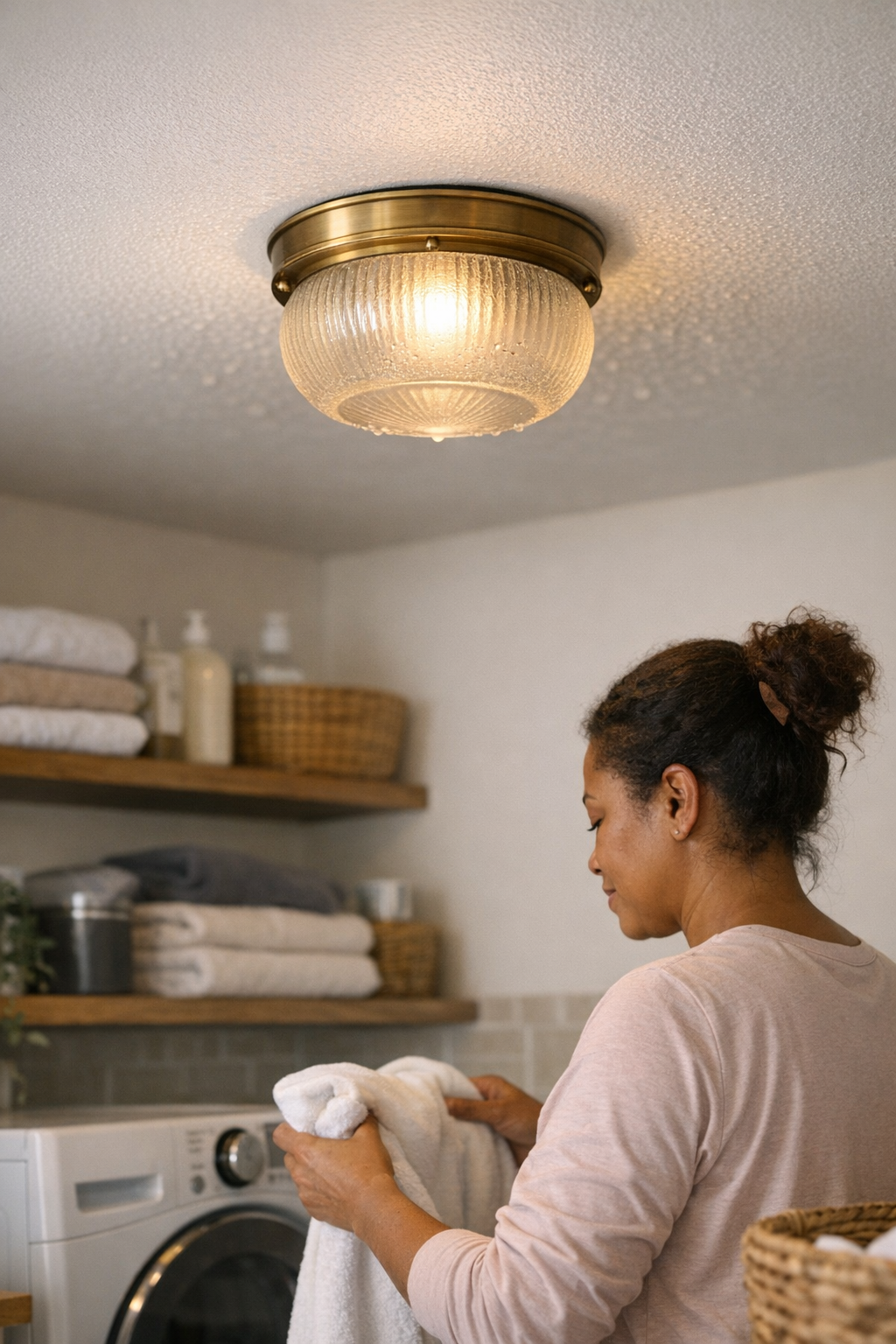
There’s a calm kind of satisfaction in those first hours after installing a flush mount ceiling fixture—especially one of those enclosed models with a bright, uninterrupted surface. At first, the fixture almost disappears into the routine: mornings in the bathroom, late evenings crossing the hall, the regular reach for light in the laundry or utility room. Everything feels contained and solved. You don’t expect these fixtures to demand your attention—until slowly, they do.
I started to notice it after a couple of weeks. The lens above the shower, once bright and promising, began to pick up a wavering haze, something persistent enough not to clear with a single wipe. What had seemed invisible at first—a quiet trade-off between a tidy fixture and the steam it held back—started announcing itself in small, incremental ways. Light grew faint and uneven around the edges of the washer. The hallway by the stairs, which should have been simply lit, grew dimmer in the corners. You don’t notice this immediately. But you feel it. That was the part I kept coming back to.
Living With the Change, Light by Light
That fog wasn’t just visual. It became a subtle barrier between me and everyday tasks—an extra pause to find a stray sock, a squint at the laundry counter, the slight hesitance stepping through the hallway shadows. Cleaning routines crept in more often. Sometimes it was just working a cloth around the lens again; sometimes, nothing really cleared the haze.
I realized these enclosed fixtures, for all their clean promise, trapped more than just dust—they locked in the ordinary humidity of lived-in rooms, and it built up. For every bit of external neatness, there was a hidden upkeep inside that never really let up. It’s the kind of thing you only notice when a task becomes subtly harder—just enough to be inconvenient, but often overlooked.
The Subtle Difference Air Makes
The swap didn’t happen all at once. But the first time a damp-rated, vented fixture went in above the washing machine, the difference felt quietly true. Shadows receded, light spread more evenly to the corners, and I stopped thinking about the lens altogether. Cleaning dropped from monthly to something like every other season.
It wasn’t a dramatic shift; life simply moved more smoothly. Even when several loads ran through on a humid day, the fixture stayed clear. That tension between clean lines and practical clarity faded, replaced by a steady ease—sorting, moving, stepping out after a shower, the light just working.
Routines, Revisited and Lit Anew
These experiences invite rethinking the lighting rhythms in a room. For me, it’s become a habit to notice where lighting helps, and where it quietly doesn’t. There are still enclosed fixtures around—reminders of what seemed like a good idea when the box was opened.
But the steady improvements—humid corners now usable, softened shadows near the stairs, less frequent cleaning—stand out more than any claim on the packaging. Sometimes it takes living with a fixture a while before seeing what would have made everyday routines smoother from the start.
If you want to see where your own lighting quietly helps or stumbles in real rooms over repeated use, it’s worth exploring what works here: www.lighthelper.myshopify.com



