When Bright Rooms Hide the Real Shadows
Ceiling and wall lights seem bright but miss shadows and blocked zones. A headlamp moves with you, reducing mistakes and fatigue.
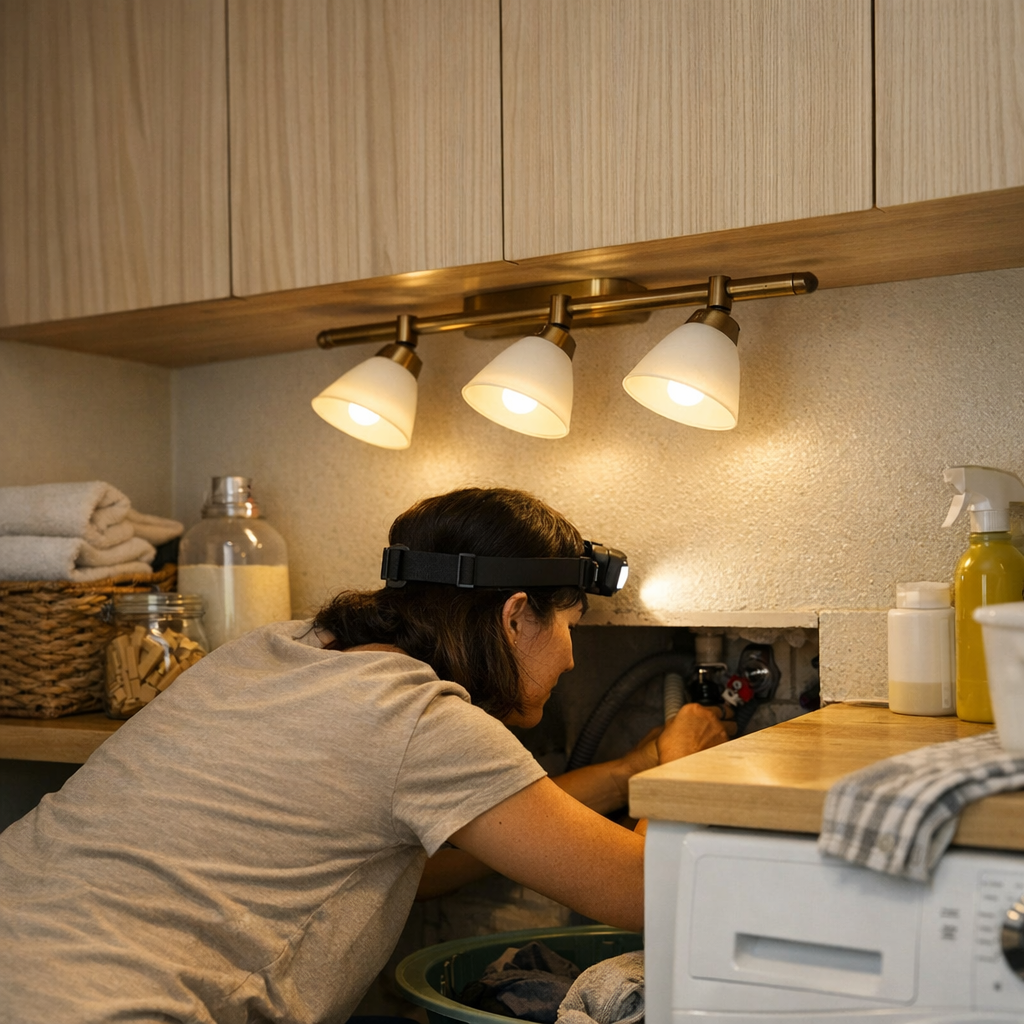
There’s a hush that settles into the room after the first weeks, once the novelty of new flush mount or semi-flush mount ceiling lights and wall sconces fades. The space feels brighter, yes — more open to movement and daily mess. It can be almost convincing. Sometimes, I’d find myself noticing the glow reflected in bathroom tile or stretched evenly across the hallway panel lighting. But then I’d fumble with a detergent cap under the cabinets, or try to skim a screw from behind a laundry machine, and the same shapes would disappear beneath pooled shadows — no matter how many times I adjusted the fixtures above. You don’t notice it immediately. But you feel it.
Corners That Pretend to Be Bright
It happens quietly: the laundry corner, the edge of the countertop, that pocket behind the faucet where cables or lost socks seem to vanish. Overhead, the flush mount or panel lights look strong. In the reality of repeated laundry loads or a tight plumbing repair, though, it’s never enough. Shadows carve out space and create blank zones where the fixtures say there shouldn’t be any. Sometimes it happens in the hallway, rounding a turn and finding the light falls just short of the steps. That was the part I kept coming back to — the difference between the room’s first impression and the way it actually handled daily use.
A Small Change That Fills the Gaps
I started leaving a headlamp by the washer, almost as a joke at first. Its beam followed wherever I looked — under the shelf, behind the machine, into the folds where ceiling LEDs or under-cabinet lighting refused to reach. The chores themselves didn’t truly change, but the stops and stumbles mostly faded away. I could read faded product instructions or refasten a loose clamp without craning my neck or wedging a cabinet door open. There was something oddly satisfying about not needing to clutch a phone flashlight or invent new workarounds. The quiet improvement wasn’t in the room’s appearance, but in how much less I noticed the lighting at all.
When Routine Shows Where Light Actually Matters
In real spaces — bathrooms, laundry rooms, elongated hallways, even those damp-rated nooks that seem perpetually dim — light isn’t just about seeing. It’s about whether the smallest routine feels undemanding or awkward, or even a little prone to error when the glare returns or a crucial patch stays in shadow. I noticed my mood shifting subtly when I stopped fighting with the room’s corners. The right illumination follows you, even when your hands are full and the angle keeps shifting. Sometimes, that’s all the difference that’s needed.
If you find yourself thinking about those same persistent shadows, there’s more to consider: http://www.lighthelper.myshopify.com



