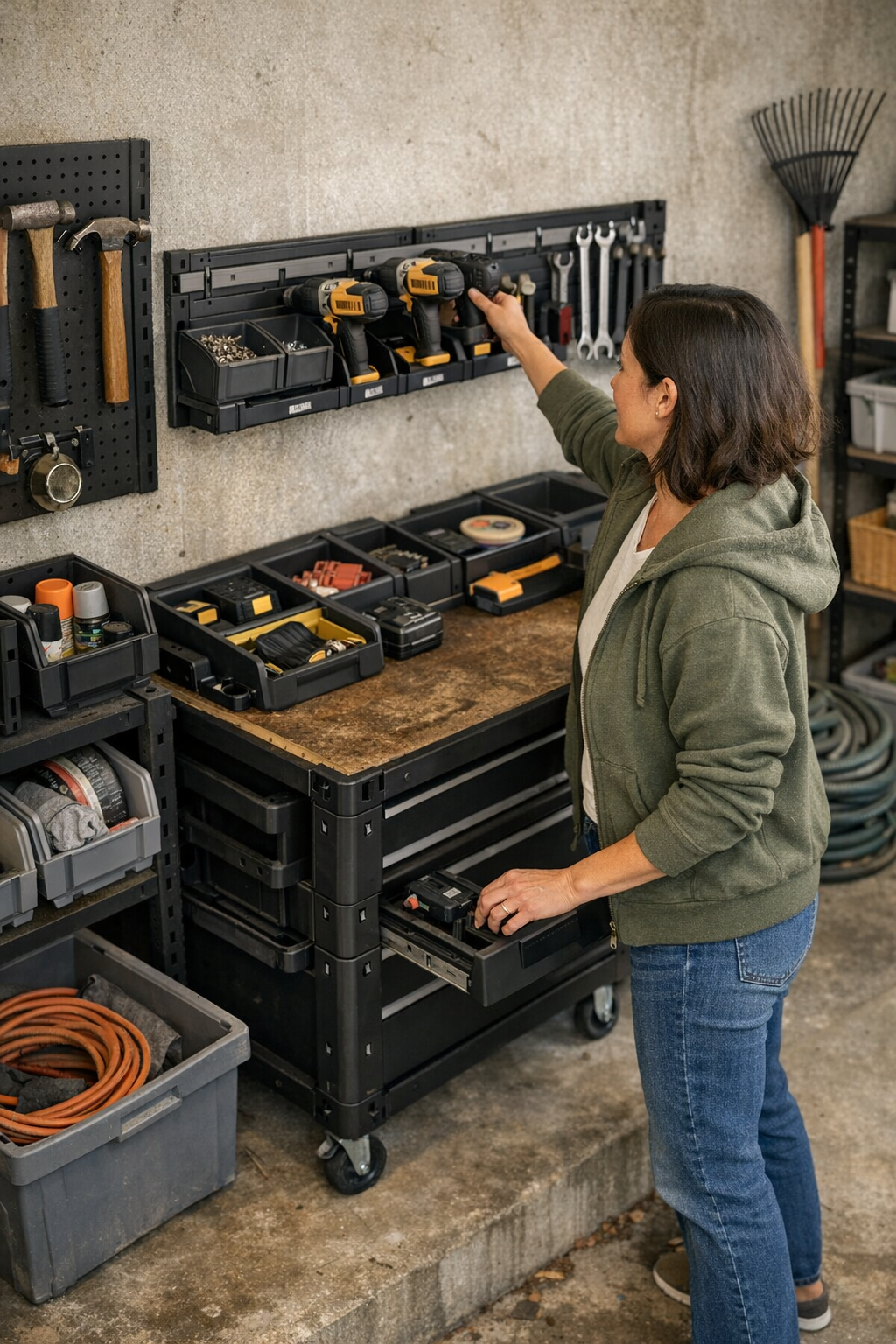
When Cable Management Meets Everyday Adaptability
Replacing cable ties with flexible sleeves made cable management quick, adaptable, and clean, easing daily tech and work changes.
The Quiet Difference in an Adjustable Desk: How Rigid Cable Ties Slow Things Down
The idea of a perfectly ordered desk still pulls at me. Underneath the surface of a busy workstation—whether it’s equipped with under-desk storage units, cable trays, or clamp lamps—it’s easy to settle for tight cable ties. Everything looks sorted, wire paths snapped into place, neat and controlled. But after a few weeks of real use, a certain friction creeps in. Each new device or cable isn’t just a simple addition anymore—it’s a little project, always involving scissors, a handful of old ties, and the familiar chore of undoing last month’s solution. The goal was to keep things under control, but the way forward quietly got harder.
You Notice It When You Want to Change Something
At first, it looked fine. I’d sit at my desk—my ergonomic chair pulled in—and reach for my charger, every cable feeling in its lane, fixed and crisp beneath the desk tray. But after a few cycles—swapping in a new dock, shifting the monitor arm, plugging in an extra device—the system began to resist. The act of cutting ties to reroute a single cord meant pulling the whole run apart. Order was locked in, but so was the hassle.
That was the part that stayed with me: how “tidy” slowly shifted into “unwilling to change.” I found myself leaving tasks for later, avoiding upgrades, and letting cables dangle just to avoid the reset—especially when under-shelf bar lights or monitor risers needed adjustment or when limited under-desk clearance made reaching awkward.
When Routine Becomes a Delay
You can see it when you follow your hand beneath the desk—whether near a drawer unit or close to a stool perch seat. That moment when a cable tie gives way, but it feels less like progress and more like undoing the last run. Over time, that drag builds up. Even a clean setup echoes with fragments of past adjustments: snipped ties, interrupted cable runs, tools left out on the desk surface.
The difference kept showing up in small, frustrating moments. Adding a new device, changing light placement, or fixing a simple cable route shouldn’t feel like prep work for a bigger project. But with rigid ties, it always did.
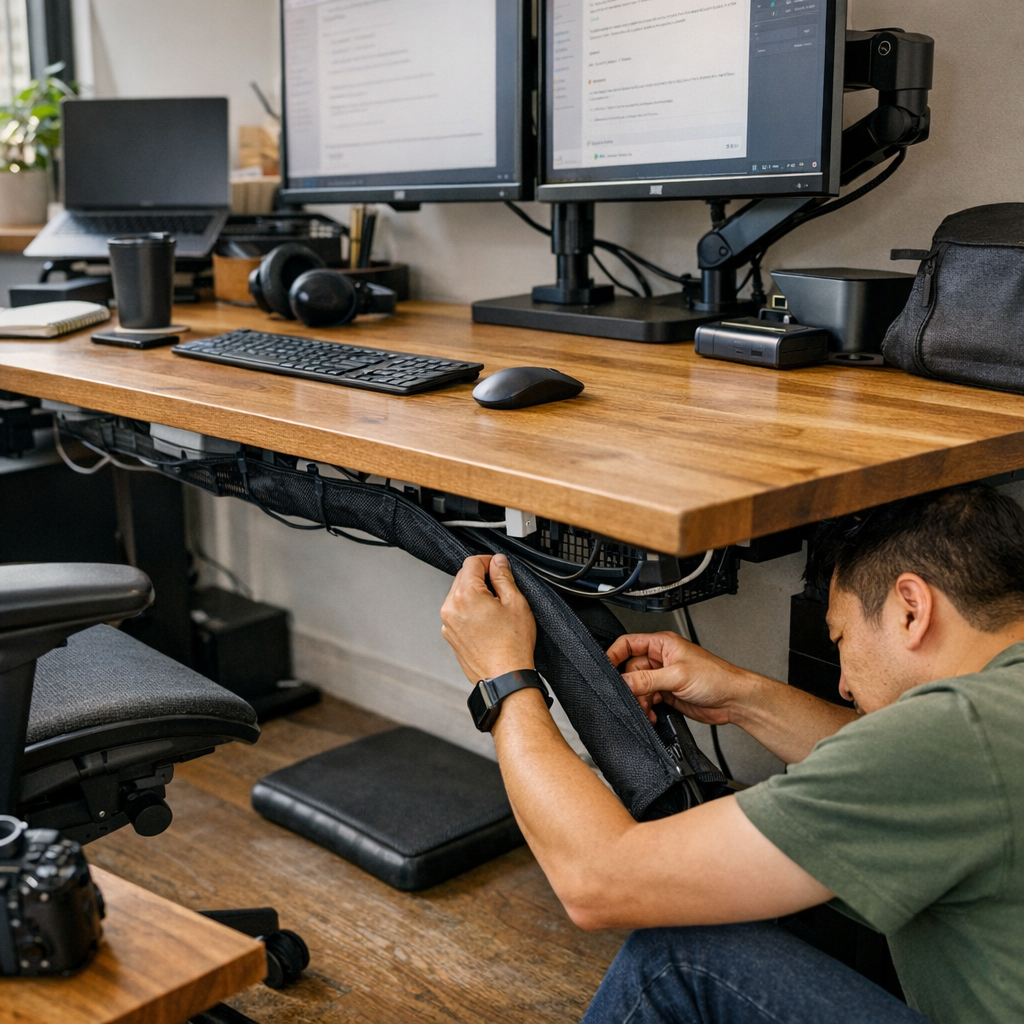
Flexible cable sleeves aren’t glamorous, but they cut through the slow friction. A zipper or fold lets you open, change, and close the cable path without starting over. In practice, this means the order you see is the order you can actually live with and update without hesitation, whether you’re managing multi-device charging stations or adjusting your dual monitor arms.
A Shift in Desk Tempo
Replacing the anchoring cable ties along my under-desk cable tray with a zippered sleeve was a quiet refresh. The cable route itself didn’t look much different. But when it came time to add another charger or swap a cable, it took less than a minute—no leftover fragments, no scratched wires, and no interruption to work.
That small, repeated adjustment—the way a setup lets you reset quickly and keep going—became more useful than a perfectly crisp line of ties. The change wasn’t dramatic, but it lingered. The desk felt less like a finished puzzle and more like a workstation willing to adjust to what’s next, whether that’s a standing perch transition or a late-day posture shift.
If you want to see, here’s the source for these thoughts: workbasic.myshopify.com