When Carry-On Order Meets Airport Chaos
Quick-access pockets and a clear essentials path in your carry-on reduce delays, confusion, and repacking, improving travel flow after arrival.
There’s a quiet panic that sneaks in right after landing, when the plane’s door clicks open and you grab your bag from the overhead bin. Everything inside still looks as you left it, neatly packed and divided by pouches and organizers. But that careful order rarely holds up once you move from your seat to the terminal. The difference between how your bag looks in the aisle and how it works in motion becomes clear the first time you reach for a passport, a transit card, or a charging cable before customs and start fumbling.
You notice it more after a few flights and transitions. What started as an organized setup becomes muddled at the border. The tidy mesh pockets and zipped compartments that seemed perfect in the bin begin working against you—enough that a bag which looked so controlled suddenly feels like a mess, making you dig around just as the crowd is moving forward. That was the recurring problem: realizing that “neat” isn’t the same as “ready.”
When Tidy Isn’t Fast
It’s easy to be misled by a bag that stays visually organized throughout a flight. The mesh pockets, magnetic closures, and liner dividers seem designed to keep everything locked in place. And on the plane, they do. Until you try to get to your essentials while walking through the terminal.
I found myself stuck in awkward routines—unzipping multiple compartments, guessing which pouch held my ID, untangling cables mixed with receipts or gum. It looked fine while seated, but those steps quickly added up once I was on the move. I’d pause by the terminal map, pulling out my bag to fish around. The gear that once felt coordinated would spill or snag just when efficiency mattered most.
Access Is Its Own Kind of Order
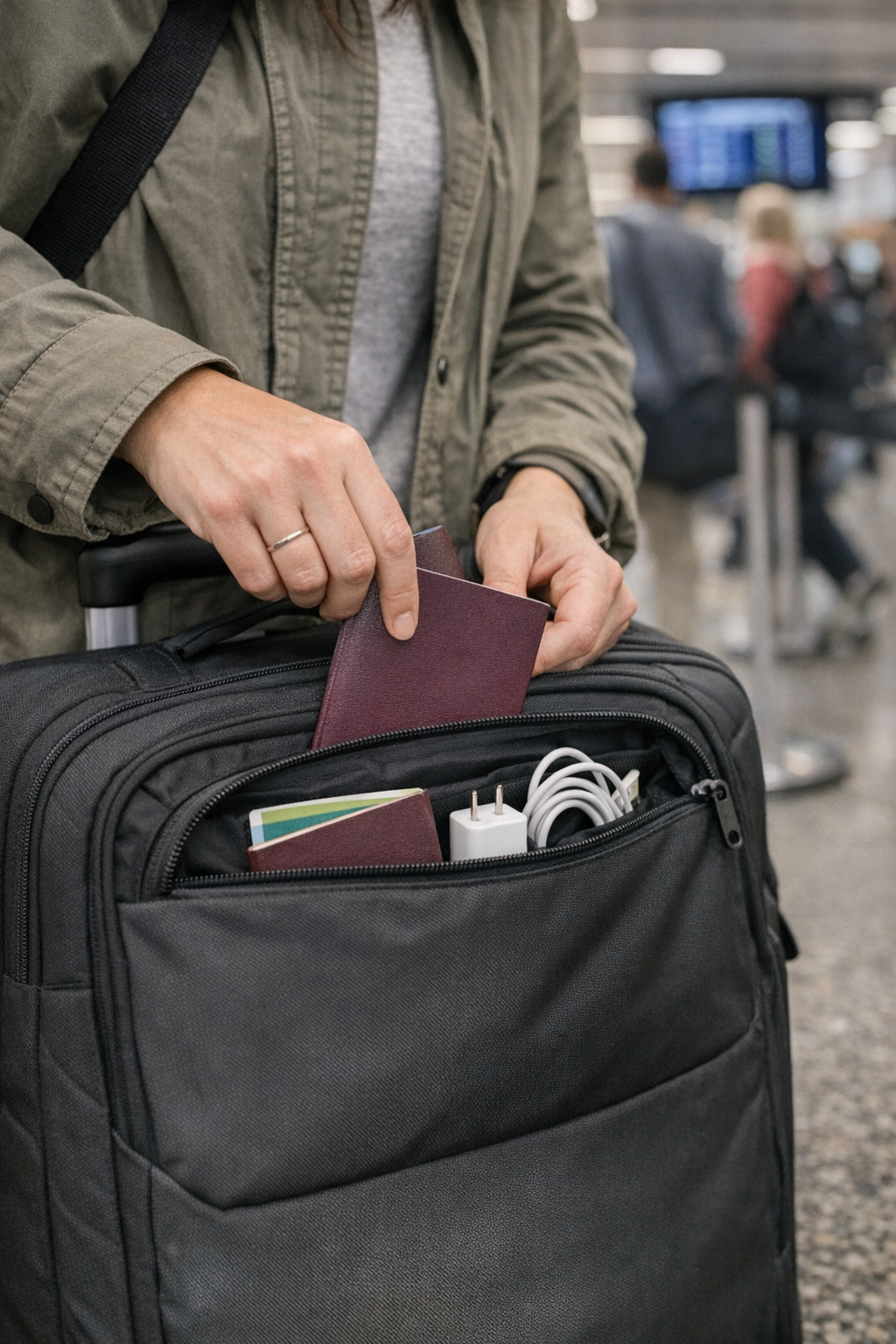
The shape of convenience only changed when I stopped thinking about separate pouches for “tech,” “documents,” or “snacks,” and started organizing by actual use-case: what I’d need, and when. Everything I’d pull before immigration moved into a slim, single-zip pocket right at hand.
That shift brought relief. Having just one place to check meant no more juggling or readjusting what had shifted mid-flight. Passports and travel cards lived together, apart from chargers, coins, or other infrequently used items. The bag’s layout reset more naturally each time. Whenever I caught myself hesitating, it was because multiple organizers overlapped and slowed me down.
Movement Over Appearance
I realized I’d been packing for a picture of order, not for the real flow of traveling. A bag that looked tidy at my seat became clunky in the arrival hall if I had to unzip layers when everyone else was moving quickly.
Each trip proved the value of a flat, easily reachable outer zipper pocket. Even small details like the zipper’s angle made a difference—the easier it was to slide a passport or cable out in one smooth motion, the less I jammed fingers or fumbled in the line. Simplified setups—just one habitual spot for each frequently accessed item—worked best. The little habit of always returning key items to the same place cut down on panics and the drag of repacking.
After enough trips, I learned that movement, not static neatness, was the only order that truly mattered.
For more thoughts, I sometimes scroll through carryonsupply quietly: http://www.carryonsupply.myshopify.com