When Carry-Ons Fail in the Chaos of Travel
Repeated airport movement reveals weak points in carry-on setups. Use single-purpose pouches and direct outer access for quick, easy retrieval.
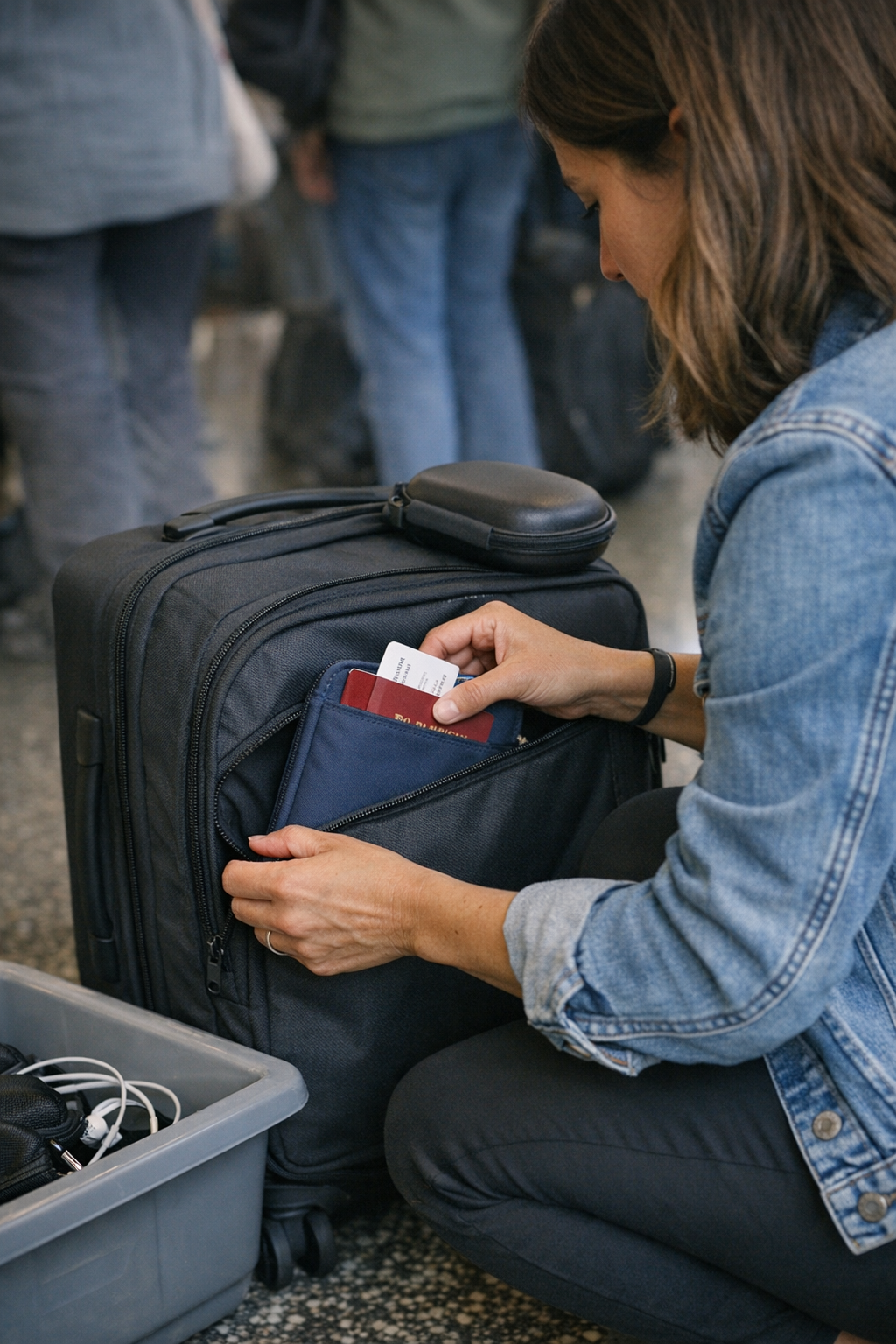
It always feels under control right after packing. Pouches lined up, tech snugged into one spot, documents tucked just so. But all that order can shift the minute the journey begins. The first crowded security line has its own logic, and by the time I reach for my passport, I’m already quietly annoyed that it’s stuck behind something I rarely use. That feeling kept coming back—the setup I’d mapped out never moved at the same speed I did.
You notice it after a few transitions.
The outside of a carry-on projects calm—clean panels, neat lines, every pouch zipped. What happens inside, though, unfolds with each unplanned motion: sudden gate changes, reseating, or the usual scramble for documents. It looked fine at first. Then I kept finding myself rooting through a nest of organizers, always needing one item hidden behind another. Sometimes it was headphones blocking my wallet, or that neat cable roll jammed in front of my boarding pass. These aren’t dramatic problems, just small pauses that stack up.
The difference shows in tired, repeated moments—at the tray table, in the aisle, standing at checkpoints. Each grab for ID or battery pack becomes a mini rearrangement. Over time, this repetition sticks: access far less smooth than it seemed when the bag was still.
A setup that only works when nothing’s moving loses its edge fast. It was the repeated need to repack, dig, and restow that slowly made me change something basic: separating daily-grab items into their own pouch—one step, always within arm’s reach. I put travel documents in an outer pocket that opens fully with a single zipper, and moved all tech deep into another pouch inside. The first time I grabbed my passport in stride, without shifting anything else, I barely noticed. By the third time, it felt lighter—not because the bag weighed less, but because the small resistance was gone.
That’s what matters most—how a carry-on’s setup acts in motion, not how it looks standing still. When every item has a place that tracks with how you actually move, the routine softens. There are fewer interruptions, and the rest of the journey stays steadier.
There’s a quiet in getting the flow right. Details here: http://www.carryonsupply.myshopify.com