When Cat Boxes Crowd the Home, Tension Grows Quietly
Simply following the “one per cat plus one” guideline isn’t enough; strategic box placement reduces mess and eases cleanup.
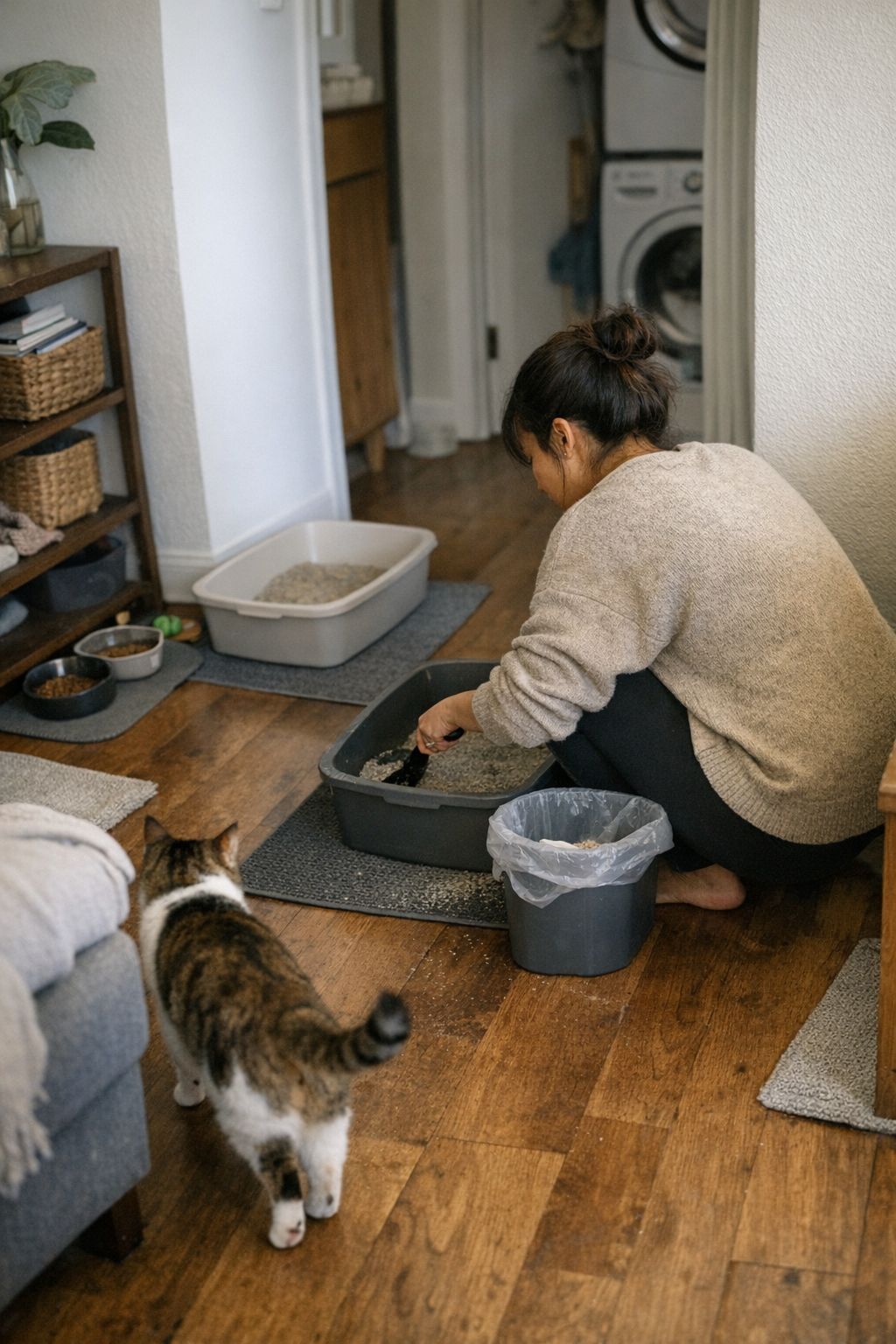
At first, it looked like I’d finally figured out the math: one litter box per cat, plus an extra tucked neatly along the wall. It felt satisfying—precise in the way advice often promises to be. There was even a certain calm those first two days—just enough separation between boxes, at least in theory, and each one lined up with a mat I’d actually remembered to buy.
But the overlap wasn’t far behind. The kitchen corner, set up as the “backup box” spot, started to feel cramped—especially when feeding bowls needed refilling late, or a toy turned up halfway underneath the mat. After a few resets, I noticed the pattern: there was always one spot lagging in cleaning. The tidy “extra” box sometimes did nothing but collect dust and a thin layer of litter footprints that steadily drifted closer to the water area. The shape of inconvenience wasn’t what I expected. A setup that looked neat on day one quietly built friction by day four.
The Space Between Routines
It wasn’t just about how many boxes I’d squeezed in, but where I’d allowed routines to overlap. For example, the spot next to the laundry room worked fine until a feeding bowl got placed in a path crossing two daily cat tracks.
That was the recurring issue—a sense that order depends less on surface tidiness and more on how routines thread through the space without bumping into themselves. The “just right” number of boxes got lost under competing needs for scooping, bowl lifting, and sidestepping a resting cat. I’d watch one box stay in heavy rotation while another barely saw paws. It looked fine at first, but the difference showed up in small ways: tracker footprints wandered farther, wipe-downs took longer, and extra steps multiplied near the busiest corners.
Not Just Numbers on a Floor Plan
Moving a single box past a hallway threshold made more difference than adding another box to the same cluster. Suddenly, the main box needed midday attention, but stray litter scatter stopped leaking into shared spaces with every trip past the kitchen. The “extra” box outside the main run felt like relief instead of a burden.
Daily cleanup turned out to be less about the total count and more about the lived-in geography between routines. Even a small relocation changed how quickly mess built up—or didn’t. There was less doubling back, fewer detours around obstacles, and a better match between maintenance and how we both moved through the home.
Somehow, the smallest shift was the one that finally settled things.
If you want to see how others have arranged their setups or compare notes, there’s a quiet collection here: http://www.stillwhisker.myshopify.com



