When Cat Care Routines Reveal Hidden Household Frictions
Consolidating cat care essentials in one spot cuts interruptions, shortens routines, and makes daily maintenance less stressful than separated setups.
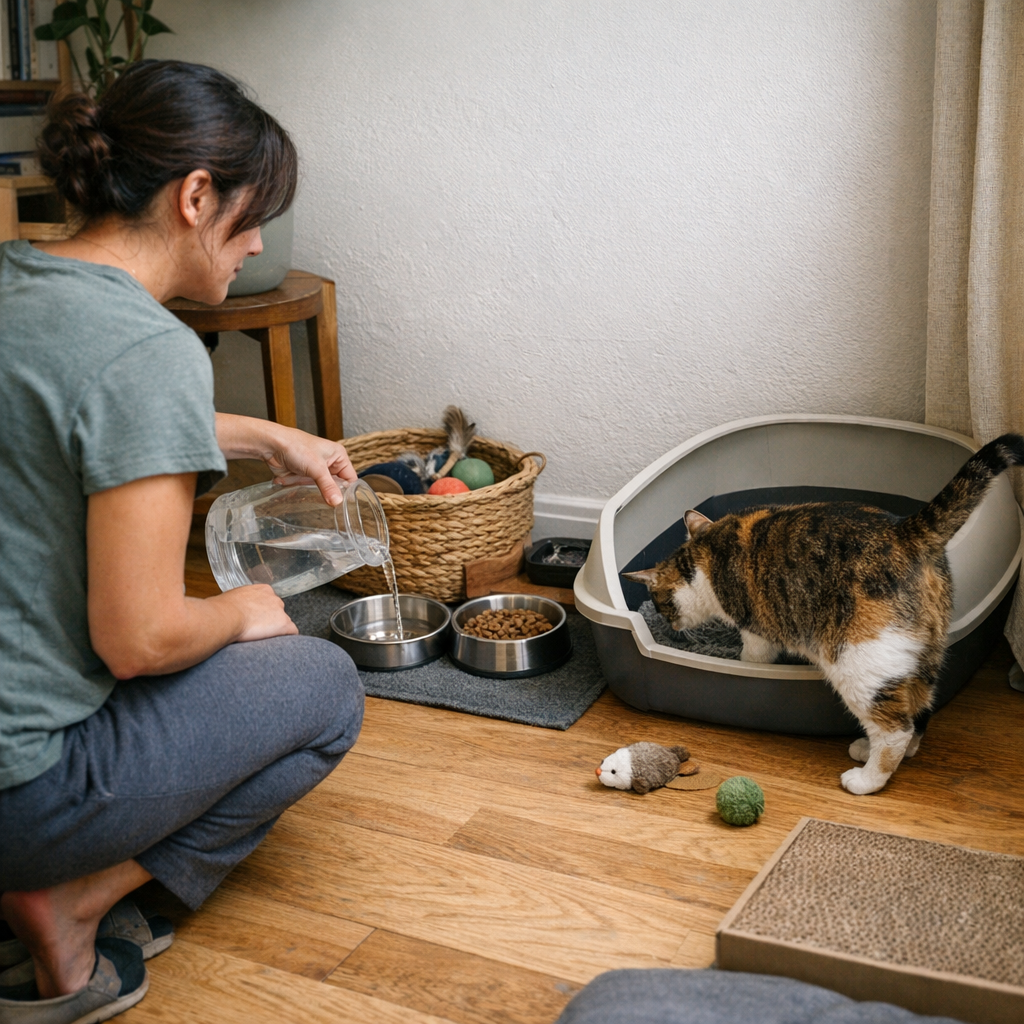
There’s a moment, usually after the third cleanup of the day, when you start to notice the quiet patterns that settle in around an indoor cat’s living space. At first, the setup feels straightforward: feeding bowls grouped in one spot, a water dish placed in the kitchen, litter tray tucked behind a door. Everything neatly arranged in its own corner, the space looking orderly, almost intentional.
But it only takes a few refills and resets before you see where that order actually breaks down. The walk between water and food feels longer once you’ve spilled a scoop of kibble, and stray pieces end up scattered in new spots. What looked tidy slowly turns into repeated micro-detours—bowls to wipe, a splash to dry, a track of litter to sweep up. This kind of realization sneaks in quietly, caught somewhere between routine actions and the small expansions that make cleanup feel endless.
The Distance Between Setups
There’s comfort in separating zones for different cat needs—food on one side, water in the kitchen, toys in a basket a room away. At first, it seems fine. But every refill, wipe-down, or missing-toy search sharpens the gap between how it looks and what it really costs in time and steps.
One tired evening, halfway focused, I counted crossing the hallway four times just to refill a bowl and check the litter. None of those moves was complicated, but together they made the whole process drag. Even the cat seemed to see it, weaving new routes and tracking crumbs as she went.
After a few resets, routines start to feel less like smooth habits and more like interruptions that take you away from everything else.
All in One Reach
Bringing everything close wasn’t a planned overhaul—more of a slow correction. Food and water bowls placed side by side, the litter tray nudged nearer, and a low tray for toys kept within easy reach. Everything was close enough to grab or return without breaking the flow.
The look didn’t change much, but where the effort went did. Refilling, scooping, wiping—all happened in one less-choppy loop. Litter still tracked out, crumbs still fell, but usually stayed within the main area. The difference showed up in fewer back-and-forth steps, fewer half-finished cleanups abandoned because energy ran out, and less lingering mess.
Small moments extended naturally—like feeding while waiting for the kettle to boil, or tidying the whole zone in a single motion before bed. It’s not “no work,” but the scattered interruptions no longer pile up and drain the day.
How Mess Finds Its Pattern
The urge to separate and style every item is familiar in many homes. But cats—and the people caring for them—move differently. For most weeks, practical comfort isn’t about hiding each component out of sight or making every corner look perfect. It’s about what you don’t dread on repeat.
That ease came in the proximity of scoop, wipes, and refill cans within arm’s reach—never having to think twice about which route would miss tracked litter or stray crumbs. Even as the tidy appearance fades or the space gets cluttered, keeping everything close helped keep the cleanup hassle manageable.
There’s always a tradeoff between clear space and real use. Over time, I found myself thankful for a stretch of floor that tolerated a little mess, but still kept all the daily tasks within a simple, sensible loop.



