When Cat Routines Collide: Finding Calm in Shared Spaces
Post-meal and post-play calm in cats depends on separating feeding and play areas to reduce mess overlap and ease cleanup.
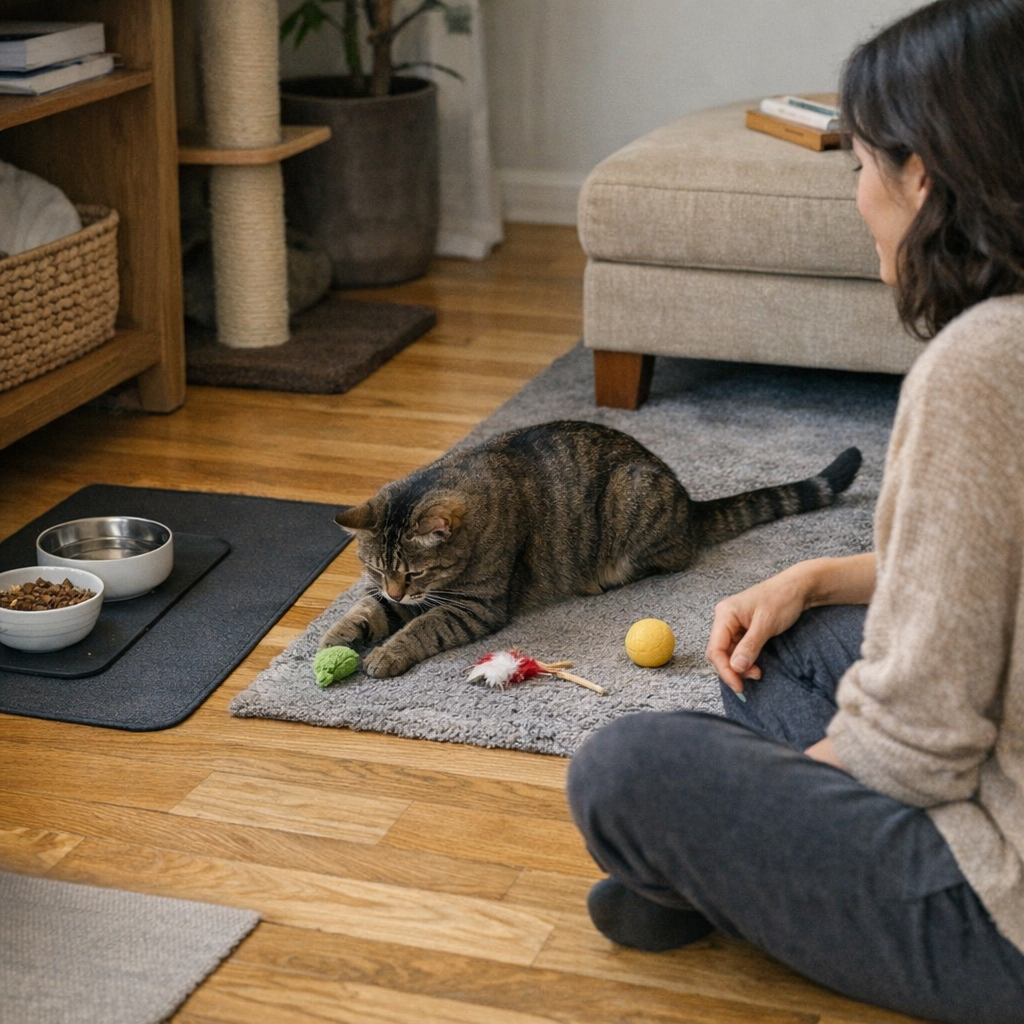
There’s a moment just after a cat’s meal when everything feels back in order: bowls lined up, mat wiped, quiet returning—if only for a bit. A similar hush settles right after a frenzied play session, with toys finally coming to rest somewhere along the floor. These calm phases, however, only feel surface-level. The real cycle moves slower and sneakier: the same corner that looks clean keeps drawing me back, pulled into work—sweeping, collecting, realigning—again and again, like a subtle loop woven into the days of indoor life.
Overlap Hides in Plain Sight
At first, it seemed practical to tuck feeding and play close together, especially in a smaller space. It looked efficient at a glance. But daily routines started overlapping in small, messy ways I hadn’t expected. A mat that stayed in place after breakfast would get nudged sideways by a mid-morning chase, stray kibbles scooting out to meet wandering toys. The difference kept showing long after the room looked tidy. One zone meant for eating now held both crumbs and fuzz, and what should have been a quick post-meal wipe started turning into a longer reset.
The real sign was how easily a chewed toy found its way under the bowl, or bits of food hitching a ride far from the mat. Resetting everything became a ritual—slower than expected, repeated more often than planned—especially on days when the cat’s energy looped right back to where it started.
A Small Boundary, a Softer Pause
Moving the playthings just a mat’s length away from the food felt insignificant at first. But the difference turned out broader than it looked. Now, after a meal, the feeding corner keeps its calm a little longer. Toys still scatter, but the scatter stays contained—no more hunting for grit under a heavy bowl or peeling sticky tape from mat edges.
You notice it after a few resets. The feeding zone becomes less of a magnet for every stray, half-forgotten thing. The practical part surfaces slowly: cleanup no longer demands an extra lap around the same area. It’s just a pause, not a project. There’s an odd relief in a zone that only requires the work you expected on the first go, not the catch-up.
Living With Fewer Collisions
Over time, I stopped dreading the end-of-day sweep. But the shift was quieter than I expected. The feeding corner and play field settled into their own rhythms, and repeated cleanup lost its edge.
Small equipment—like an extra mat or an improvised spare towel—helps lean into the separation, but it’s never about making things look decorative. It’s simply easier to live with spaces that keep their own mess, not someone else’s. The difference slips into the background, clear only after I realize I haven’t been back to realign or dig something out for days.
It’s a small, lived-in kind of improvement. Not dramatic, but definitely lighter on the loop.
Sometimes I look for more ideas here: http://www.stillwhisker.myshopify.com



