When Cat Spaces Demand More Than You Expect
A stable layout for indoor cat essentials cuts down on unnecessary steps and checks, improving upkeep by preventing mess and overlap.
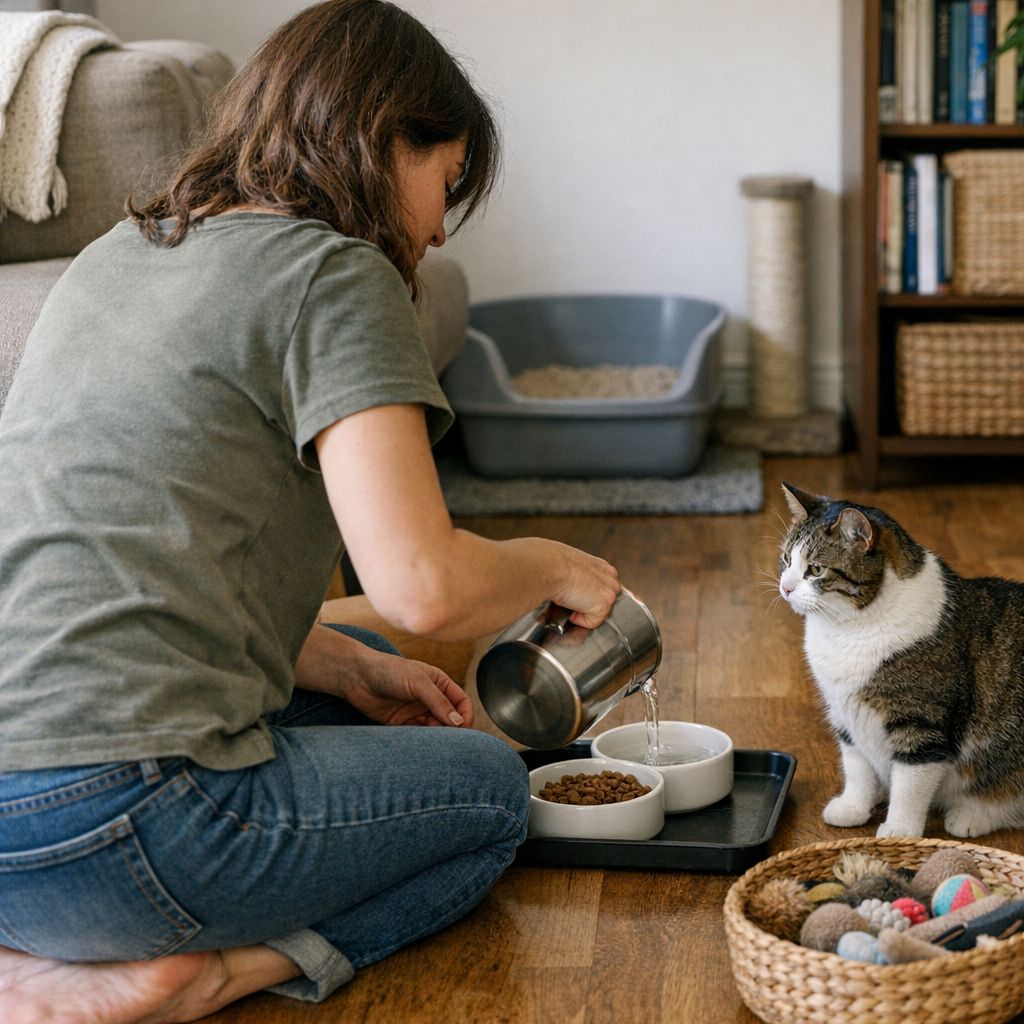
It’s easy to feel settled when the room looks ordered—the bowls aligned neatly against a wall, toys resting in their container, and the small things tucked “just so.” For a moment, it feels like the space will need only a light touch to stay calm. Sometimes, that’s true. But most days, the real test comes later, as the rhythms of daily life slowly undo what you arranged. These patterns show up quietly: a water bowl inching into a walking path, a toy hiding under furniture for the third time, stray litter clinging to paws and multiplying even after the floor has been swept.
At first, these differences don’t register. You notice them only after a few resets, when the room keeps asking for minor corrections. In the beginning, everything still looks neat. But the small misalignments accumulate—a slow drift of objects, slight detours along your route through the kitchen, pauses to wipe up faint water rings left after refilling. The setup that once seemed efficient keeps nudging you for adjustments, quietly asking for another round of work.
The bowls had looked fine initially: paired and pressed against the cabinet, the feeding mat freshly wiped down. The litter box was tucked just out of sight on a mat you’d convinced yourself was easy to clean. But over a week or two, those corners began to stretch disorder into the rest of the room—a slow, creeping mess. The same bowl would shift after your cat’s evening sprints, bits of food tracked down the hallway. What kept returning wasn’t the initial disorder, but how daily routines gradually undermined the illusion of lasting order. You find yourself bending down to fetch lost toys or noticing the mat thinning where it takes the most wear.
Eventually, I moved the feeding bowls onto a shallow tray with a raised edge, placing it just outside the main footpath. That one small shift—almost too minor to count at first—became a quiet relief. Water and crumbs finally stayed put, and reaching the bowls no longer required contorting around furniture. The litter box, reluctantly left partially visible, spilled less now that the mat was larger and better positioned. Even the toys—rounded up each evening—felt less like landmines scattered across the floor.
That’s where the difference settled: the space stopped demanding constant tweaks. Instead, it let daily routines play out without a running tally of small chores. A slight lift in daily breathing room, but clear enough that I noticed.
Day-to-day indoor cat life ends up shaped more by these slow accumulations than by any initial setup. If the room routinely makes you pause, step around, or reset, it’s a signal about what needs to change.
Sometimes a better solution is just a tray with a lip, and room to move without checking your next step. I found that realization here: www.stillwhisker.myshopify.com