When Cats Pause Before Eating: Quiet Struggles at Home
Indoor-cat feeding issues arise from poor bowl placement and mat size, causing hesitation and extra cleanup; small adjustments ease tension and improve meals.
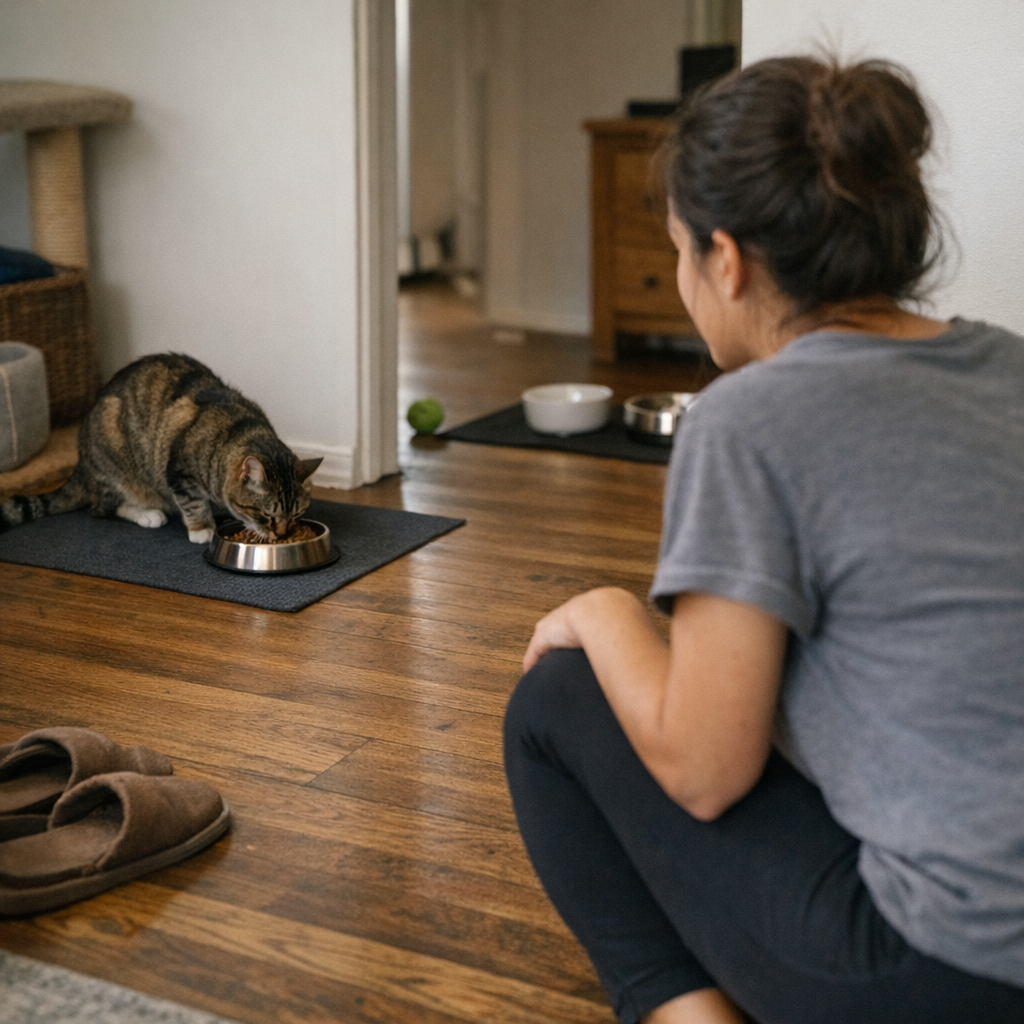
There’s something oddly repetitive about the way a feeding area feels “good enough” for a while—until it isn’t. In the first weeks, two cats eating side-by-side from separate bowls can lull you into thinking the setup is settled. But over time, patterns emerge. You notice one cat hesitating just outside the feeding mat, or slow, sidelong glances that seem innocent until you’re straightening bowls once again.
For me, this awareness came slowly—more as a quiet irritation than a clear discovery. The extra cleanup was what made it hard to ignore. Half-eaten food, stray kibbles pressed along the edge of the mat, bowls shifted at odd angles. I’d bend down to tidy the area and realize I’d done the same thing the day before. It looked fine at first, but the subtle differences kept appearing.
The Small Frictions That Stay
Usually, it’s small things. One cat hangs back, watching the other’s bowl instead of eating. I’d see them circle the area, hesitate, and sometimes switch spots without touching their food. These quiet tensions stretched the feeding process. What should be five minutes routinely doubled—especially on cold mornings before work.
Cleanup followed a similar pattern. No matter how neatly I tried to keep the mat, crumbs collected under it, and bowls moved out of place by evening. Wiping the floor became a daily, slightly annoying task that just kept coming back. That routine was what stuck with me.
When “Tidy” Isn’t the Same as “Easy”
It became clear that the setup I kept resetting wasn’t really working for either the cats or me. The mat looked right, the bowls matched, and the routine was consistent enough. But tension lingered just beneath the surface. Food sat untouched while one cat hesitated in the entryway. Every small adjustment—moving the bowls an inch here or there—brought brief improvement, then the old dance resumed.
After a few resets, the flaw shows itself clearly. A setup that photographs well doesn’t perform smoothly through days of repeated, messy use. Lining the bowls with more space seemed logical, but the kitchen traffic and their positions still got in the way. It felt like a chore designed to keep repeating.
A Subtle Change, a Different Result
Surprisingly, the simplest shift made the biggest difference. I placed the bowls about four feet apart—far enough so they could both be seen but out of each other’s direct line of sight—and extended the mat to frame the space better. The circling and pauses stopped. Meal times became quiet again. Food scatter dropped sharply, and I found myself sweeping once a day instead of every few hours.
There’s a clarity in these small changes—less internal debate, less cycling through chores. The setup that finally works is the one you stop thinking about after every meal. That’s when it’s truly right, at least for now.
If you want to explore more about feeding setups, water areas, litter-adjacent organization, rest corners, scratching zones, or cleaning routines that deal with real indoor cat life, you can find a few ideas here: http://www.stillwhisker.myshopify.com



