When Chargers Overheat: A Garage’s Quiet Disruption
Garage chargers often overheat with blocked airflow and back-to-back cycles; vertical mounting with open space improves cooling and reduces shutdowns.
You don’t really think about your battery charger until your routine suddenly stalls. Maybe you’re almost finished—just one more step, one more screw, one last burst of airflow in a stuffy garage. Then the charger blinks red or quietly refuses to wake your tools up again. In that moment, you notice a faint warmth in the air, maybe the vague scent of overheated plastic.
This isn’t just about equipment—it’s about momentum being quietly stolen.
The Quiet Trouble of Overheating
It comes on slowly at first. One charger after another cycles through batteries, the temperature creeping up as the afternoon lingers. You might not spot it right away—chargers are built to be invisible workhorses, after all. But the heat builds beneath the surface, and suddenly the steady rhythm of swapping and using cordless tools disappears.
You might not notice immediately.
But you feel it.
Productivity slides as you wait. That quiet hum from the charger gets a little sharper; maybe the case seems too warm in your hand. Some time later, the battery you expected to be ready is still glowing in the charger, delayed by a forced pause you didn’t plan for. Missed cycles start to pile up, and unfinished jobs drift into tomorrow.
How Small Choices Shape the Whole Day
Chargers are marketed with impressive specs and promises—fast, smart, rugged, ready for anything. But when the garage air climbs past 80 degrees and the rounds keep coming, you see where real resilience lives. One charger shrugs off the demand, batteries in and out, steady and composed. Another, built for store shelf comparisons, starts showing its limits: hot spots, slowdowns, and that unmistakable burnt aroma warning you about what’s happening inside.
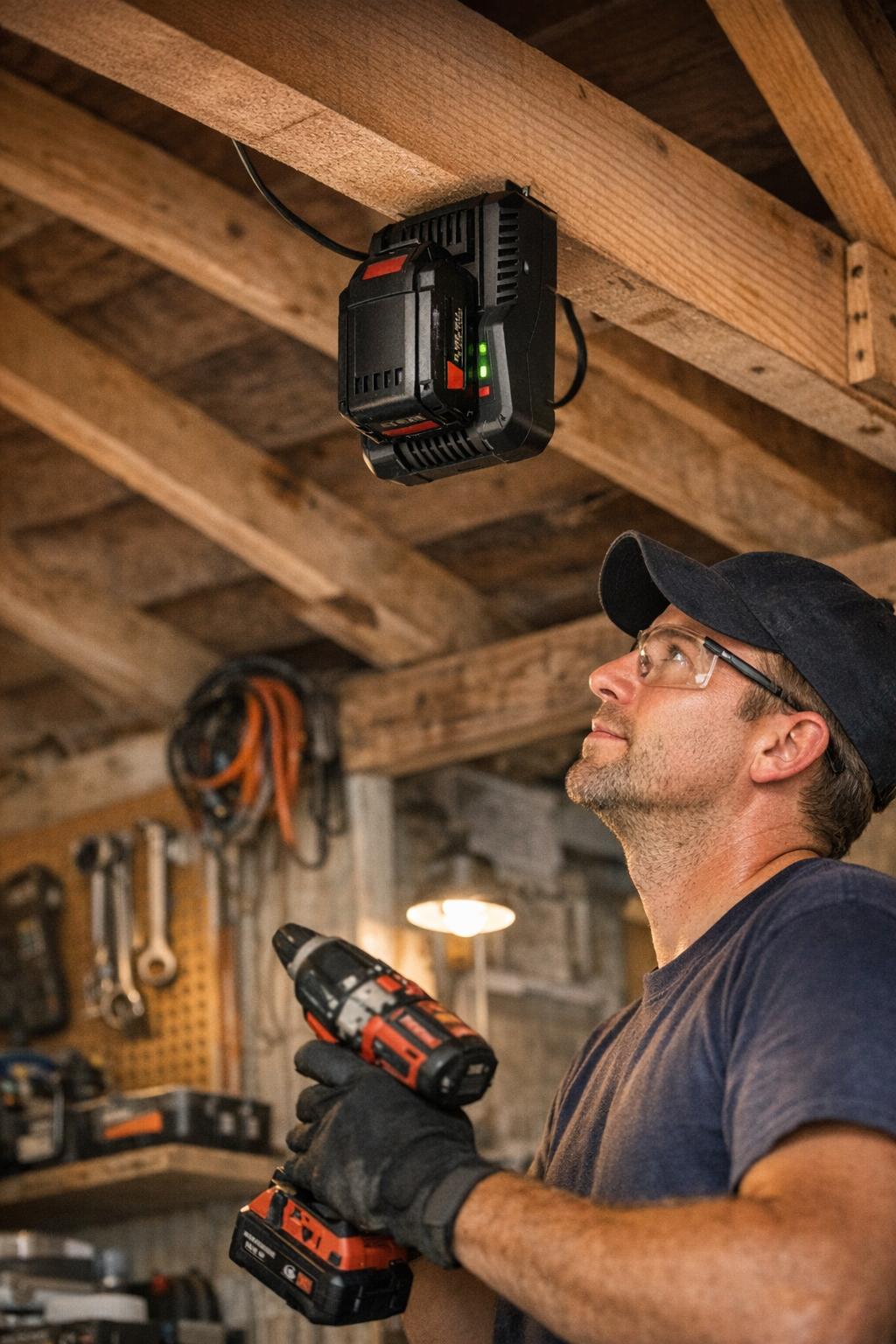
It’s easy to underestimate how much the physical placement of a charger matters. I used to keep mine tucked under a bench, thinking it would save space. But every summer, overheating and forced shutdowns threw off the entire day. Only after moving the charger—mounting it vertically, open to the air on each side—did a different rhythm set in. The heat didn’t stay trapped; the work kept going.
A Subtle Shift, A Noticeable Change
It’s not dramatic. Just a twenty-degree difference, some breathing room around the plastic case, and suddenly the red light on the charger means “ready” instead of “wait.” The jobs roll through, the last tasks get done, and there’s no lingering sense that simple things have quietly gotten harder.
You notice the difference when it’s gone—those moments when the charger keeps up and your plans keep moving.
There’s a comfort in trusting your setup, realizing that how and where you place a tool can matter just as much as which model you picked.
Sometimes, putting your charger in the right spot is all it takes to let things flow again.
These thoughts came together while troubleshooting in my own dusty garage.