When Charging Choices Quietly Shape Your Workday
Disciplined charging routines like timed sessions and avoiding daily fast charging keep lithium-ion tool batteries healthy and extend lifespan.
You don’t really notice batteries—at least, not until they slip out of sync with your routine. Life keeps moving. The tools keep humming. Most days, you grab a pack from the charger, slip it into your drill, and expect everything to work as it should. There’s almost a sense that these little blocks of stored energy are invisible—until, quite suddenly, they aren’t. This is where charging habits begin to matter, even if, at first, it all feels automatic.
The Hidden Cost of Everyday Charging
It creeps in quietly. Maybe you leave the battery on the charger overnight, thinking it’s harmless, or you choose fast charge for convenience—just this once. Nothing happens at first. Both batteries, the carefully tended and the carelessly charged, seem to run just fine for weeks.
You don’t notice it immediately.
But you feel it.
A few months down the line, the tool that once powered through an entire job now needs a battery change halfway. The pack you’d trusted suddenly runs warm, even after a gentle task. There’s sometimes a faint ache of frustration—one more small obstacle in a day already packed with moving parts.
Small Choices, Long Shadows
What shifts the outcome, in the end, isn’t a single big decision. It’s the little habits. In a real-world moment: the difference between grabbing a battery kept cool and unplugged, and one left to “rest” on the charger for days. I’ve watched two identical batteries—side by side, same age, same brand—gradually part ways. One loses a precious ten minutes of runtime, the other powers through. The change is nearly invisible, until it isn’t.
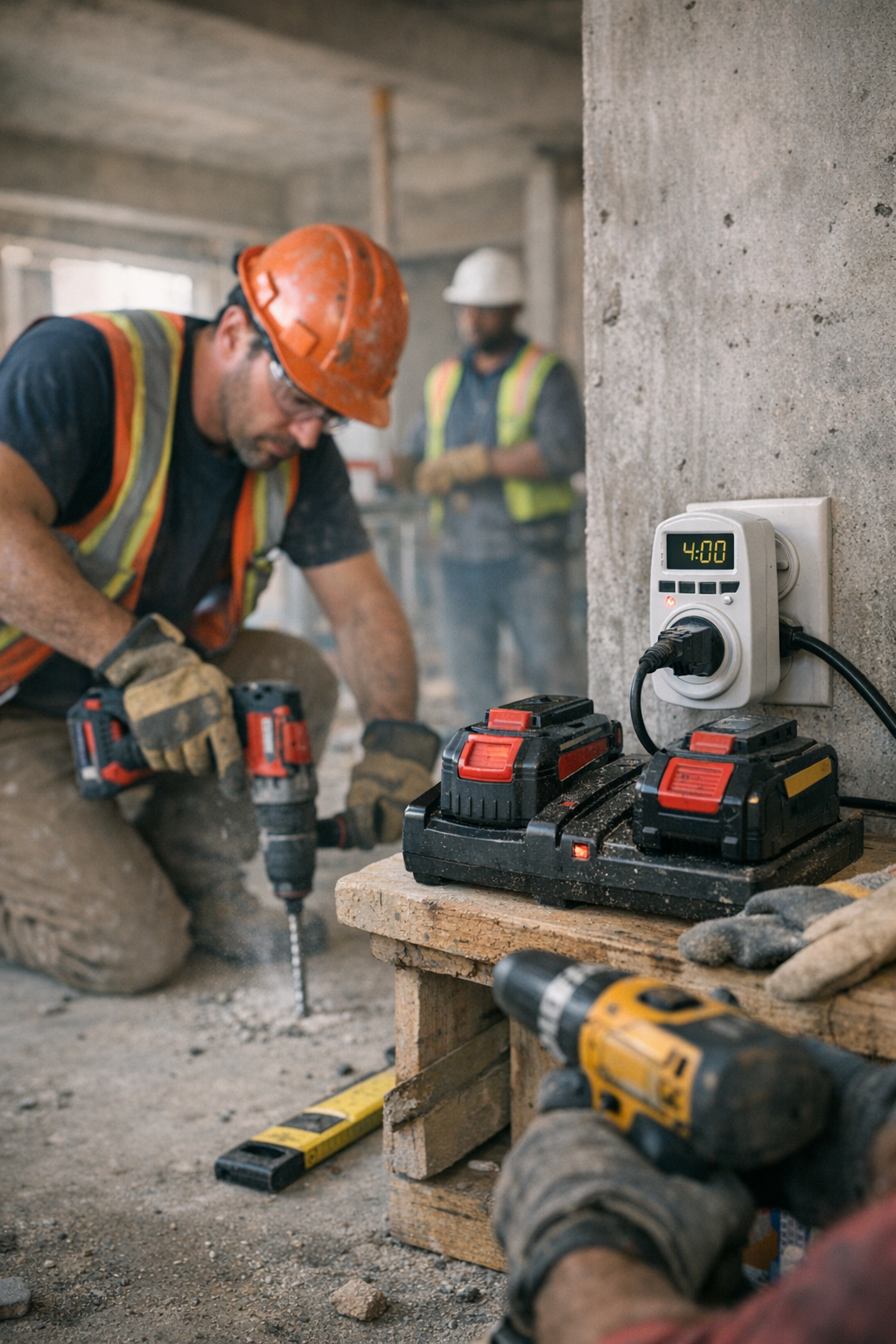
A quiet refresh in perspective came when I started using a simple timer plug on my workspace. Batteries only stayed on charge for the hours they needed—never longer. No more stacking up heat. No more forgotten overnight charging. Day by day, the surprise interruptions faded, and runtime seemed to stretch just a little further, as if I’d squeezed more hours out of ordinary mornings.
The Work You Don’t See (And Why it Matters)
Most tool batteries recharge in three to four hours. They don’t beg for attention—but they do hold a silent memory of how we treat them. Leaving them plugged in past that sweet spot asks more from each cell than you realize. Use fast charge only in those moments when it’s essential; the battery’s quiet warmth after, not just in your hand, but in its life, will show gratitude.
Real work, in the end, is about flow—not just speed. There’s less scrambling for backup power when those small charging habits become routine. Noticing these subtleties won’t change the world, maybe, but it might make your work feel a little less interrupted. A little more yours.
These quiet thoughts flickered through my mind while tinkering on an old workbench I’d almost forgotten.



