When Clean Doesn’t Mean Welcome: A Cat’s Quiet Resistance
Switching to a mild unscented cleaner cuts cat avoidance and mess, resetting both the cat’s routine and your cleanup effort.
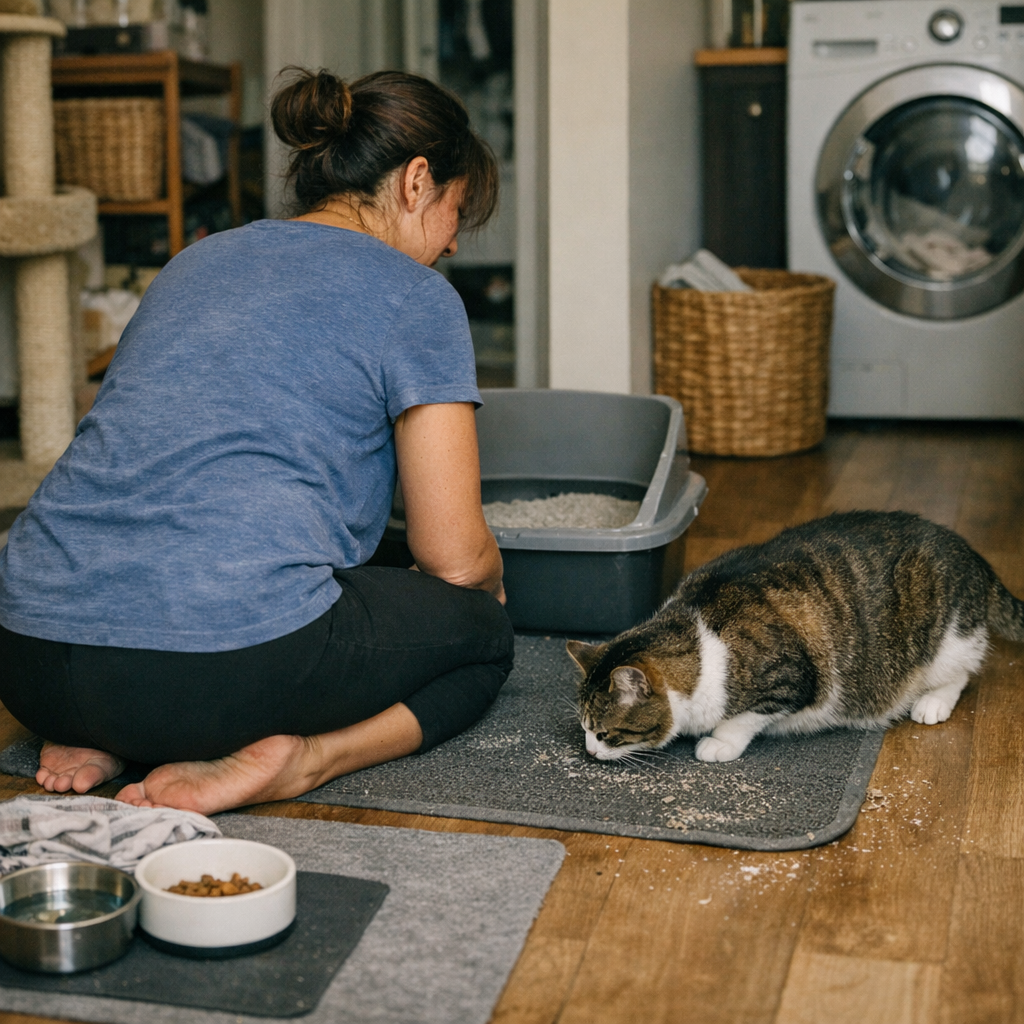
You only notice it after some time living with it. The spot where your cat always eats or uses the litter box seems settled after you’ve wiped down every surface—until it isn’t. It’s not dramatic at first. A few days pass, and the space still looks fine but demands more from you than it did before. It should have been an easy reset and a stable routine. Instead, something keeps pulling you back to that same patch of floor, again and again.
At first, it seemed alright. The air smelled fresher, mats were neatly arranged, bowls were back in place. But subtle differences kept appearing—litter tracked beyond the mat, food crumbs collecting at the edges, and a cat who paused just long enough to catch your attention. The shift didn’t happen all at once. You realize slowly that your choices around “clean” don’t always settle well—especially in indoor spaces, where everything tends to stay put, including the scent of cleaners.
Where Clean Turns Into Work
You learn that a cat doesn’t just respond to what’s visible. Strong fragrances, even from products that promise freshness, cling to the eating or litter area—sometimes enough to keep cats away. What was supposed to be a shortcut to tidiness ends up adding steps to your routine. This realization hits somewhere between picking up scattered kibble and finding yet another clump of litter in the hallway. Every reset grows slower; routines wobble.
After a few attempts, you see that using a cleaner that’s too strong or heavily scented doesn’t just take more time—it actually multiplies the mess. The cat hesitates around the box, the litter box sits untouched longer, and suddenly you aren’t just wiping surfaces, but coaxing your cat’s routine back into place.
When Less Is Actually Enough
There’s a quiet relief that follows switching to a mild, unscented cleaner. Not a dramatic improvement—just a quiet one. The cat’s hesitation at the box disappears, tracked litter fades to a faint memory, and the feeding area stops demanding constant second looks. The whole setup settles once the cleaning fits the cat’s comfort, not just the human’s idea of fresh.
That small change keeps coming back to me. The extra work fades, routines stabilize, and cleanup returns to being just an ordinary part of the day—not a recurring puzzle that traps you in extra resets.
The Real Test Happens Later
Over time, you realize a space doesn’t just need to look tidy right after cleaning. It needs to demand as little as possible between resets. The mild, scent-free cleaner turned out to be the only part of the cleanup routine that actually lessened workload instead of multiplying it. Even in shared spaces—between laundry baskets, in a corner near the sofa—it brings a small but genuine steadiness back to the day.
Sometimes you have to live with a routine to see which parts quietly make it easier. I keep circling back to that insight, even now.
If you want to see what’s changed in my own setup, I tend to keep things here: stillwhisker.myshopify.com



