When Clean Yards Quickly Turn Chaotic Again
Small yards quickly lose tidiness after cleaning if storage can’t handle mixed-user routines; divided wall zones keep areas clearer longer.
There’s something strangely predictable about the life cycle of a small yard. After one weekend of effort—tools tucked away, cushions stacked, gear corralled—you stand at the edge, admiring open paths and the absence of clutter. For a day or two, it holds. But soon, the old pattern creeps back in: stray rakes leaning in corners, sandaled footsteps scattering shoes, toys blocking the way to what you meant to grab.
It’s not that the cleaning fails. It’s the way the space absorbs the everyday habits of everyone who lives there. That’s the part I kept circling back to, even after every round of tidying.
The Surface Illusion of Order
Bins lined up along the fence do look organized for a minute. Deck boxes stand like sentinels. You don’t notice the slow unraveling at first.
But the real trouble blooms under routine. Different people add things at odd hours; one set of hands puts away gloves, another rushes to grab a ball, someone else drops cushions without thinking. Each runs their own route, and storage meant to be neutral and flexible can’t keep up.
Order breaks down not from messiness, but from a setup that isn’t shaped for the real, overlapping rhythms of use. You find yourself resetting paths over and over.
Where the Clutter Starts
Walking the side yard by Wednesday, you see how quickly patterns reassert themselves. Sneakers pile at the gate. A hedge trimmer blocks the way before anyone thinks of putting cushions back in their spot. Somehow, objects migrate just far enough to trip you up.
You don’t really notice when it happens. You feel it when you can’t walk through cleanly. That’s when it clicks: organization isn’t just about where things fit, but how they return, especially with more than one person in the mix.
The line between organized and clogged gets crossed most quietly in moments of interruption—one toy, one tool, one busy afternoon when everyone’s routine overlaps.
A Small Change, A Longer Calm
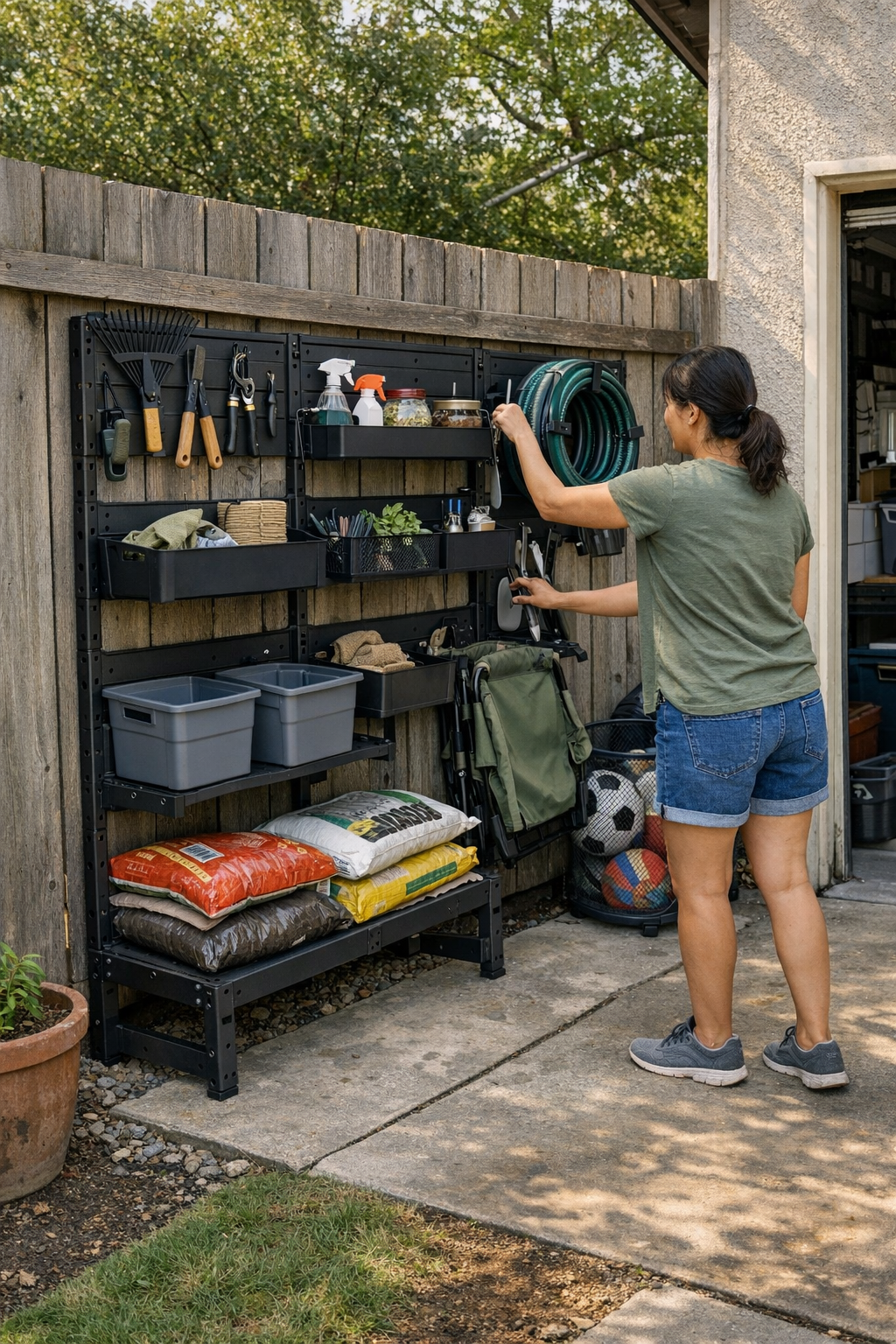
Eventually, I swapped the bins for a wall panel. Not bigger, just divided—clear vertical spaces set aside for each main group of items. The effect wasn’t dramatic, but something stuck: when the storage nudged things upward, giving each clutter type a hard stopping point, spillover didn’t sneak onto the footpaths as easily.
It became easier to reset after a crowded weekend. The ground stayed open longer. The need to reorganize didn’t disappear, but the area asked for less. Sometimes, I think that’s what makes a small space feel human—when you catch yourself moving through it, not fighting it.
These thoughts gathered over the course of a long, slow project in my own backyard: http://www.tidyyard.myshopify.com