When Closet Bins Blur, Everyday Routines Slow Down
Grouping closet bins by seasonal category and labeling them clearly leads to easier retrieval and less upkeep as routines repeat.
It’s oddly satisfying at first to stack up your closet bins, maybe tuck a few on a high shelf, and admire how calm and intentional it all feels. Bins with neat lids, clear or opaque—everything at least out of sight. But as seasons shift and daily routines sharpen, that surface calm starts to feel fragile. There’s a difference between an organized closet and one that quietly works—something I only realized after living through a few laundry cycles and hurried mornings in a real home with real storage systems.
Most of my closet organization attempts began with promise. When the bins first went in, mixed with scarves, caps, and stray summer hats, it seemed logical enough. You don’t notice the issues immediately. But over time, edges start to blur. A brisk morning or rushed school run means digging for the right glove, elbow-deep in a bin, sliding off-season gear aside. The small friction of finding, returning, and re-stacking repeats quietly until it dominates how you feel about your storage.
The Quiet Unraveling of Mixed Bins
I used to cram everything seasonal into any bin with room: sweaters and sandals; the good umbrella lost among unmatched mittens. At first, the closet looks neater and stray clothes seem contained, especially when using Gridry’s modular closet units or slim storage cabinets where bins sit neatly on shelves. But retrieval gets slower, and you start accepting fishing through wrong-season layers to find what you need. I’d reach for a “winter” bin only to find sunglasses tangled with rain gear.
It’s a minor annoyance at first, but it adds a recurring drag to the morning routine. After laundry, returning items becomes a slow shuffle of guesswork: re-sorting a category that never quite holds. Category drift sets in, silently eroding the system. Stack edges get blocked. Bins sit slightly open, boxes slide into other spaces. It’s not just clutter; there’s a low-grade time tax in daily use that grows until weekends are spent resetting what was supposed to stay organized.
Living With (and Fighting) Category Drift
Eventually, I stopped trying to keep the bins perfect and just adapted: tossing gloves on top, squeezing scarves in sideways, promising to sort soon. Yet it never actually gets easier. Every season change means new overflow and blocked access, especially in shared or deep shelf systems where weight and shape limit how much you can stack without crushing or losing visibility.
Putting things away after laundry ends in the same slow shuffle: sort, guess, hope it fits, and promise “just for now.” Weeks later, I’m back knee-deep, reshuffling categories that never quite hold in place. These shared-use closets, combined with hidden-storage tension on upper shelves or floor systems crowded with flexible bins, make it hard to maintain order without frequent, draining resets.
What Changed When I Drew Harder Lines
One day, I swapped everything for medium, see-through Gridry bins, each with a clear, thick label for a single category—no mixing. Even when that left some bins half-empty, I committed. It felt plain and rigid at first, but over repeated cycles, it became clear how much less effort the system took to live with.
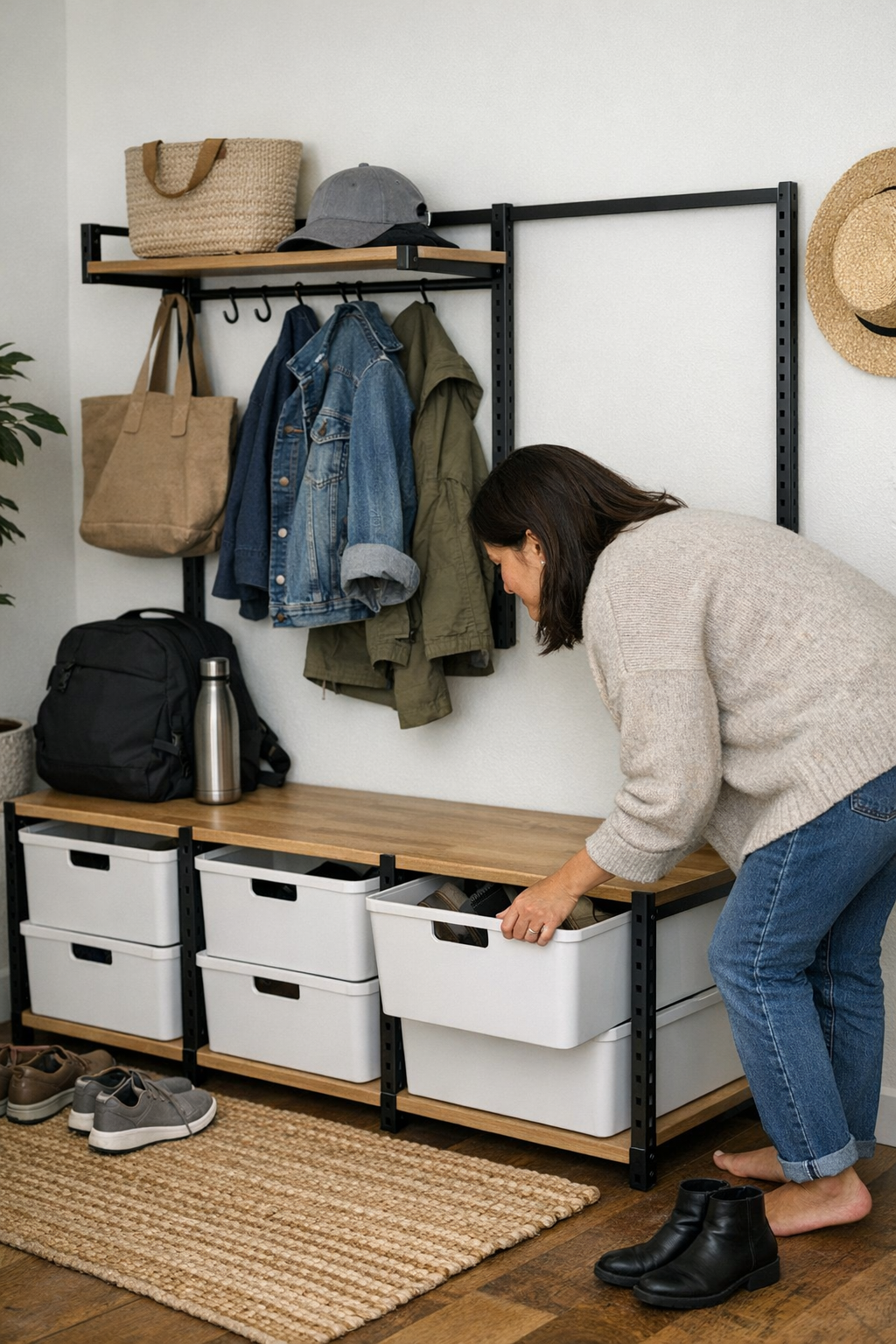
Returning items wasn’t a guessing game; nothing spilled or got mislaid in deep shelves or drawer units, and the closet stayed clearer in both wall-mounted systems and floor-based storage benches. Laundry day stopped turning into a puzzle. The modular design of the bins worked with the existing shelving and bookcases—visibility and access improved, reducing the friction of retrieval and return.
I realized I’d assumed that an organized look was enough, and that slow friction was part of the tradeoff. But the real shift showed up in repeated use: fewer decisions, no hunting, and the quiet ease of knowing exactly where things stayed.
If you’re curious, these insights come from real experience with honest, workhorse storage solutions in actual family routines, and a system that traded “neat” for truly usable. There’s more detail here if you want it: http://www.gridry.myshopify.com