When Closet Order Fades: The Quiet Struggle of Daily Use
Shelf dividers suit stable stacks but topple with use; bins contain items but hinder quick access. Combining both eases daily use.

When Order Unravels Quietly (And Why Closet Routines Matter More Than We Admit)
There’s a slowness to how chaos creeps in. The closet looks sharp, every stack squared, every bin lined up. For a little while, the feeling holds — the comfort of order, the small relief each time you open the door. It’s only in the background, after a week or two, that things begin slipping. Socks blend with tee shirts; a stack leans, the bin you need is buried. Somewhere in the routines of ordinary days, you notice the questions your closet quietly asks: Will this last? How do you actually use this space?
The Illusion of Lasting Neatness
At first, shelf dividers seem like an answer. They promise visible, separated categories — sweaters here, jeans there, nothing bleeding past the lines. Bins have a similar appeal, corralling small things so they don’t wander. In the light of morning, both give the sense that you’ve done something right.
But time tells a different story. You don’t notice it immediately. A shirt tugs a few others along when you pull, or a deep bin swallows socks you thought you put on top. What helped the first day now requires small workarounds. Soon, the closet seems to ask for more attention — not less.
What Happens Between Resets
It’s often a Wednesday when you reach for a favorite shirt and find the tidy stack has started to sag. Or maybe it’s Sunday afternoon, shifting through a bin that once held order but now hides what’s needed at the bottom. These moments are quiet: a sigh, a sense that the effort isn’t quite paying off.
Living with a closet is a cycle of arrangement and breakdown. I’ve noticed it most with the shelves holding activewear—a semi-neat row of leggings, a pile of tees, socks tumbling out at the sides. Dividers help, for a time, but their hold is always temporary. Bins contain chaos, yet sometimes at the cost of visibility or ease. And the next reset is always floating somewhere on the horizon.
A Small Shift, and a Bit More Clarity
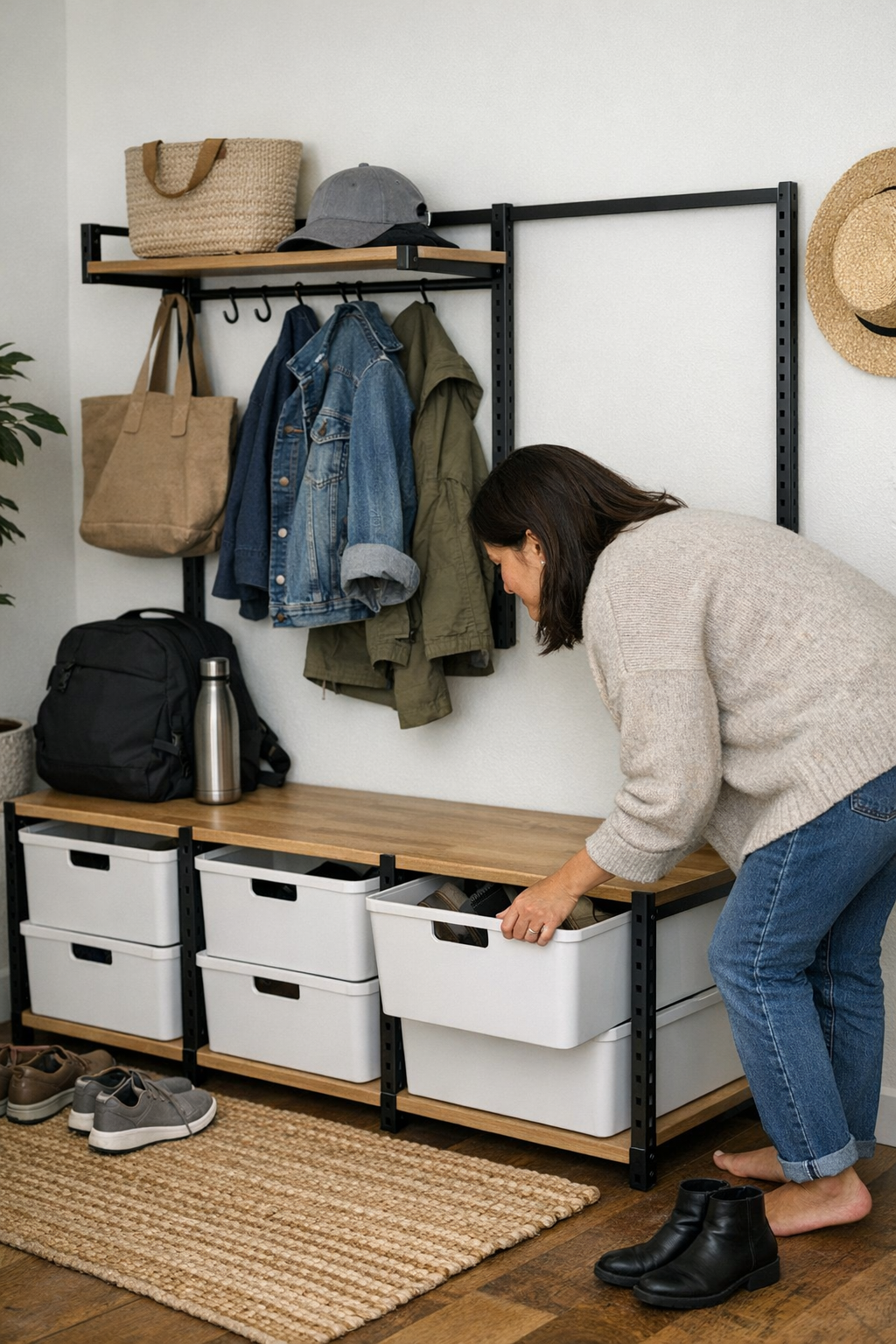
What softened the friction wasn’t more products, but a subtle change in arrangement: pairing low dividers only where stacks stay flat and using shallow, open bins for everything less stable. One section, left a little bit empty, became a soft return zone — a place for the everyday things that haven’t made it back to their category. This buffer turned out to be more useful than any new container, easing the daily return and making the next reset gentler.
It’s a small observation, but a telling one: when you pause before putting something away, or find yourself always reshuffling, the system is speaking. Sometimes, all it takes is a change in how much space you leave open, or which things share a shelf.
Closets, like routines, settle into rhythms you don’t always notice. With a little attention, the line between order and chaos shifts — never perfect, sometimes just a little more forgiving.
If you’re curious, I started thinking about this while reworking the shelves in my own closet, and you can see some of that process here.