When Closet Order Meets Everyday Chaos
Open shelves offer quick access but need frequent tidying; cabinets hide mess but can slow retrieval. Dividers help maintain order.
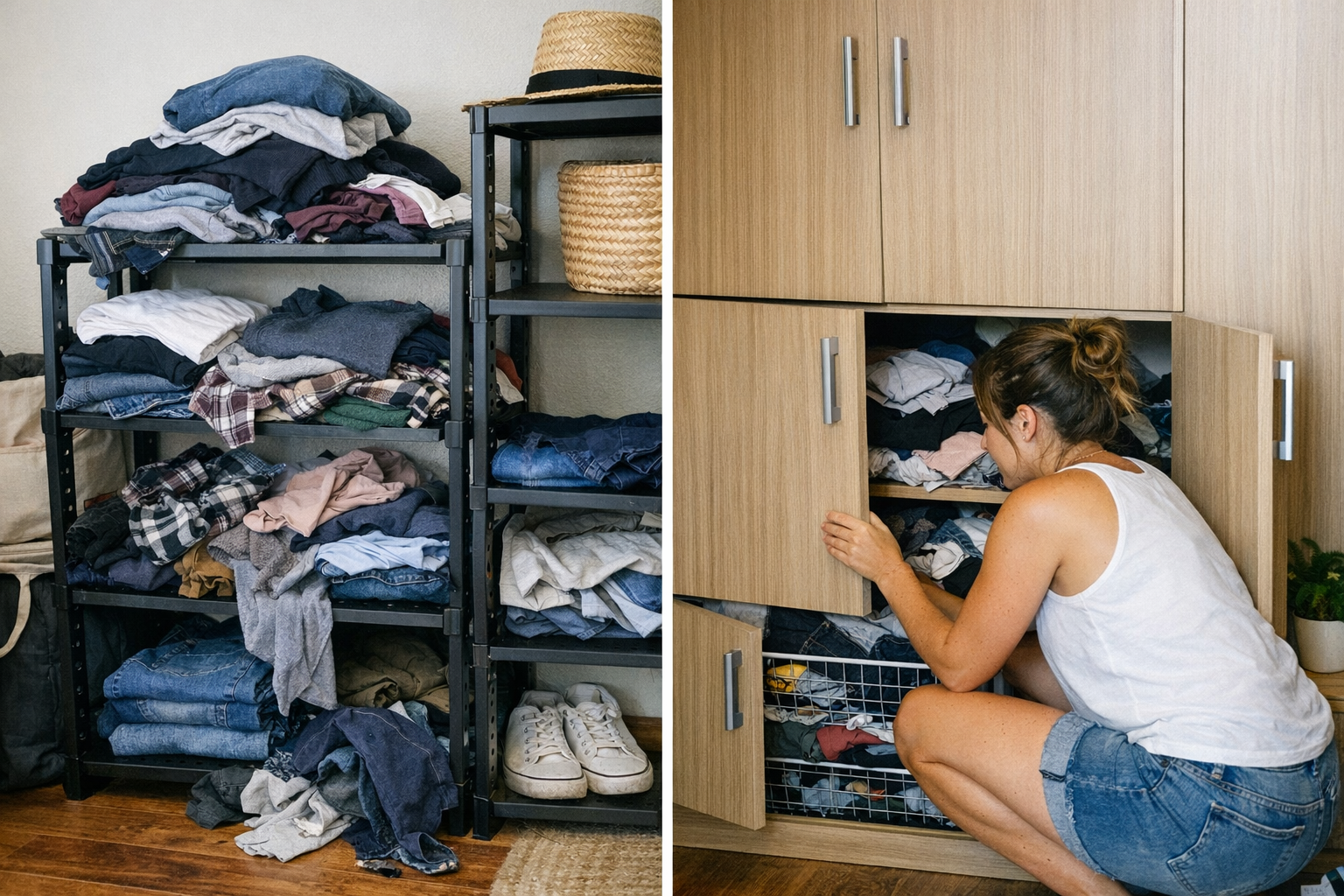
Some mornings start with a sense of possibility—until you open your closet. It takes only a few extra seconds to find that one shirt, but the rhythm of your morning shifts. There’s a subtle, daily drama here, rarely talked about: the silent impact of how you store your things.
Closet storage isn’t just a matter of taste or style. The choice between open shelving and closed cabinets quietly shapes the ease—or friction—of your routines. Without fanfare, this small decision ripples into the flow of your day.
The Unseen Effects of Open Shelves
In the beginning, open shelves feel almost aspirational. Everything visible and neatly folded; each sweater and shirt ready at a glance. It all looks under control. You don’t notice it immediately.
But a few busy mornings pass, and new patterns emerge. Edges start to unravel. One rushed grab, and a careful stack gives way; favorite T-shirts slide forward, mingling with things they weren’t meant to. It’s an accumulative effect—easy to ignore, until it isn’t.
Something subtle happens: the open shelf reflects each hectic moment, magnifying the ebb and flow of daily use. Yet, there’s an unspoken benefit. When things fall out of order, you spot it right away. And sometimes, that immediate visibility makes it easier to gently put things right again.
Cabinets: Calm Surfaces and Hidden Currents
Cabinets offer a different atmosphere. Closed doors promise order; the outside world remains undisturbed, tidy, calm. For a while, you can forget about what lies behind them. But you feel it.
Over time, items drift deeper into the shadows. The favorite pair of jeans slips to the back, a shirt is quietly forgotten. In some ways, cabinets trade visual simplicity for an occasional sense of searching—a minor delay that’s easily dismissed until repeated often enough.
Out of sight doesn’t always mean out of mind, but it can. A single open door can reveal a tangle of mystery piles. Calm is kept on the outside, but inside, it’s still just you and your habits—set to their own quiet rhythms.
A Small Change That Quietly Solves a Lot
This all came into focus for me one evening, folding laundry for what felt like the hundredth time. I slid a simple divider onto an open shelf—one low boundary, dividing shirts from sweaters. That’s all.
To my surprise, this small adjustment changed everything. Categories stayed intact, and grabbing one thing no longer made others topple. For the first time in ages, the shelf’s edge held steady all week; resetting wasn’t a full-scale rescue operation anymore. Just a little attention, here and there, as needed.
It was an unassuming shift, but it made the difference between feeling like I was chasing after chaos and quietly managing it—almost without noticing.
The tradeoff between open shelves and closed cabinets isn’t solved once and for all, and maybe that’s the point. What works at first can shift with the rhythms of life—seasons, moods, sudden rushes out the door.
Sometimes, all it takes is noticing where the stress accumulates, and a gentle change—dividers, a door, or simply a new way to reset. The details of storage are small, but they echo quietly into the way each morning really begins.
These reflections came together as I sat, watching the last light tilt across my closet, here.



