When Closet Order Starts to Slip in Daily Life
Pull-out drawers offer easier, more reliable access and keep categories defined, while fixed shelves often lead to clutter and slower resets over time.
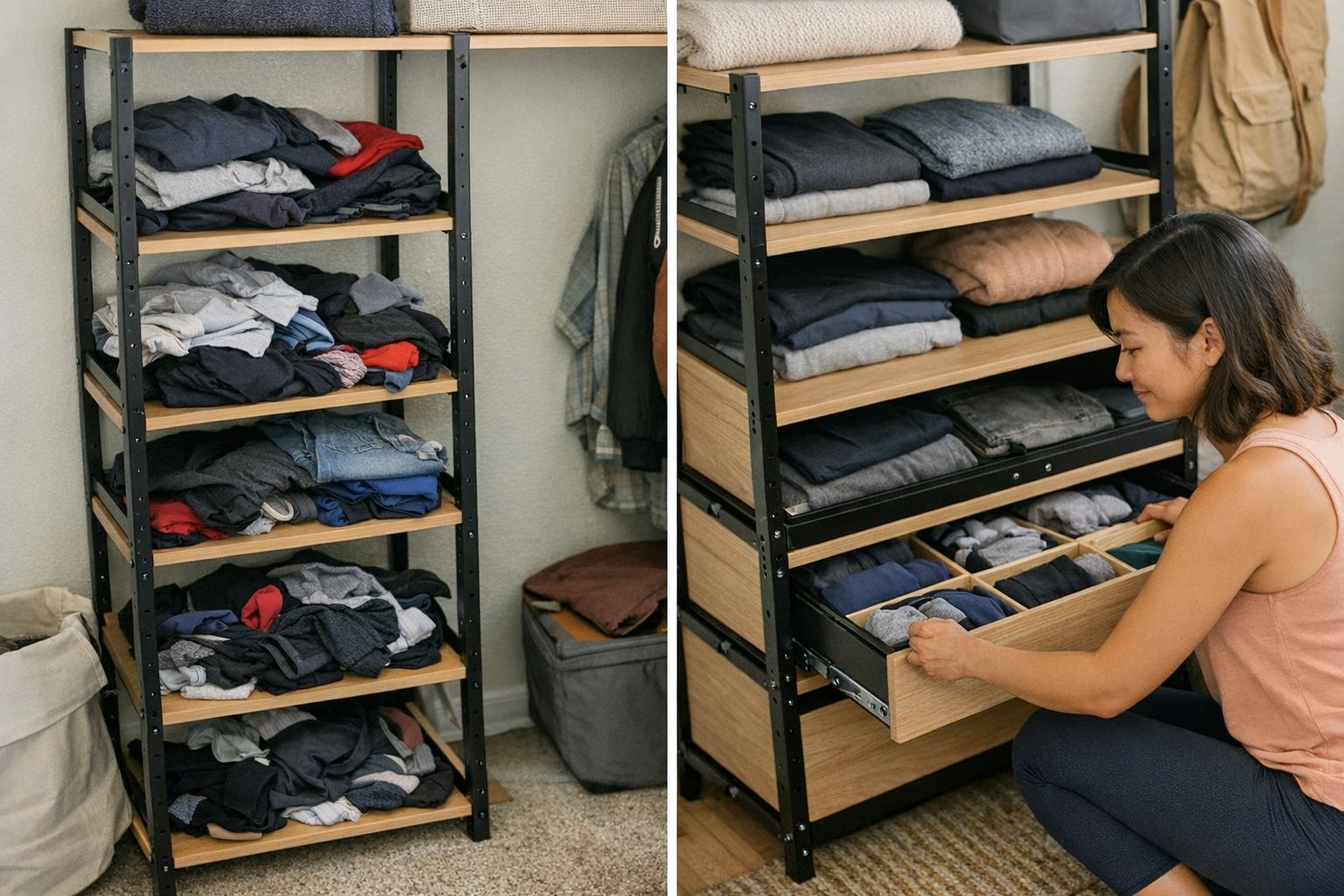
You don’t really notice the flaws in your closet until you’re running late. In those moments, when your hand disappears into a pile of tangled shirts and socks, the idea of “organization” becomes something more felt than seen. Suddenly, where your clothes rest shapes your whole morning.
Maybe it starts with fixed shelves, everything perfectly stacked and folded at first—the way we all want things to look when we finish a good purge. But habits form quickly. It’s only after a few weeks that the smooth look slips away, replaced by restless stacks and scavenger hunts for missing socks. Pull-out drawers or fixed shelves? This question lingers quietly in the background, becoming real only as life tumbles on.
The Illusion of Order
On day one, fixed shelves offer a sense of control: neat rows, visible at a glance. But as days pass, items drift. That crisp stack from Sunday morning blends into a mess by Thursday night.
You don’t notice it immediately. But you feel it.
The socks that were once on the left now hide in a shirt pile on the right. A favorite tee migrates to the back, rarely seen. Reaching in—especially during rushed mornings or post-laundry resets—means disturbing everything else. What began as order quietly unravels.
Small Shifts, Big Differences
There’s a subtle difference when you move from fixed shelves to a pull-out drawer. It doesn’t shout at you—just makes things a little easier, morning after morning.
One pull, and everything is there: categorized, easy to reach, nothing tipping or sliding out of reach. Even after a busy week—laundry days, last-minute outfit changes—the drawer keeps its promise. Each item remains contained, waiting where it should be.
The first time I switched a shelf for a drawer, the effect was immediate. No more digging; no more piles threatening to avalanche. The simple act of returning a fresh stack took seconds, not minutes. Resets became an afterthought.
Noticing the Patterns
I’ve noticed something: the longer I use pull-out drawers, the more invisible the “work” of staying organized becomes. The messy shelf above collects random loose things—a hat, a charger, forgotten gloves—while the drawer below keeps its boundaries.
This isn’t about perfection. Sometimes, a shelf really does handle big or odd-shaped things better. But for the tangle of socks and tees that make up most mornings, the drawer quietly wins.
A small divider inside, barely taking up space, can also keep categories separate—subtly preventing that slow slide back to chaos. Little shifts make every morning run just a bit smoother.
And maybe that’s what makes the difference linger.
Closet solutions reveal their truth not on setup day, but through the repetition of everyday life. Habits shape spaces, not the other way around. I find myself reaching for things more easily, rarely frustrated, and the need to “reset” feels less like a chore.
Some days, I still glance at my closet and notice the old shelf spilling over, while the drawer remains quietly, almost stubbornly, in order.
Most of these reflections came together while sorting clothes for a weekend project at home.



