When Closet Shelves Shape Your Daily Routine
Choosing adjustable shelves offers flexibility for changing storage needs, while fixed shelves provide stability but may waste space as habits shift.
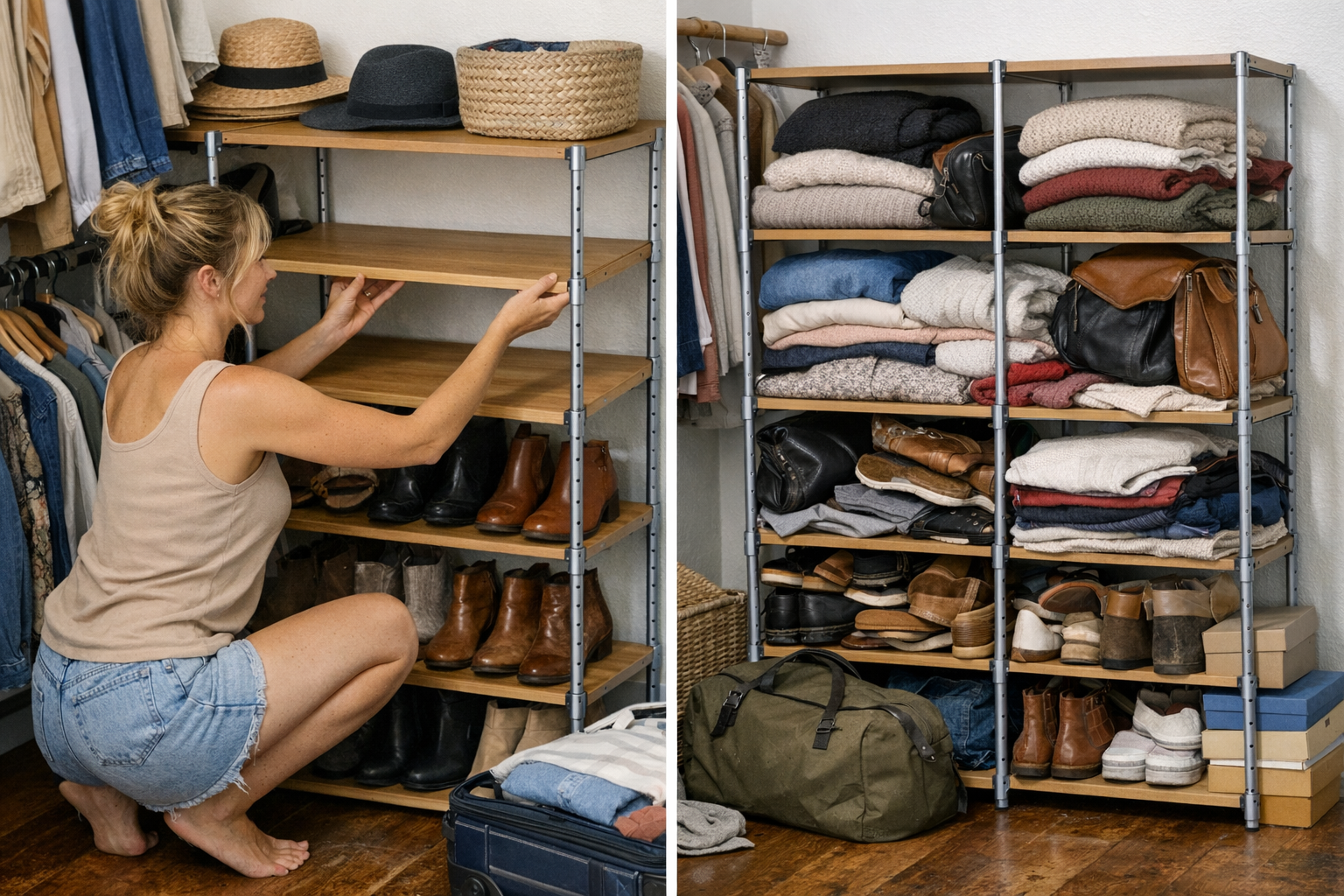
You rarely think about your closet shelves until you’re standing there, groggy in the morning, nudging aside shoes to find your sweater. Maybe you’re in a hurry. Maybe you’ve just shifted things around for the season, and suddenly what felt simple now asks for a little juggling. The quiet decision between adjustable shelves and fixed shelves rarely earns more than a passing thought—until it becomes the reason clutter starts to spill over, edge by edge.
There’s a funny divide in closet design. The question: What matters more—order that doesn’t budge, or the room to rethink what belongs where?
You don’t notice it immediately.
But you feel it.
Order That Lasts, Until Life Changes
At first, any shelf can look crisp and clean. A row of folded shirts. Shoes lined up just so. There’s a fresh satisfaction in seeing everything where it belongs.
But weeks go by. Then, a new coat arrives, or you finally buy those boots you’d admired. Suddenly, the neatness hits its limit. Fixed shelves, steady and unwavering, hold what was there—until the rhythm of your life swerves and demands more room. Stacks inch higher, unused space sits just out of reach.
You start to see it, slow and subtle, as floor space shrinks and piles creep outward.
The Quiet Promise of Adjustability
Adjustable shelves tell a different story. Shift a peg, lower a board, and it seems like you’ve made new space out of nowhere. When two people share a closet, it’s these small changes—a shelf slid just low enough for boots, another lifted out of the way for bags—that can keep each morning a little less rushed.
Of course, flexibility brings its own risks. An off-kilter shelf, set in haste, can tilt. A loose support wobbles under weight. The convenience comes with a minor price: small misalignments that nudge items to the edge, or a rushed restack that turns into a daily ritual.
Still, for many, the ability to rework a closet without a saw or screwdriver becomes its own kind of quiet relief.
A Subtle Shift, A Simpler Routine
There’s something satisfying about returning things to their place with one easy motion. I noticed this during one rainy week—just after anchoring new adjustable shelves so the gap fit a shoebox perfectly. Suddenly, jackets settled into place without fuss. The mess that used to collect near the door stayed at bay. In some ways, the closet felt lighter—less a storage tomb, more a living part of home.
It’s easy to miss these moments until you catch yourself, less hurried, just because reaching for a sweater doesn’t mean toppling a pile.
The truth: most closets work at first, but only the right fit holds up to the small churn of real life. Sometimes, a quiet reset—moving a shelf, tidying an edge—opens up more room than you’d expect. The frustration from before smoothes out, almost unnoticed.
And one morning, what was clutter becomes quiet again, at least for a while.
These realizations came to me in the middle of a slow weekend, just after a simple closet reset.



