When Closets Feel Calmer Behind Closed Doors
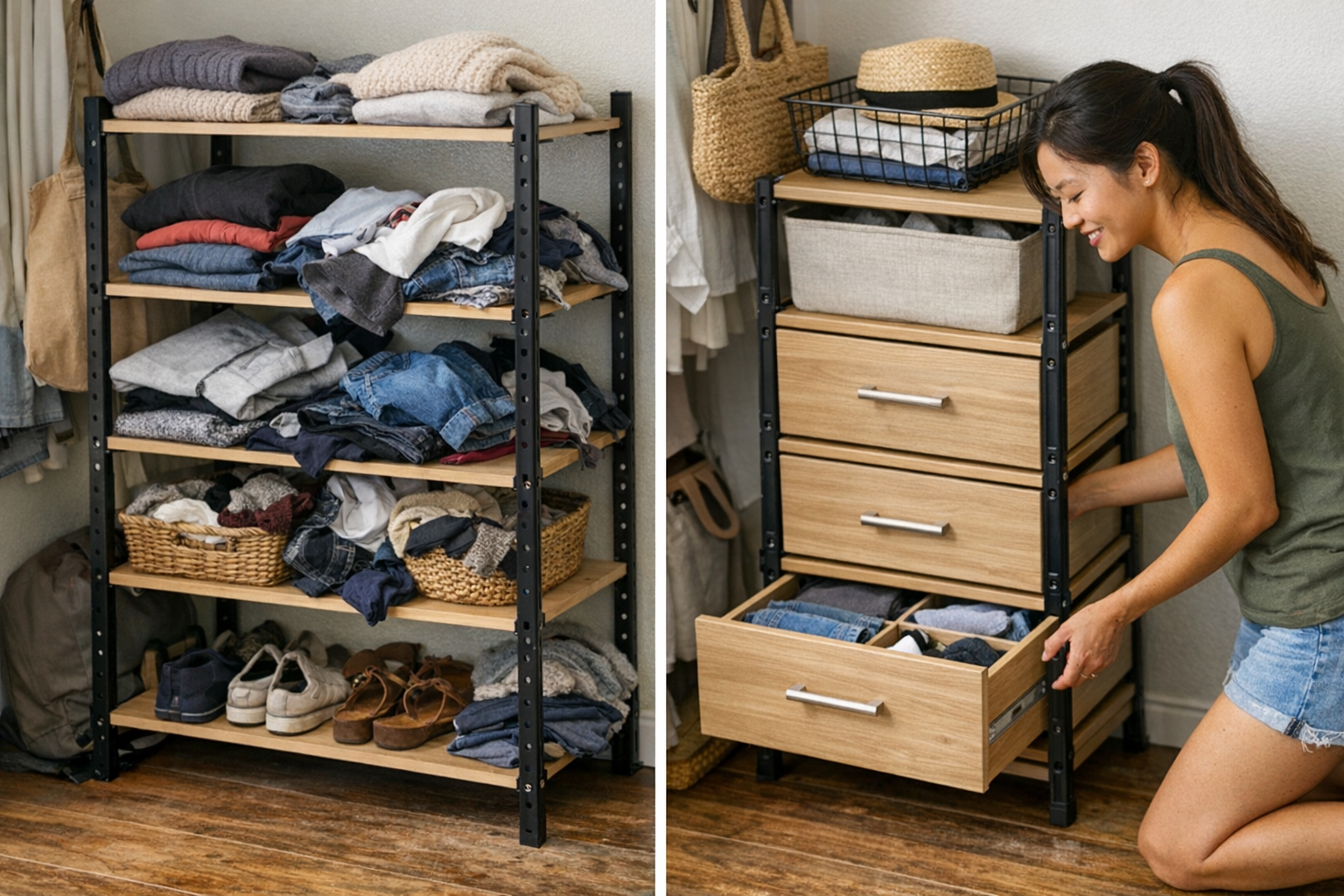
Drawers control visual clutter and speed resets by hiding mess, while open shelves offer visibility but show every slip in organization.
You rarely notice a closet’s mood until you’re already standing in it, one shoe in hand, lost in a sea of shirts and socks. Closet organization sounds simple: drawers or open shelves? Each promises something—openness, calm, a sense of control. But the real differences only appear when daily life slips past the showroom setup and into the soft chaos of rushed mornings and late-night resets.
The question isn’t just how to fit everything neatly. It’s how to keep your space feeling restful when time and energy wane. Drawers and open shelving, it turns out, aren’t just practical choices. They quietly shape how we feel about the spaces meant to support us.
Visibility and Calm: The Promise and the Price
Open shelves look perfect, at first. Everything laid out, easy to see, promising instant access and less searching. The order feels secure because each fold stacks neatly, each category tidy in its own exposed row.
You don’t notice it immediately. But you feel it.
As days pass, the surface order starts to unravel. One stray hand reaches for the back, and the front of the pile slides forward. Socks sweep into t-shirts. Where you once had distinct lines, clothes blur into restless heaps. Open shelving always reveals the state of things—good or bad.
Drawers, though, shift the mood right at the surface. Their closed fronts soften a crowded morning. Even if the interior isn’t perfect, you’re met with a quiet, unbroken line. It’s a moment of calm. The mess stays hidden away until you choose to face it.
The Real-Life Drift of Clutter
It happens slowly: that shelf you thought would stay tidy grows crowded. Reaching for jeans unsettles shirts, and stray accessories tuck themselves behind the piles. Suddenly, grabbing one thing undoes the order of five.
It’s common—more common than people admit. The open shelf becomes a subtle source of frustration, a reminder that perfection slips with every hurried reach. Drawers don’t fix all mess, but they keep it out of sight, letting you reset with far less fuss.
After swapping just one busy shelf for a single, shallow drawer, I found the reset almost effortless. A gentle slide, one item out, nothing toppled. The line stayed unbroken. That small difference changed the whole mood of the closet. Sometimes, hiding what you can’t fix right away really does help.
Resetting the Day, Not Just the Closet
There’s a kind of comfort in spaces that let us close the door on disorder, even temporarily.
Open shelves favor the constant curator—the one who enjoys keeping lines sharp and categories thin. But most days aren’t lived that way. Most days blur. That’s when drawers come into their own: by hiding what’s unsettled, they make “tidy enough” feel acceptable, and easier to come back to.
A closet that hides clutter, even for a while, invites us to reset without pressure. Maybe that’s why some designs last far beyond their trend—their ease becomes invisible, right until you need it again.
These lines found their shape during a slow weekend, reshuffling things that never quite stayed where I left them. If you’re curious about the small, restorative power of closing the drawer, you might find more here. You will receive a Medium-style blog body.