When Closets Quietly Lose Their Order
Storage systems with clear destinations and gentle boundaries prevent daily pile drift, making retrieval and return easier for reliable closet use.
It’s curious how storage choices—open shelves, slotted racks, baskets with tidy dividers—alter not just the look of a closet but the feel of daily life moving through it. At first, everything finds a home and appears settled. But over days, the slow scatter begins: shoes sidle into sweater territory, scarves tangle with belts, baskets fill with mismatched odds and ends. A system once crisp grows opaque, and that quiet drag—friction—nudges its way into morning routines.
The Spaces Between
You don’t notice it immediately. But you feel it.
It begins with the little search for a left shoe in the rush, or the odd sense that putting things back takes just a beat longer than it should. I’ve found the turning point is rarely dramatic. It’s in the gradual drift of categories, the way a bin marked “gloves” accepts a hat or two, then anything soft and small. Pretty soon every category is merely a suggestion.
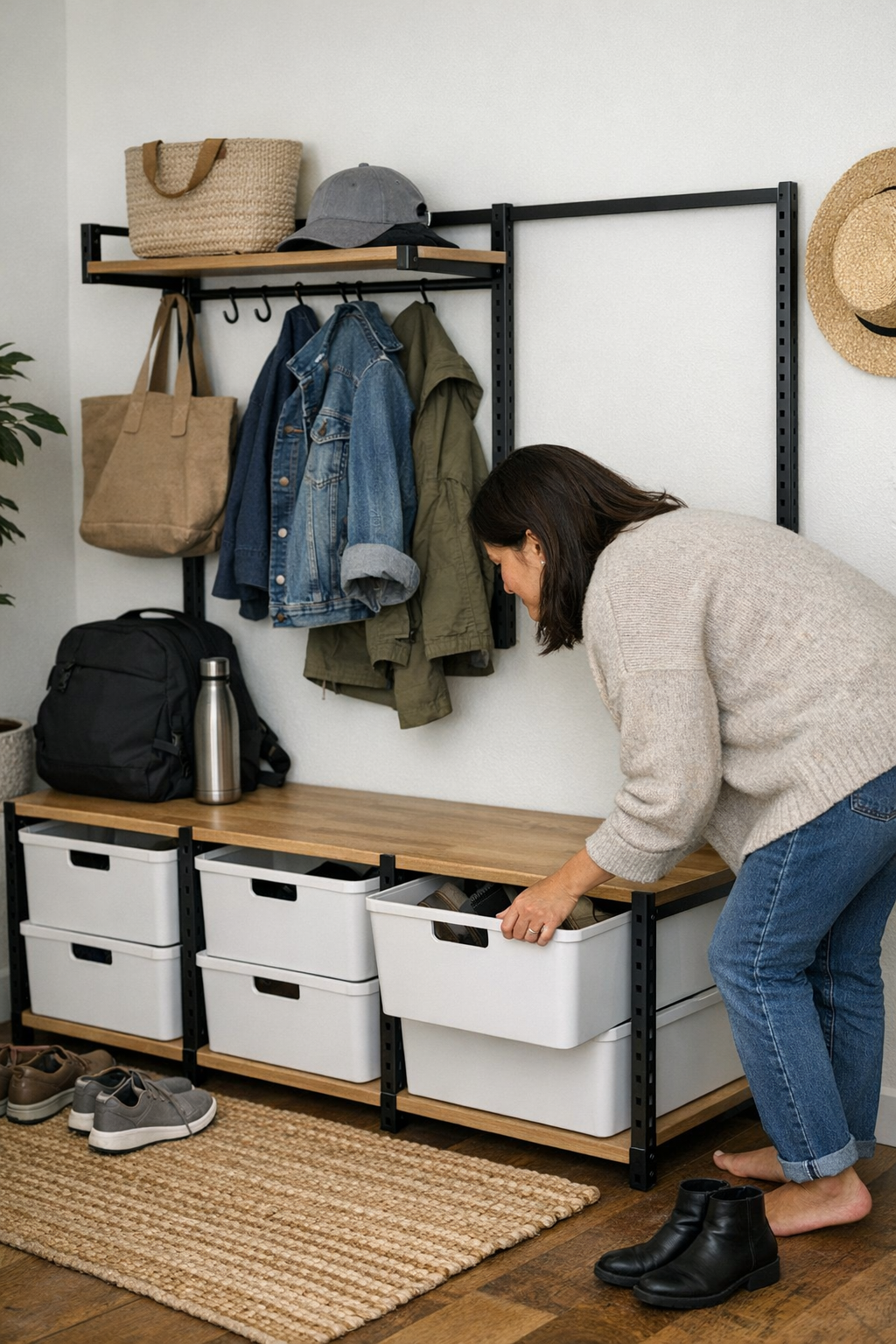
Physical barriers, even gentle ones, start to matter. Shelves divided, baskets with clear assignments, these aren’t about rigidity. They’re about letting things return to their spot with less effort—again and again.
Invisible Maintenance
A closet with one big shelf and an all-purpose bin looks spotless when first arranged. You breathe in that order, admire the simplicity. But the ease is temporary. By the next week, shoes creep over sweater piles; hats gather in with tangled belts. Each catch-all bin becomes a tiny black hole—slowly swallowing its label, mixing whatever lands inside.
The routine changes, too. Returning an item takes one more pause. A check. Sometimes a minor shuffle just to make a little space. The difference between a system that resets itself and one that always needs a nudge starts to come into focus—quiet, persistent.
A Small Change, A Softer Reset
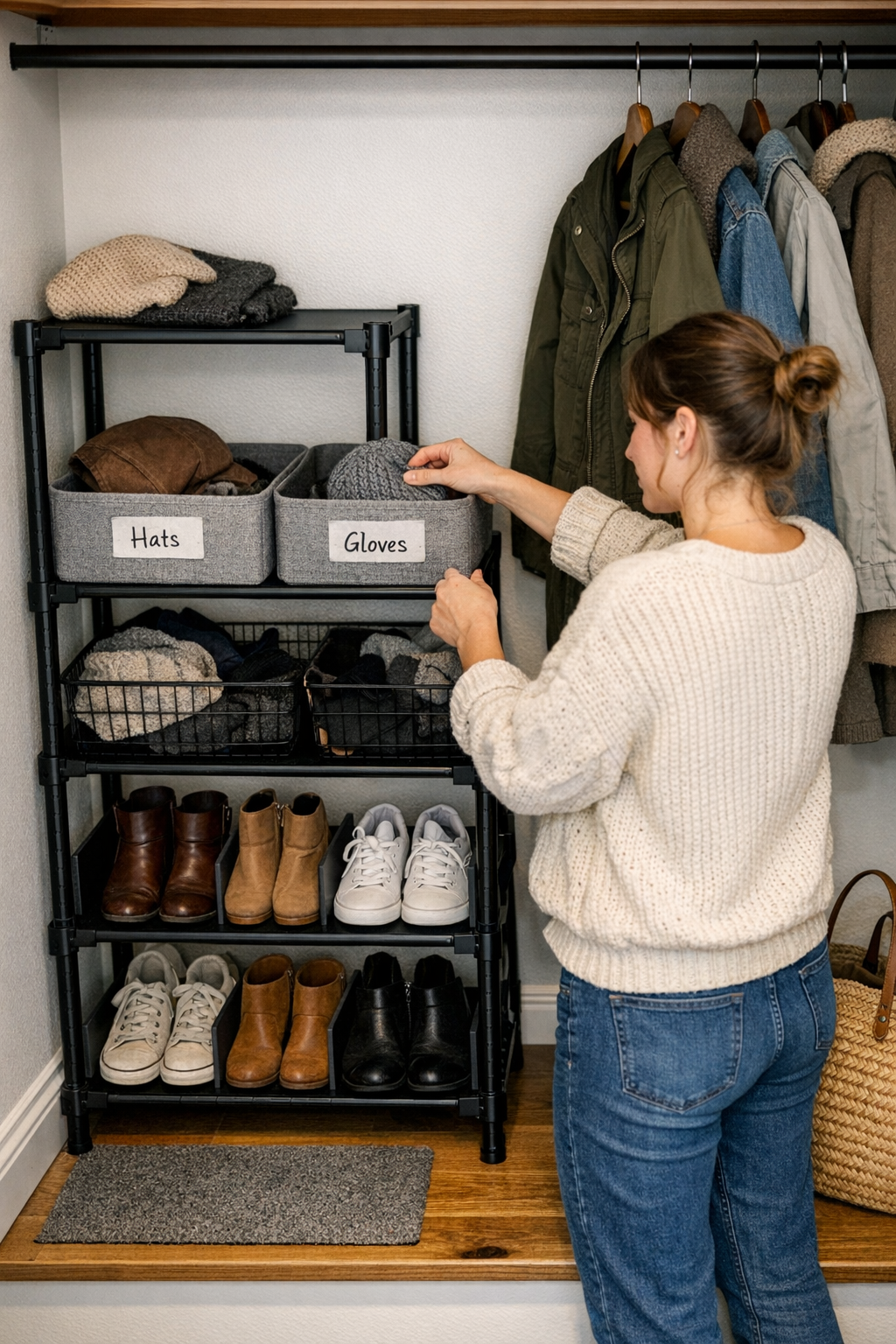
One winter, frustrated with a hallway closet that never stayed organized, I tried something small. Instead of one deep bin for gloves and hats, I used two shallower ones, each with its own spot. I slotted a divider into the shoe rack: left shoes, right shoes.
It didn’t overhaul the closet or promise perfection. But the boundaries stayed visible, even under weekday pressure. Grabbing gloves didn’t upend everything else. Shoes stayed in pairs. Reaching in and putting away no longer meant restoring order the hard way; it was the path of least resistance.
Sometimes, the smallest changes keep things smooth.
These reflections came together after resetting my own cluttered entryway, one ordinary evening.