When Clutter Creeps In, Clarity Finds Its Way Back
Open storage looks organized but often causes clutter and overflow. Selective visibility with covered areas restores clear access and smoother movement.
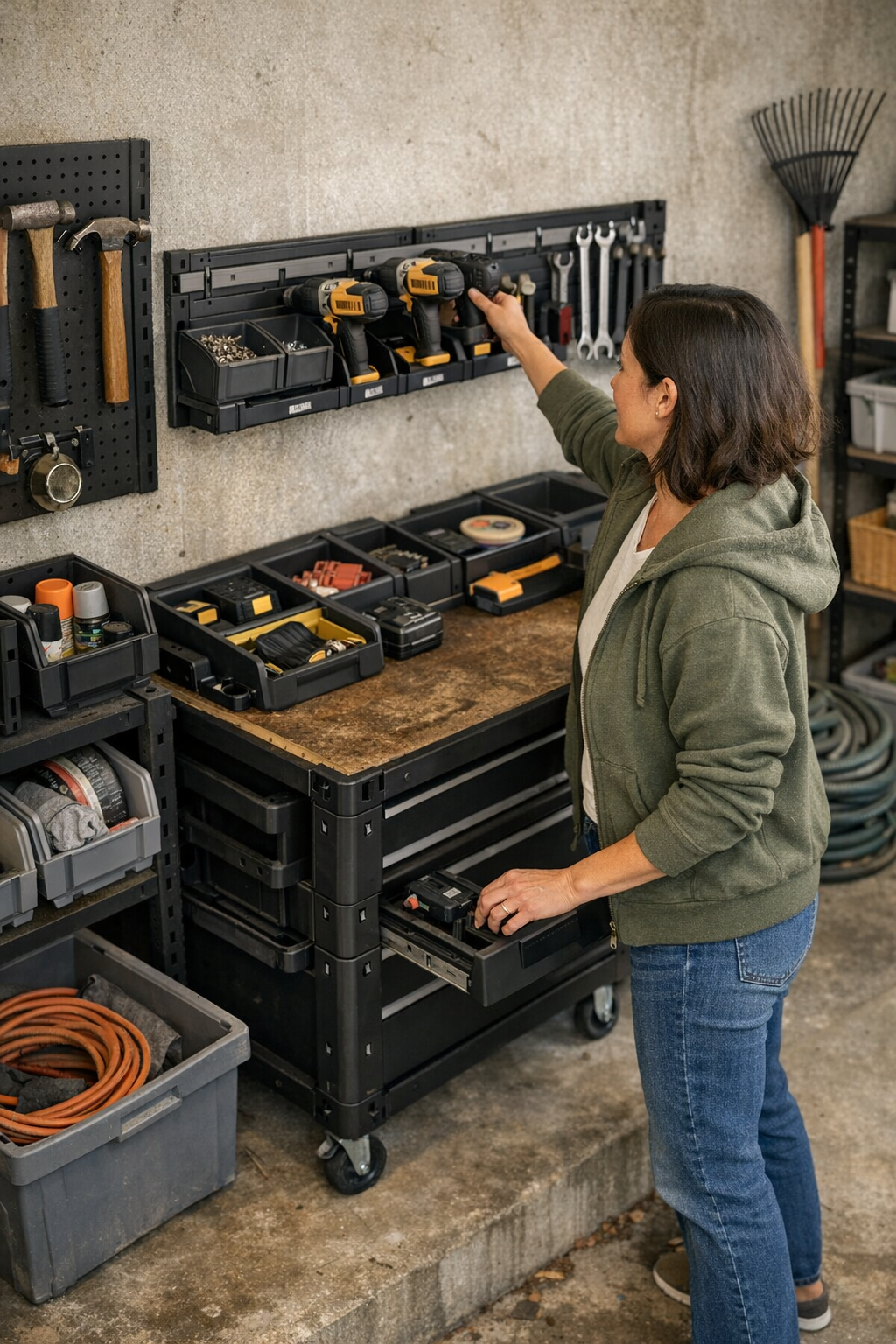
You know that first burst of satisfaction after installing a new modular wall system in your garage or workshop? Hooks lined up, bins neatly arranged in perfect rows, everything ready and reachable. It’s the kind of order that feels like a promise: work will flow smoothly, projects won’t get tangled.
But after the first real weekend of tinkering or repair, a different pattern emerges—subtle at first, but impossible to ignore. The tools you use most begin to blend into the crowd, bins become crowded, and that clear worktop you admired in the morning quickly fills up. You don’t notice it immediately, but you feel it.
The Allure of Total Visibility
There’s something reassuring about seeing every tool out in the open. Organization is often equated with visibility—if you can see it, you can find it, right? For a while, this holds true; each wrench and drill bit lines up like a checklist. The wall reads as organized and ready.
But the mind tires quickly of visual noise. As more tools get added and projects pile up, the lines start to blur. After a busy stretch—multiple projects running at once, maybe a late-night repair—finding the right screwdriver takes just a bit longer. Putting things away slows down, too. You pause, scanning the wall, searching for the right shape amid a mosaic of nearly identical outlines.
It sneaks up on you. Clarity gives way to clutter—not because things aren’t in the right place, but because there are too many “right places” at once.
Where Clutter Begins (Even in a Tidy Space)
I saw this in a friend’s garage setup. The wall system was a showcase: pegboards, shallow trays, everything arranged with purpose. But halfway through a hectic week, overflow trays ended up on the bench, and every reset meant moving stacks just to find the right bin.
You start to spot the signs—tools being handled two or three times before finally going “away,” items drifting off the wall onto the workbench, the slow build of piles in areas meant to stay clear. The space remains neat, but the ease of working quietly starts to fade.
There’s a quiet lesson here, tucked inside those extra steps. A workspace can look organized while still eroding your workflow a little every day.
The Quiet Power of Selective Visibility
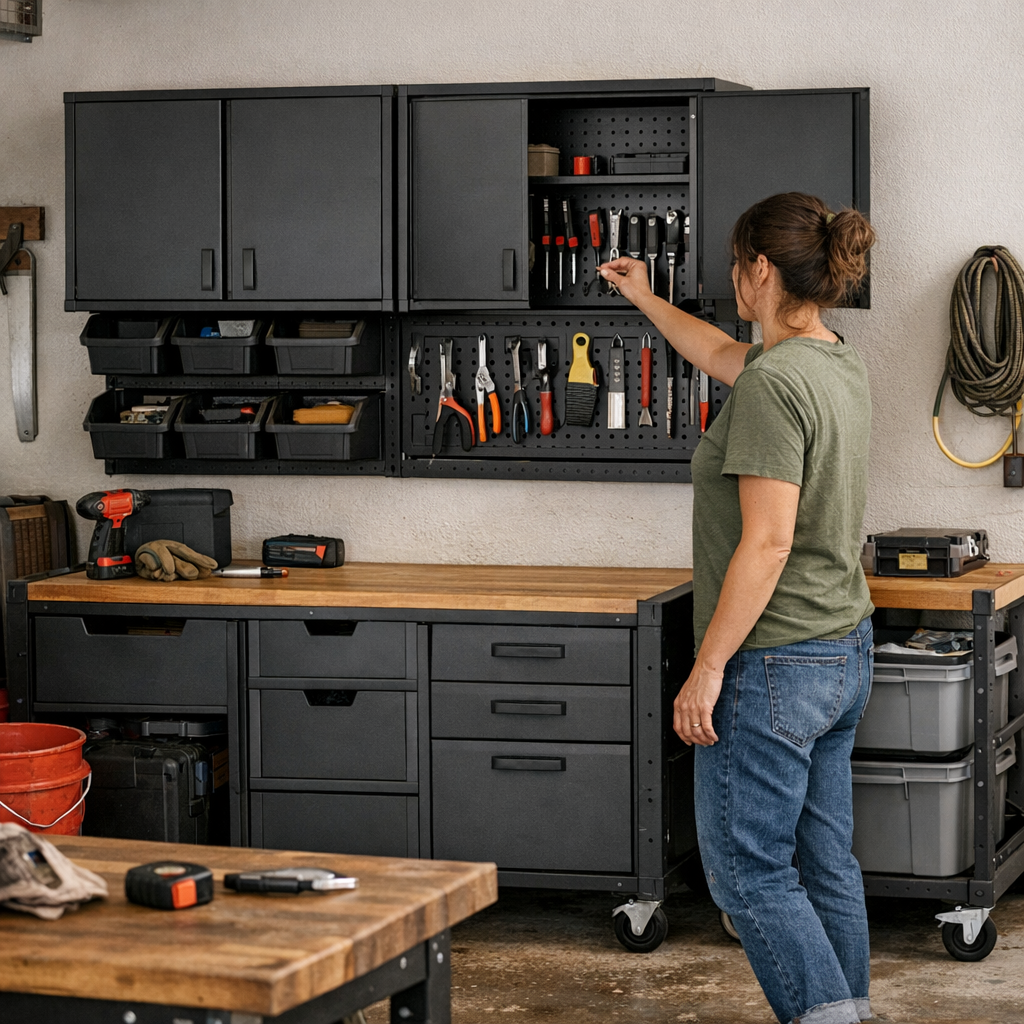
Shifting part of the wall—covering seldom-used bins, sliding a drawer under the main row—changed the rhythm entirely. Suddenly, only the tools for the current project stood out. Backup gear? Tucked quietly behind doors.
Something else shifted, too. Fewer back-and-forth trips, less shuffling. More moments of reaching out, grabbing, and returning items in a single smooth motion. With less for the eye to scan, the mind relaxed into the work. Even resetting the workspace at day’s end took less effort.
It’s a small but persistent improvement. One you might not notice on day one, but that slowly changes the flow of every session after.
I’ve come to appreciate this kind of modular design—one where you see just enough, and the system fades into the background. It’s the kind of order that feels personal, built around how you actually move through the day in a garage, workshop, or small workspace.
A system like that is quiet, nearly invisible, and always ready for you to start again.
These reflections settled in while rearranging my own little corner of the garage—and if you want to see a modern take on adaptable wall storage, Shopify’s guide to modular setups offers quietly insightful ideas.