When Clutter Creeps In: The Quiet Battle of Overflow
Contain spillover by setting clear boundaries and assigning one overflow spot, preventing hidden piles and easing daily resets.
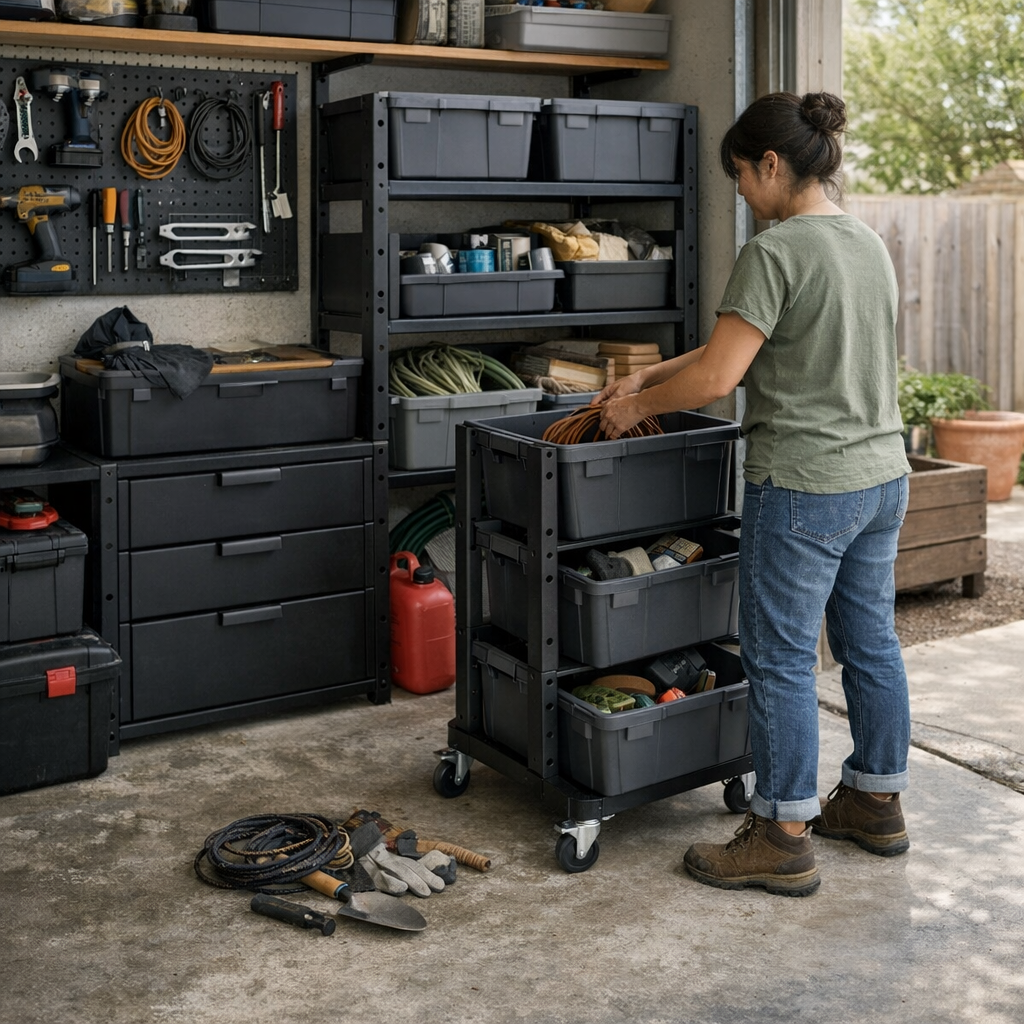
There’s a satisfaction that comes when you line up fresh bins and racks in a newly cleaned garage. Everything feels possible. You step back, admire the neat rows, and tell yourself this time will be different.
But even the best setups, carefully designed with StackNest’s modular storage, mobile carts, and wall-mounted racks, lose their edge faster than expected. It’s almost invisible at first—a stray wrench by a corner, garden gloves left on a shelf, items quietly migrating away from their assigned zones. You don’t notice it immediately.
But you feel it.
Edges Are Where Clutter Begins
The boundaries of a workspace reveal themselves only after real use. The first week or two, order holds. Then a quick chore interrupts routine. You toss something onto the nearest surface, promising to put it away properly later. This starts the dance of objects straying—first drifting to shelf ends, then slipping into odd gaps.
Open shelving looks efficient at first, everything in clear sight. But without defined edges or end panels, bins begin to drift and piles collect, encroaching on your workspace. Before long, resetting the space feels like a small project instead of a quick tidy.
Most storage setups, whether floor-based, wall-mounted, or mobile, only show their limits once daily work habits take hold. Weak boundaries become invitations, and “just for now” easily becomes “permanent.”
A Subtle Shift: Creating Boundaries for the Inevitable Overflow
One afternoon, after sorting through a tangle of lost screws and scattered tools, I tried a small adjustment. I added simple end stops to shelves and carved out a single cart for overflow. Nothing radical—just a gentle nudge telling extras where to go.
That changed everything. After a long day, I knew exactly where stray bits should end up. No more knees pressed against awkward piles. No more searching shadows for missing pieces. The goal wasn’t perfection; it was making the next tidy inevitable and manageable.
Practical changes like giving every overflow item a real home turn chaotic returns from scattered sprints into a calm, predictable path. The friction of putting things away drops away.
The Real Measure: Ease of Return, Not Just First Impressions
When your storage system quietly guides overflow into one defined zone, the workspace stays workable—even as daily pace speeds up. It’s less about battling clutter and more about keeping your movement clear, your footprint efficient.
The cleanest floor plan or cleverest shelf design isn’t the whole story. What matters is how easily everything returns “home” after use—even if that home is just a single catch-all bin. Corners without purpose become magnets for frustration.
There’s a calm in places that resist slow disorder creep. It’s not always visible in a photo, but you sense it every time the space asks less from you and quietly helps you keep moving.
These thoughts came together while reorganizing the edge of my own garage with StackNest’s modular storage solutions. Small shifts, like defining edges and overflow zones, make a real difference in daily use.



