When Cold Weather Changes Your Tool’s Rhythm
Power loss in cold outdoor use shows gradually as battery and blade resistance shift; proper blade, pace, and cleaning prevent rough cuts.
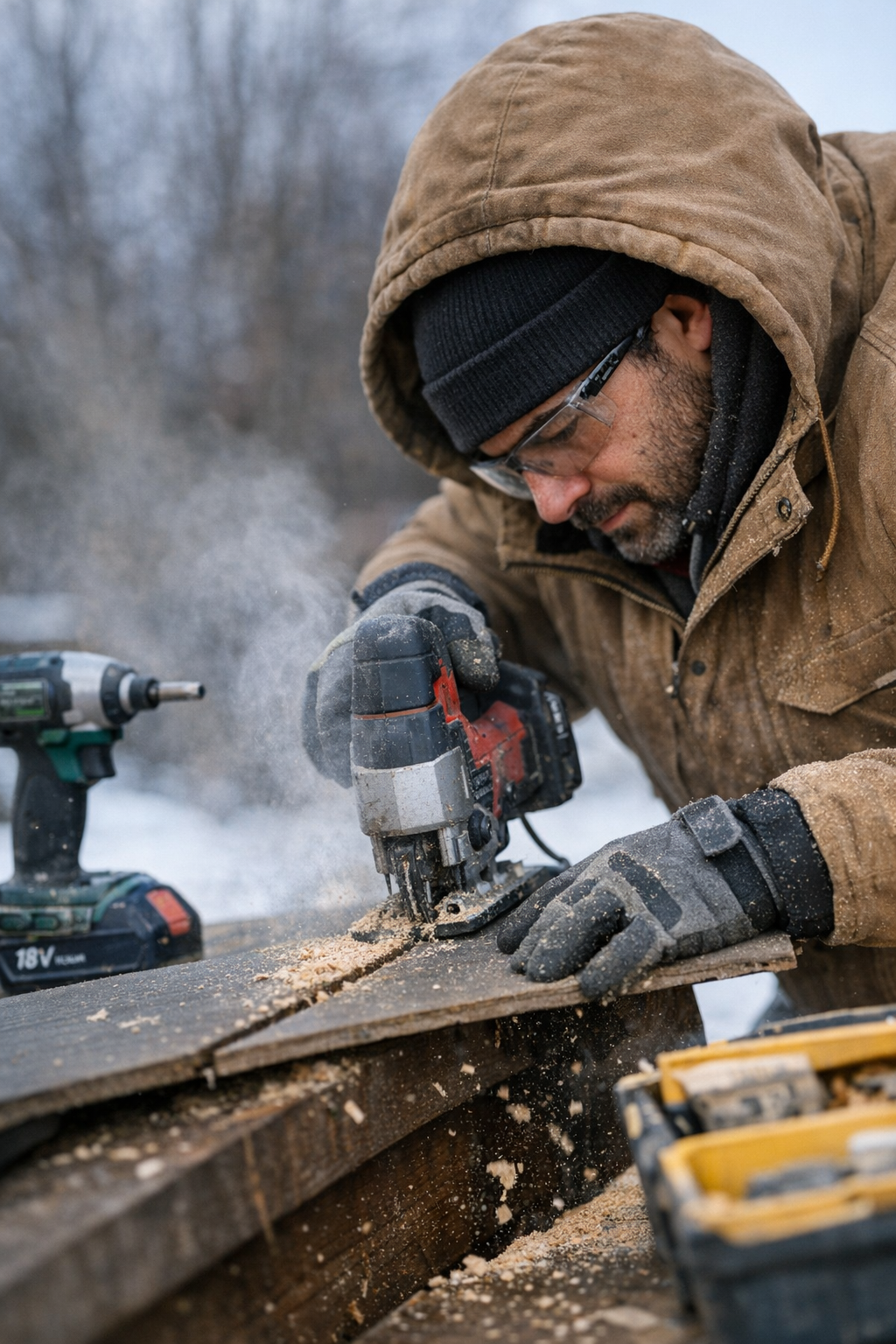
It’s easy to forget about battery life—until the rhythm of your work goes off-beat. On cold mornings, an impact driver hums along just fine. At first. There’s an undercurrent, though. That quiet uncertainty about what’s really happening under the shell of your tools in the freezing air.
I’ve spent chilly afternoons chasing clean cuts through winter wood, beneath breath that hangs like fog. Every time, I’m reminded how battery life and simple hardware can become subtle saboteurs.
The First Few Cuts Are a Kind of Illusion
There’s something deceptive about how power loss creeps in.
The first plunge of the blade feels smooth. Maybe even the third. Everything seems in order—motor pitched evenly, wood fibers yielding with no protest. You don’t notice it immediately. But you’ll feel it.
Almost always, it’s a change in the hands. A slight new shiver in the grip, barely there. The driver’s noise grows uneven. Edges begin to drag, just a little. Before the battery meter has even moved, the seam splinters or the cut line slips.
Pushing on through cold—past these small clues—makes rough work of things. Ragged edges. More sawdust clinging where you want clean lines. And hours later, you’re sanding or re-cutting what felt perfect only moments before.
When the Tool Fights Back
Not all power loss is loud and obvious.
Maybe you’ve plunged five times into stiff plywood, everything fine until—halfway through—each cut starts to resist. The drag increases, the sound deepens, dust thickens at your feet. Even a strong, new battery can start to falter if the blade isn’t right for the cold.
Sometimes, it’s easy to keep faith in your setup just because those first few passes came out well. The tool, after all, hasn’t stalled. But by cut seven, you’re working harder for the same progress. Your grip tenses. The line wavers.
I’ve found myself, mid-job, pausing just to look at the pattern: cleaner cuts when I slow down, clean the blade, or switch to a better-suited accessory—even if that means working against the urge to hurry.
The Moment for Subtle Adjustments
One winter, deep in a siding project, I started swapping a cold-jointed blade for one made to flex when the air bites. I began to pause and clear the kerf every few cuts, setting aside my usual push for progress.
It didn’t seem much at the time: cut speed slowed, work settled, edges came out sharper. Suddenly, cleanup at dusk took less time.
There’s a kind of calm in admitting the job is easier when you pay attention to the slightest shift—a vibration, a wider dust trail, an uneven pitch.
Shifting perspective can be as simple as allowing yourself to listen for the difference between a machine in harmony and one fighting its own resistance.
That’s the quiet reality behind handy tools on frosty days: paying attention to what changes, and when, makes space for less fatigue and cleaner work. Sometimes, the best progress reveals itself not in the rush, but in all the small pauses along the way.
These thoughts came together while tinkering with a few blades at dusk, on a side project that lingered into the cold.