When Corners Fade, Light Brings Quiet Order
Wall lighting targets edges ceiling lights miss, reducing clutter and improving visibility for smoother daily use in shared or compact spaces.
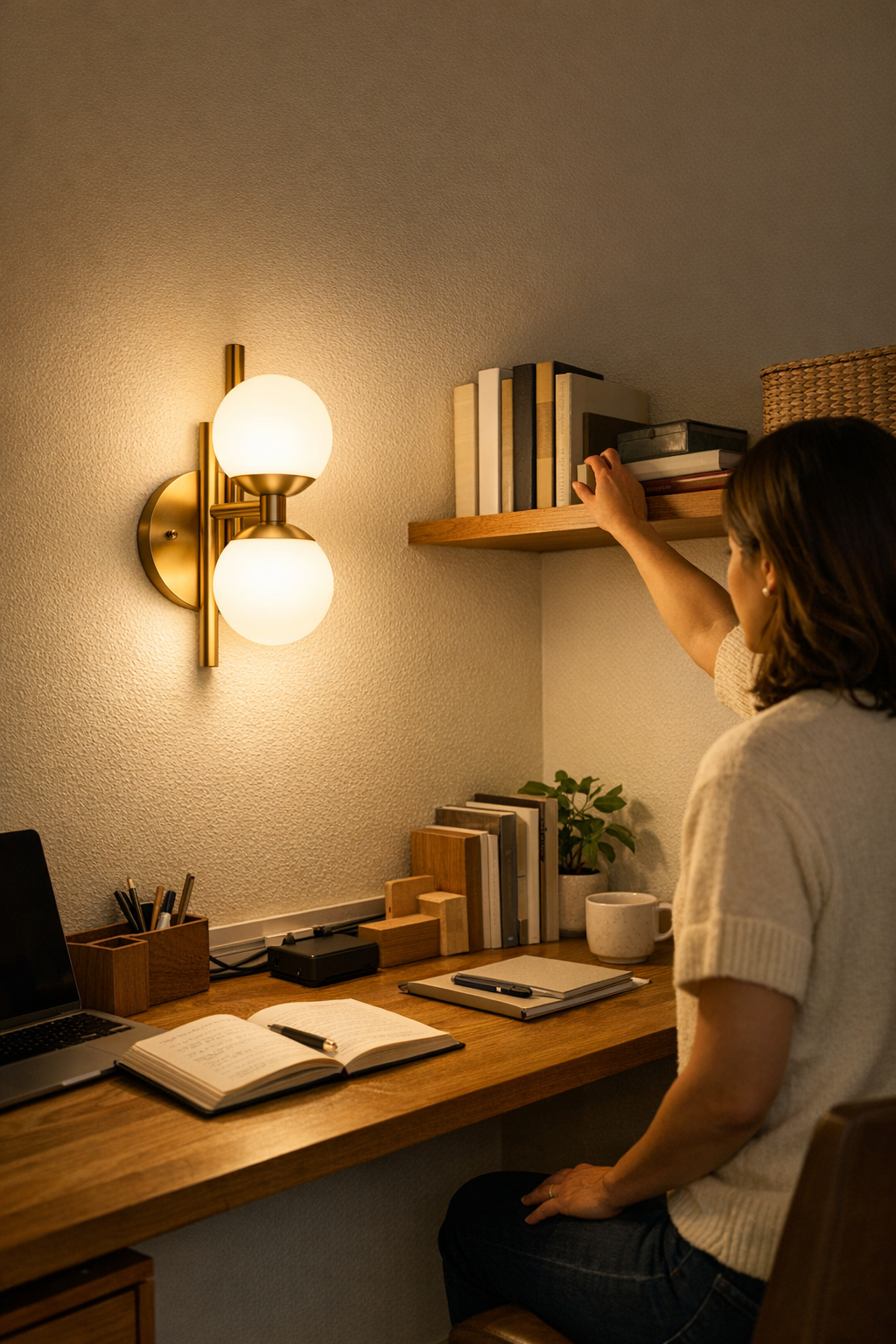
The Corners We Don’t See Until We Live With the Light
There’s something about the edges of a room at night. You settle in with the overhead lights on, maybe a desk lamp angled just right, and a shelf glow somewhere out of the way. The room’s shape looks simple—safe, even. But over time, these corners tell a different story. From my spot at the desk, I kept seeing the same pocket of shadow, a tangle of cords collecting behind the chair leg, the slow migration of things drifting into places where light couldn’t reach. It doesn’t feel like an issue at first.
But you feel it.
Edges Build Their Own Clutter
The reality isn’t that a room is too dark or too bright—just uneven. Most ceiling lights leave the far edges of walls in shadow, and those shadows become something else after a few days. Papers pile where they’re easiest to miss, cables droop out of view, and plugging in a new device means feeling for the socket rather than seeing it. It’s not immediately noticeable.
But it quietly complicates daily routines. The places where feet catch on cords, or where small things slip out of reach, those are always the dim spots—never the zones where the light falls cleanly on surfaces.
Wall Lights Change the Conversation
It wasn’t extra brightness alone that made the difference. The first time I aimed a small, adjustable wall lamp into the stubborn shadow next to the worktable, the messy edge stopped lurking off to the side; it became part of the room’s surface. Adding a slim fixture about 35 centimeters from the corner did more than improve visibility—it altered how I moved, filed papers, even noticed dust.
That subtle task lighting revealed cable routes clearly, not just where I guessed they were in the dark. I reshaped the cable path to stay close to the wall, and the change felt immediate. Less frustration, fewer lost items. That was the part I kept returning to.
It’s Less About Looks, More About Living
Rooms can look “finished” with an even ceiling light and a couple of lamps, but after a few nights at the same desk, you notice what the camera won’t: corner shadows aren’t just weak light zones—they disrupt how the space works. Shelves swallow things where under-cabinet lights miss by inches. The best lighting setups weren’t always the prettiest, but the ones with glare controlled, cable runs matching where hands reach, and surfaces clearly lit for tasks.
It’s never just about adding more light—it’s where that light lands. Every time I returned to the desk, what made it feel quieter wasn’t perfection, but that corners stayed visible enough to stay organized. The room became easier to use, and the little distractions felt fewer.



