When Distance Creates Clutter at the Doorstep
Placing entryway storage too far from the door delays small cleaning tasks, causing clutter; close storage encourages immediate, easy resets.
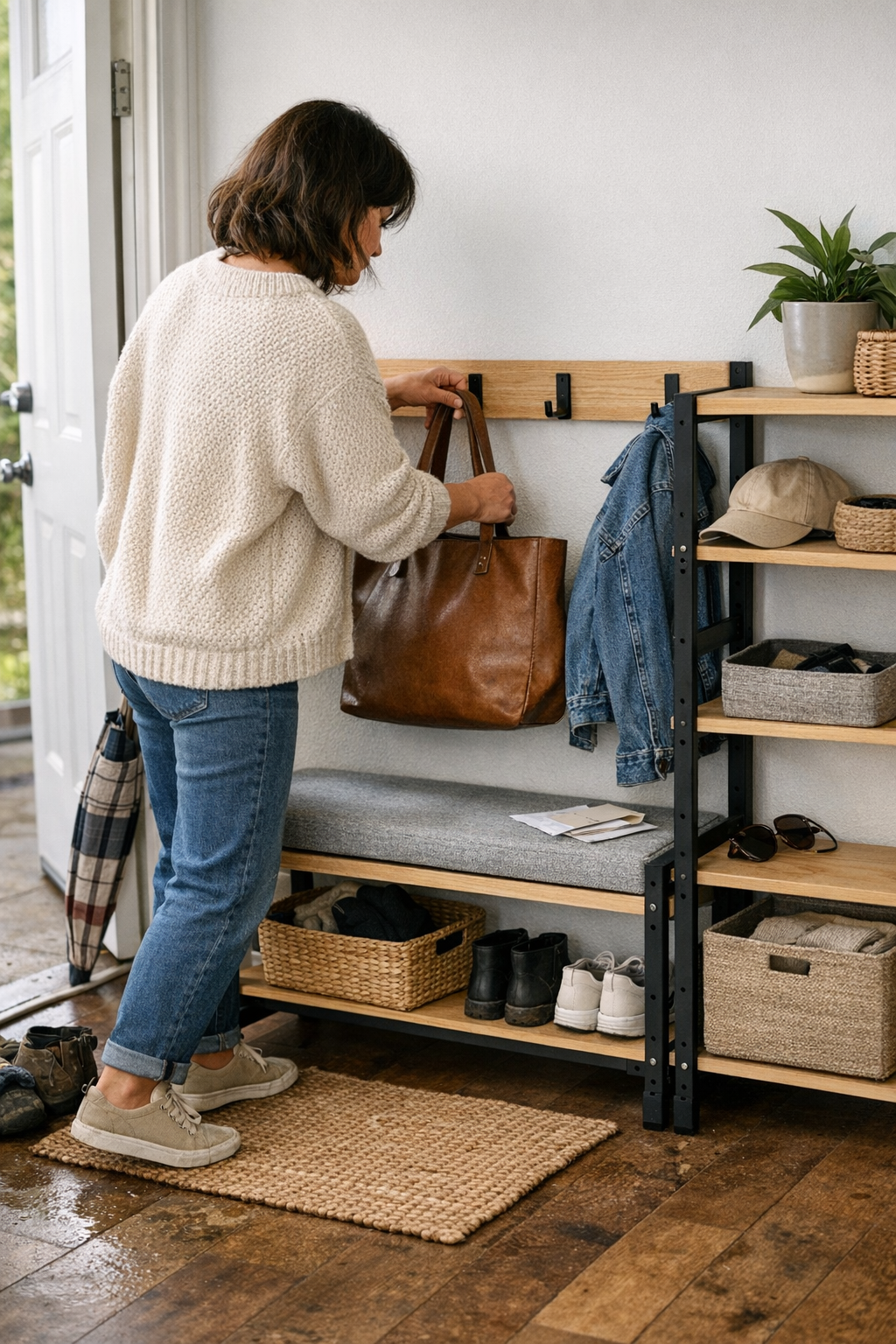
There’s a moment, every evening, when the house fills with those small traces of movement—shoes left at odd angles, damp rain jackets, bags that never make it farther than a step past the threshold. For a while, I tried to keep these things contained with an entryway storage setup that looked tidy: modular cubbies tucked further back, utility seating along the side wall, some vertical shelving where traffic thinned out. It seemed like the answer to mess. But real routines have a way of slipping around tidy intentions. It was in the repeated crossings—every arrival, every exit—that I started noticing how storage just far enough from the actual point of use quietly undid itself.
The Drift That Happens Anyway
You don’t notice it immediately. The first day, everything feels more open, less crowded. Benches stay clear, shoe rows line up obediently out of sight, drop zones remain pristine near the door’s edge.
But a day or two in, you feel the drift. Shoes stop at the nearest mat, forming their own row while the actual rack waits a few steps away. Bags get looped around bench corners or stacked “temporarily” by the doorframe, edging closer to the path of least resistance. Even the clean lines of a utility cabinet become a backdrop for overflow—the gloves nobody tucked away, a stray hat tossed in the rush of coming inside.
That was the part I kept coming back to: how easy it was to make a first impression look under control, but how hard it was to hold up the system when daily habits took over.
Thresholds Really Mean Thresholds
There’s a kind of pressure where people naturally pause. That liminal zone where you change shoes, shed wet layers, glance at the clock, decide what stays by the door and what travels further inside. If storage sits too far away—just out of reach or a few steps off the main path—you find yourself excusing small drops all day. “I’ll move it later” settles into routine. The threshold gums up, quietly blocked by the very things you meant to shuffle onward.
Real-life pauses accumulate here, at this converging edge. Rush-hour mornings bring quick discards and half-hearted placement, especially when one person’s gear tangles with another’s stride. A mobile utility bench that once seemed unnecessary ends up more useful than the parked vertical rack at the far wall. There’s a reason exit clutter collects by the exit: that’s where the returning really happens.
When Nearness Becomes the Reset
One afternoon, it finally got to me. I moved a wall-mounted storage unit from the far end of the room to a spot just inside the entry, nearly brushing the door-swing’s edge. There was no grand plan. But suddenly, things started returning themselves: muddy boots, a canvas tote, wayward gloves. The micro-messes that used to stall at the threshold could now be fixed in passing, not as a catch-up job.
That gentle shift—the friction dropping away—wasn’t obvious at first. But the ongoing sense of reset, rather than delayed cleanups, changed how the space felt. Not perfectly neat, but more available: threshold clear, movement easy.
Sometimes the best structure is simply the one that keeps you from needing to think about it. The distance that matters isn’t how far you can put things away, but how close you’ll return them before doing anything else.
If you ever want to see where this thinking leads, Betweenry’s corner of the world gave me a few ideas: http://www.betweenry.myshopify.com



