When Doors Don’t Close Right at Home
Weak hinges cause door misalignment, snagging, and clutter; reinforced hinges improve function, ease resets, and keep walkways clear.
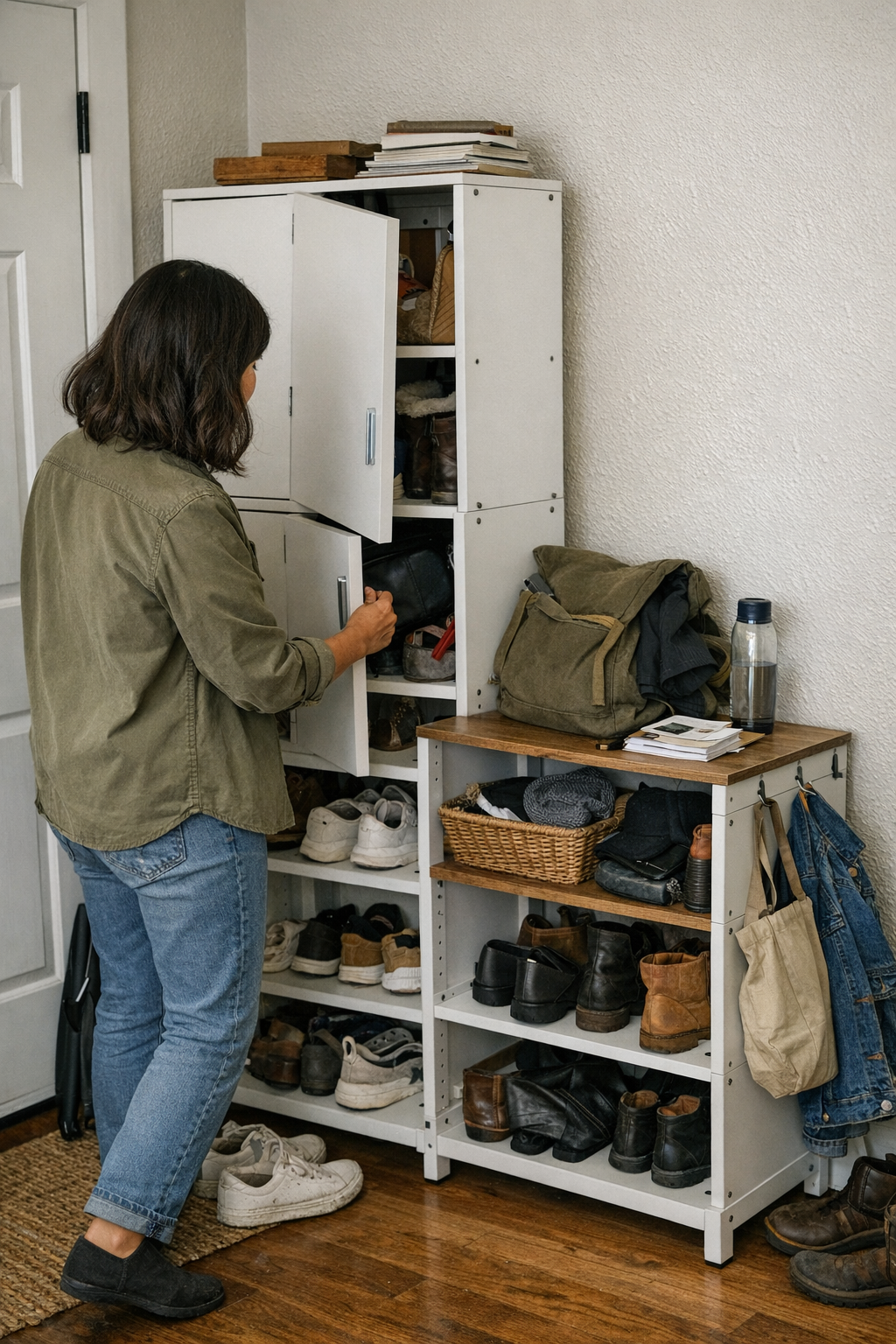
Some disruptions announce themselves, but others slide in with the softest signs—a door that sighs instead of shutting, a shoe always skimming past the edge. The transition spaces in a home, especially near the door, have their own private logic: everything lands, shifts, exits. For a while, a cabinet might seem to anchor the routine, holding shoes, bags, and other items that pass through. Then, subtly, its hinges start to drift. I didn’t notice at first; the pace of arrivals and departures disguised the small changes. Over time, though, the drop zone becomes less about order and more about adaptation—the friction of an entry cabinet not quite holding itself (or its load) together.
Doors That Learn Your Habits
A cabinet door in a high-traffic spot adapts, or it doesn’t. There’s constant pressure at the threshold, the quick rush of shoes kicking off or grabbing bags on the fly. A weak hinge shifts the routine—closing, then swinging back a touch, asking you to push it again. I remember catching the door with my elbow because my hands were full. That pattern repeats quietly, but insistently.
You don’t notice it immediately.
But you feel it. First, items that used to disappear inside hang around on the surface—quick placements that turn permanent by week’s end. Passages clog, not exactly from clutter but from delay. The job of the cabinet starts to blur at the edges.
Appearance and Use Drift Apart
From across the room, order still lingers. The cabinet sits upright, slim, making a line against the wall, as if everything inside is unbothered. But up close, there’s a small jaw of misalignment, a toe of a shoe grazing the off-kilter edge. Opening the door becomes a task of friction; scraping, catching—not quite the smooth transition intended.
It’s not just about fixing a hinge or a door—though that helps. There’s something else about a storage piece living at the boundary: daily use is a test. In moments of rush and return, handles wobble, edges bow out under the weight of boots and backpacks, and the once-clear boundary between “put away” and “not yet” begins to slip.
This was the part I kept coming back to—the unnoticed drift between how things look and how they move.
A Storage Reset That Actually Stays
Eventually, I swapped out the cabinet for one built to hold up—a little heavier, steadier on its feet, with reinforced hinges and more width to let the doors open without catching. I left a small clearance for the swing. Suddenly, everything returned to the way it was supposed to work: door opens, shoes slide in, door closes, and nothing lingers. The fleeting piles disappeared almost completely, except for the stray soccer ball in the evenings.
It’s surprising how different it feels when a routine stops fighting the furniture. Even the daily scramble runs lighter, less divided by resets. Organization in these threshold spaces always lives on a hair-trigger; the less friction, the longer it lasts.
Sometimes the biggest difference isn’t visible but is sensed—the soft ease of passing through, hands free, nothing snagging in the moment between inside and out.
These thoughts settled while considering what actually matters in transition storage, and this collection keeps circling back into my mind: http://www.betweenry.myshopify.com



